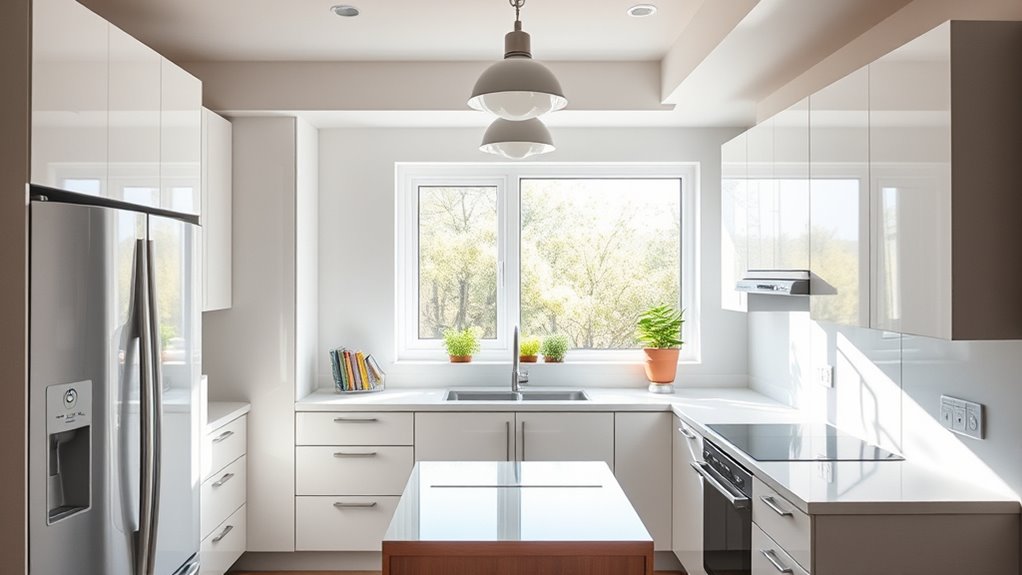

To create an energy-efficient kitchen, focus on a smart layout that forms a work triangle between the refrigerator, stove, and sink to streamline tasks and reduce energy use. Maximize natural light with well-placed windows and layered lighting, using LED fixtures and dimmers. Choose reflective surfaces and light colors to bounce light and lessen artificial lighting needs. Incorporate smart tech like motion sensors and programmable appliances to save power. Keep exploring for more ways to optimize your space effectively.
Key Takeaways
- Arrange appliances in a well-organized work triangle to minimize movement and energy waste.
- Maximize natural light with window placement and use energy-efficient LED lighting with layered and task-focused design.
- Choose reflective surfaces and light-colored cabinetry to enhance light distribution and reduce artificial lighting needs.
- Incorporate smart technology like motion sensors, programmable appliances, and smart thermostats to optimize energy use.
- Streamline workflows and position appliances to reduce unnecessary operation, combining design and technology for maximum efficiency.

Designing a functional kitchen starts with choosing the right layout to suit your space and lifestyle. An energy-efficient design isn’t just about the appliances you select; it’s about how you arrange them and how you illuminate your space. When planning your kitchen layout, consider appliance placement carefully. Place your refrigerator, stove, and sink in a well-organized work triangle that minimizes unnecessary movement. Position your refrigerator where it’s easily accessible but doesn’t block pathways or natural light. The stove should be near the countertop for prep work, while your sink should be close enough to both for seamless workflow. This setup reduces energy waste by streamlining tasks and lowering the time appliances are running unnecessarily.
Optimize your kitchen with strategic appliance placement for efficiency and seamless workflow.
Lighting design plays a critical role in creating an energy-efficient kitchen. Maximize natural light by positioning windows strategically and using sheer curtains or blinds that let in daylight without sacrificing privacy. When daylight isn’t enough, incorporate layered lighting—ambient, task, and accent—to reduce reliance on artificial lighting during the day. Use energy-efficient LED bulbs in your fixtures, and install dimmers where appropriate. Task lighting over work areas, like under-cabinet lights, ensures you’re only illuminating specific zones, saving electricity. Proper lighting placement not only enhances visibility but also encourages smarter energy use by reducing the need for excessive artificial light.
In addition to appliance placement and lighting, consider your cabinetry and countertop materials. Opt for reflective surfaces and lighter colors that bounce light around your kitchen, making the space feel brighter without additional energy consumption. This can reduce the need for high wattage bulbs and create a more inviting atmosphere. Keep appliances like dishwashers, ovens, and microwaves energy-efficient models that conform to current standards. Their placement should facilitate easy access and minimize the effort required to operate them, which indirectly conserves energy.
Finally, think about incorporating smart technology into your kitchen design. Smart lighting, motion sensors, and programmable appliances can automatically adjust energy usage based on your habits. For example, motion sensors can turn off lights when you leave the room, and smart thermostats can optimize heating and cooling, reducing overall energy consumption. Additionally, selecting stores with convenient hours today can help you plan your shopping trips efficiently and ensure you have all necessary energy-saving appliances and fixtures on hand. All these elements—appliance placement, lighting design, and smart tech—work together to create a kitchen that’s not only functional and stylish but also energy-efficient. By paying attention to these details, you’ll enjoy a space that saves energy, reduces costs, and minimizes your environmental impact.
Frequently Asked Questions
How Can Lighting Improve Energy Efficiency in the Kitchen?
You can improve energy efficiency in your kitchen by maximizing natural daylight, reducing the need for artificial lighting during the day. Incorporate large windows or skylights to let in more sunlight. Use task lighting strategically over work areas, like under-cabinet lights, to focus illumination where needed without wasting energy. Switching to LED bulbs and dimmers further guarantees your lighting is energy-efficient, saving you money and reducing your carbon footprint.
What Are the Best Eco-Friendly Appliances for Energy Savings?
You should choose recycling appliances with high Energy Star ratings, which guarantee maximum energy savings and eco-friendliness. Look for refrigerators, dishwashers, and washing machines that have earned these ratings, as they consume less power and water. By selecting appliances with solid energy efficiency certifications, you actively reduce your carbon footprint and save on utility bills, making your kitchen more sustainable and environmentally friendly.
How Does Insulation Affect Kitchen Energy Consumption?
Insulation can drastically slash your kitchen’s energy bills—it’s like giving your space a powerful thermal barrier! Different insulation types, like foam, fiberglass, or spray foam, trap heat or cold, preventing energy waste. When you boost insulation, you create an unbeatable shield that keeps your kitchen warm in winter and cool in summer, making your appliances work less and saving you money while keeping your environment comfy and efficient.
Can Solar Panels Be Integrated Into Kitchen Design?
Yes, you can definitely integrate solar panels into your kitchen design through solar integration. Installing kitchen solar panels on your roof or nearby can harness sunlight to generate electricity, reducing energy costs. You might consider seamless solar integration, where panels blend with your roof’s aesthetic, or even incorporate solar-powered appliances directly into your kitchen. This eco-friendly approach enhances energy efficiency while maintaining a stylish, functional space.
What Are Low-Energy Ventilation Options for Kitchens?
You can choose low-energy ventilation options like energy-efficient ventilation fans that optimize air exchange without wasting power. Look for models with variable speed settings to adjust airflow based on your needs. Additionally, consider incorporating passive ventilation strategies, such as operable windows or vents, to enhance air exchange naturally. These choices help maintain fresh air in your kitchen while reducing energy consumption, making your space more eco-friendly.
Conclusion
Creating an energy-efficient kitchen layout is like designing a well-oiled machine—you’ll save energy and make your space more enjoyable. By thoughtfully arranging appliances, maximizing natural light, and choosing eco-friendly fixtures, you set the stage for a greener, more efficient home. Remember, small changes can ripple into big savings over time. So, take the time to plan wisely; your kitchen’s energy performance will thank you, shining brighter than ever.