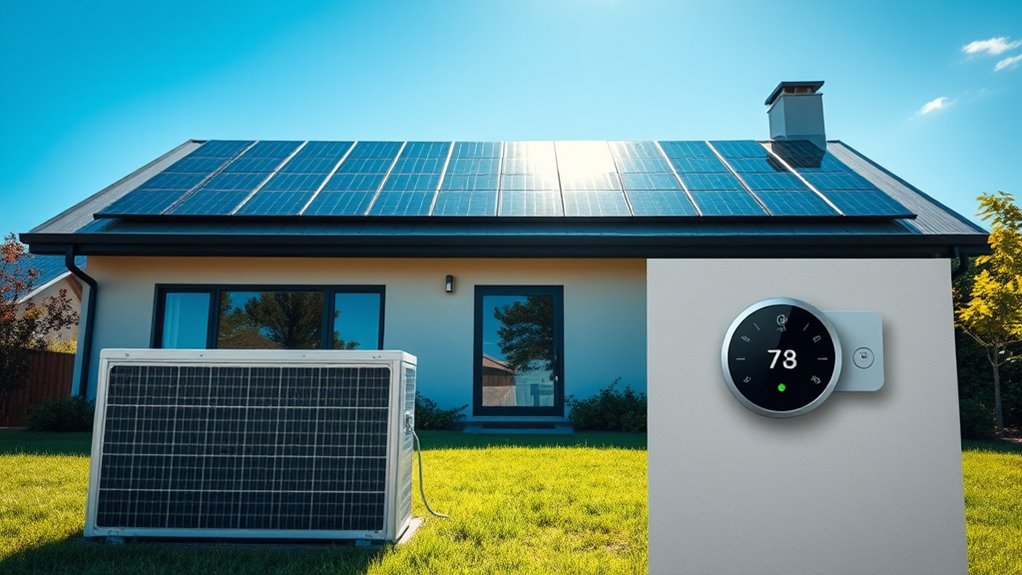

As a homeowner, upgrading your property for energy efficiency in 2025 can lead to substantial savings and sustainability benefits. With new tax credits available, you might find it easier than ever to make eco-friendly improvements. From solar panels to enhanced insulation, there are numerous options that could reduce your utility bills and qualify for incentives. Curious about which upgrades could work best for your home and how to maximize these benefits?

Get compact home essentials delivered free with Prime
- Fast, free delivery on millions of items
- Prime Video, Amazon Music and more included
- Member-only deals all year
Key Takeaways
- Installing solar panels or small wind turbines can qualify for federal tax credits in 2025.
- Upgrading home insulation with modern materials may make you eligible for energy-efficiency tax incentives.
- Combining renewable energy systems with insulation improvements can maximize tax credit benefits.
- Meeting specific standards for energy efficiency is necessary to qualify for 2025 tax credits.
- Planning upgrade projects now allows you to take advantage of available incentives and reduce overall costs.

Are you looking to cut energy costs and make your home more sustainable in 2025? If so, upgrading to renewable energy sources should be at the top of your list. Installing solar panels or small wind turbines can considerably reduce your reliance on traditional power grids. Not only do these systems harness natural resources, but they also qualify for tax credits that help offset the initial investment. The federal government incentivizes renewable energy projects, making it more affordable to incorporate sustainable solutions into your home. By choosing renewable energy options, you can lower your monthly utility bills and contribute to a cleaner environment, all while taking advantage of available tax credits that make these upgrades financially attractive.
Another smart upgrade that offers substantial savings and qualifies for tax benefits is enhancing your home insulation. Good insulation keeps your home warmer in winter and cooler in summer, which means your heating and cooling systems don’t have to work as hard. This translates to lower energy consumption and reduced utility bills. In 2025, tax credits encourage homeowners to improve their home insulation, especially if it involves modern, high-efficiency materials. Proper insulation isn’t just about comfort; it’s an effective way to cut down on energy waste and emissions. By sealing gaps and upgrading wall, attic, or floor insulation, you create a more energy-efficient home that aligns with sustainability goals and qualifies for federal incentives. Additionally, adopting energy-efficient upgrades can further maximize your savings and eligibility for tax credits.
Combining renewable energy systems with upgraded home insulation creates a powerful synergy. When your home is well-insulated, your renewable energy investments become even more effective because less energy is wasted. For example, installing solar panels on a home with excellent insulation maximizes energy savings and boosts your chances of qualifying for tax credits. These upgrades often come with streamlined application processes, and the savings can markedly offset the costs. Keep an eye on the specific requirements for each upgrade, as certain standards must be met to qualify for the credits.
In 2025, taking advantage of these energy-efficient upgrades isn’t just about saving money; it’s about making smarter, sustainable choices. From harnessing renewable energy to upgrading your home insulation, these improvements not only benefit your wallet but also contribute to a greener planet. With the right planning and knowledge of available tax credits, you can transform your home into a more efficient, eco-friendly space while enjoying financial incentives designed to support your efforts.
As an affiliate, we earn on qualifying purchases.
Conclusion
By upgrading your home with energy-efficient features and taking advantage of 2025’s tax credits, you’re making a smart choice for your wallet and the planet. Installing solar panels or improving insulation can considerably cut your energy bills and boost your home’s value. Don’t you want to enjoy the benefits of sustainable living while saving money? Now’s the perfect time to make those upgrades and reap the rewards—are you ready to start?
Halloween Picks
halloween
As an affiliate, we earn on qualifying purchases.