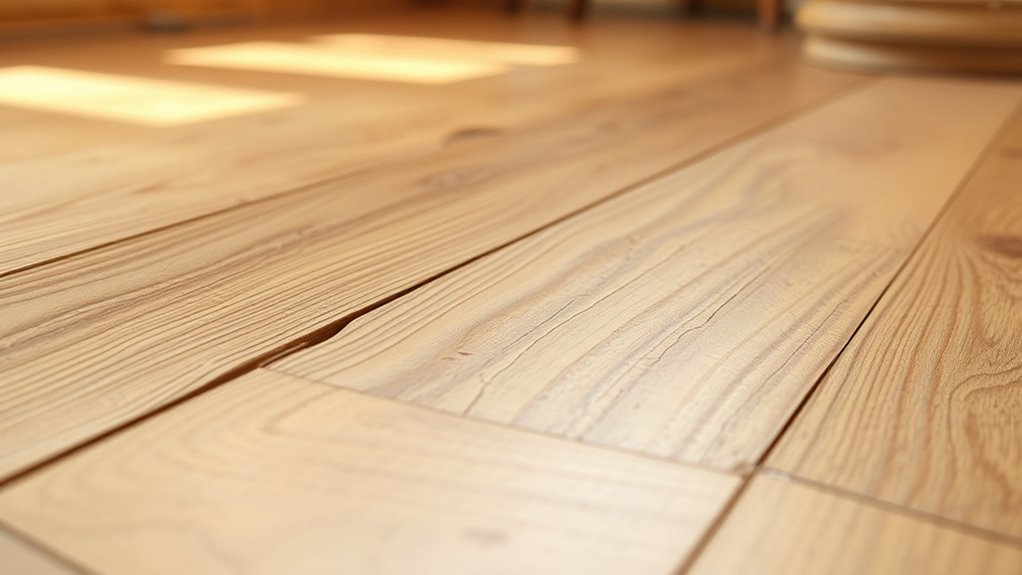

Skipping flooring underlayment might seem like a small step to save money, but it can lead to bigger problems down the line. Without it, moisture can seep through, causing warping and mold that damage your floors and home. Plus, it doesn’t just protect your investment—it also quiets footsteps and keeps your space comfortable. Wondering how neglecting this layer could affect your flooring’s lifespan? There’s more to contemplate than you might think.
Key Takeaways
- Skipping underlayment exposes flooring to moisture damage, leading to warping, buckling, and mold growth.
- Without underlayment, noise from footsteps and household activities increases, reducing living comfort.
- Lack of underlayment results in uneven surfaces, causing creaks, cracks, and early wear of flooring.
- Omitting underlayment can worsen indoor air quality by trapping dust and allergens.
- Foregoing underlayment may save upfront costs but can lead to costly repairs and replacements later.
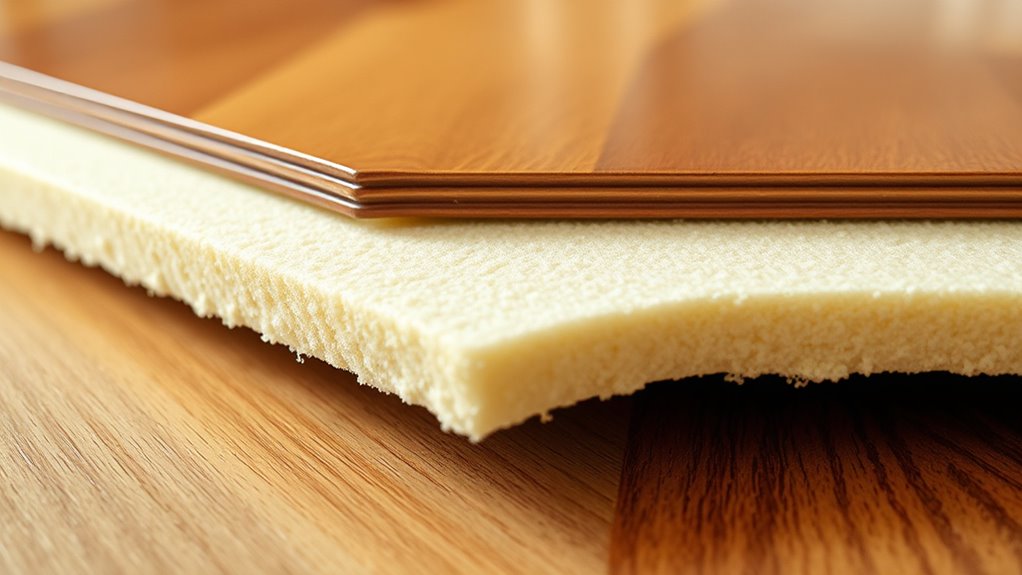
Have you ever wondered why your new flooring doesn’t feel as sturdy or smooth as you expected? The answer often lies beneath the surface—literally. Skipping proper flooring underlayment can lead to a host of problems that become painfully apparent after installation. One of the most overlooked aspects is the role of moisture barriers. Without this essential layer, your flooring becomes vulnerable to moisture seeping up from the subfloor or even from the ground, especially in basements or ground-level rooms. This moisture can cause warping, buckling, and mold growth, all of which compromise the integrity of your flooring. When you invest in quality underlayment that includes a moisture barrier, you’re proactively preventing these issues. It acts as a shield, stopping water vapor from penetrating and damaging your flooring over time.
Beyond moisture concerns, many people underestimate the importance of soundproofing techniques integrated within underlayment. If you live in an apartment or a busy household, you know how noise can become a major issue. Skipping underlayment means losing out on soundproofing benefits that can considerably reduce impact noise and airborne sounds. Proper underlayment absorbs vibrations and muffles footsteps, conversations, and other household noises, making your living space more peaceful. Without it, every step feels louder, and sounds travel more easily between floors, disturbing your comfort and peace of mind. You might think you’re saving money by skipping underlayment, but the long-term discomfort and potential for noise complaints often outweigh the initial cost savings.
Additionally, the presence of quality underlayment enhances the overall feel of your flooring, making it more sturdy and comfortable underfoot. It provides a smooth, level surface that improves the installation process, ensuring your flooring stays even and durable for years. Without this layer, uneven subfloors can lead to creaking, cracking, or premature wear. The underlayment also offers thermal insulation, helping maintain consistent indoor temperatures and increasing energy efficiency. Incorporating the right type of underlayment can also contribute to better air quality within your home, as it can reduce dust and allergens that accumulate in improperly installed flooring.
In essence, neglecting to include an underlayment means risking future problems that can be costly and disruptive. Moisture barriers and soundproofing techniques are not mere extras; they’re vital components that protect your investment and elevate your living environment. When you choose to skip these layers, you might save a bit upfront, but you’ll likely face bigger expenses down the road. Proper underlayment ensures your flooring remains resilient, quiet, and comfortable—making your home a better place to live.
Conclusion
Skipping flooring underlayment might save you a few bucks now, but don’t be surprised if it costs you a lot more later—like repairs, mold, or noisy footsteps haunting your home. Ironically, what seems like a smart shortcut can turn into a costly mistake. So, next time you’re tempted to skip the underlayment, remember: a small investment today could save you from big headaches tomorrow. Sometimes, the smart choice is the one that’s least obvious.