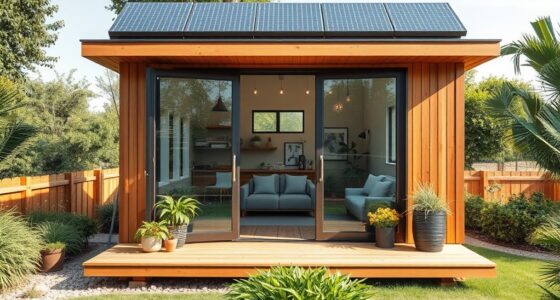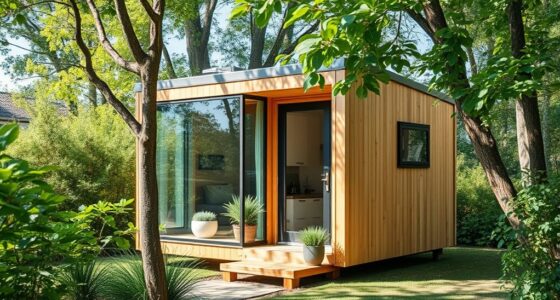
Converting a garage into a permanent tiny home is a smart way to maximize your space and save money by reusing an existing structure. You’ll want to focus on proper insulation techniques, using materials like spray foam or rigid foam boards to keep the space cozy and energy-efficient. Adding modern features and ensuring compliance with local codes can make your tiny home comfortable year-round. If you explore further, you’ll discover practical tips to access your garage’s full potential.
Key Takeaways
- Maximize space and affordability by reusing the garage structure for a personalized tiny home.
- Use high-quality insulation like spray foam to ensure comfort, energy efficiency, and soundproofing.
- Incorporate modern features such as home cinema and versatile furniture for year-round livability.
- Explore financing options like home equity loans, construction loans, or grants for sustainable upgrades.
- Plan and budget carefully, considering zoning laws and prioritizing insulation for a functional, cozy space.
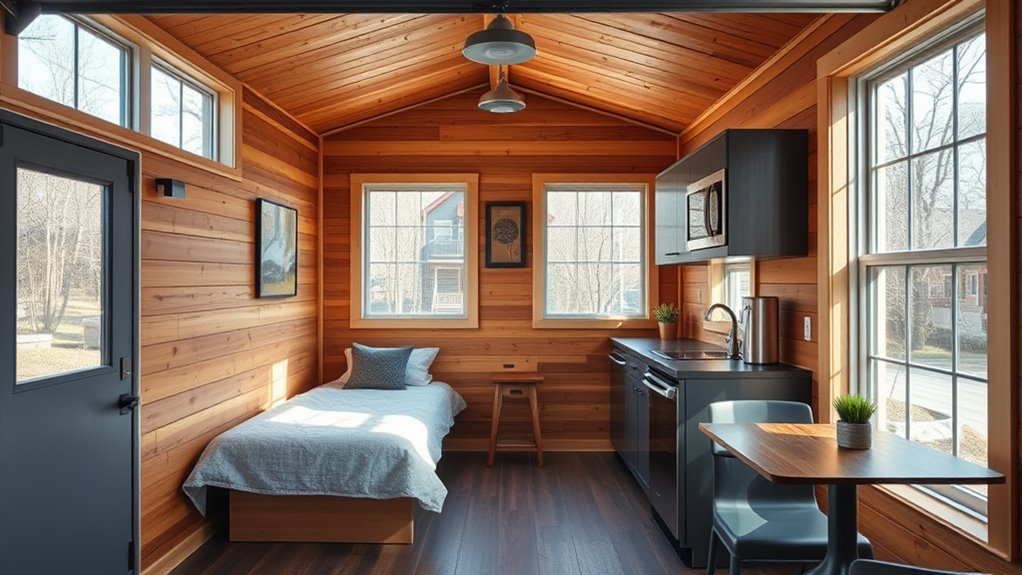
Converting a garage into a tiny home is an excellent way to maximize your property’s space and create an affordable, personalized living area. It allows you to repurpose existing structure, saving money and reducing the need for extensive new construction. To guarantee your tiny home is comfortable year-round, paying attention to insulation techniques is essential. You’ll want to invest in high-quality insulation materials like spray foam or rigid foam boards, which provide superior thermal resistance and help maintain a consistent indoor temperature. Proper sealing around windows, doors, and any gaps is equally important to prevent drafts and heat loss. Insulation not only boosts energy efficiency but also enhances soundproofing, giving you a cozy, private space indoors. When planning your conversion, consider how insulation techniques can be integrated seamlessly into the existing garage structure, whether you’re adding insulation to the walls, ceiling, or floors. Incorporating modern home cinema technology can also elevate your tiny home experience, making it a versatile space for relaxation and entertainment.
Financing options are another key consideration as you convert your garage into a tiny home. While you might initially think of personal savings, there are other ways to fund your project. Some homeowners opt for home equity loans or lines of credit, which often have favorable interest rates and flexible repayment terms. You could also explore specialized construction loans designed specifically for home renovations or additions. In some cases, grants or incentives might be available, especially if your project emphasizes energy efficiency or sustainable building practices. It’s worth consulting with lenders or financial advisors to understand what options are accessible for your situation. Additionally, some communities have zoning laws or building codes that could influence your financing options, so doing thorough research beforehand can save you headaches later.
Throughout the process, balancing your budget with quality is vital. Investing in good insulation techniques might seem like an added expense initially, but it pays off by reducing energy costs over time. As for financing, choosing the right option guarantees your project stays within budget and progresses smoothly. Remember, converting your garage into a tiny home isn’t just about making space; it’s about creating a functional, comfortable environment that suits your lifestyle. Proper insulation and smart financing are foundational steps that make your tiny home both affordable and energy-efficient, turning your vision into reality. With careful planning, you’ll enjoy a cozy, well-designed living space that maximizes your property’s potential for years to come.
Frequently Asked Questions
What Permits Are Required for a Garage-To-Tiny Home Conversion?
You need to obtain permits that cover zoning restrictions and building codes for your garage-to-tiny home conversion. Start by checking local zoning ordinances to ensure your project complies with land use rules. Then, apply for building permits from your city or county, demonstrating your plans meet safety standards, electrical, plumbing, and structural requirements. These steps make certain your tiny home is legal, safe, and ready for occupancy.
How Much Does a Garage Conversion Into a Tiny Home Typically Cost?
Think of converting your garage into a tiny home as planting a seed—you’ll need to cultivate it with the right investment. Typically, costs range from $10,000 to $50,000, depending on factors like permits, insulation, plumbing, and electrical work. To stay on track, consider all cost factors and plan your budget carefully. This way, you guarantee your tiny home dreams grow strong without financial storms.
Can I Include a Bathroom and Kitchen in the Converted Garage?
Yes, you can include a bathroom and kitchen in your converted garage. You’ll need to plan for plumbing installation and electrical wiring to support these spaces. Make sure you meet local building codes, which may require permits. Properly installing plumbing and electrical systems is essential for safety and functionality. Hiring professionals for these tasks can help you avoid issues and create a comfortable, fully functional tiny home.
What Insulation Options Are Best for a Tiny Home Garage Conversion?
Ever wondered how to keep your tiny home cozy all year? You should opt for spray foam or rigid foam insulation because they provide excellent energy efficiency and air sealing. These materials prevent heat loss and drafts, making your conversion comfortable and cost-effective. Think about it—wouldn’t you want a warm, snug space without skyrocketing energy bills? Choosing the right insulation guarantees your tiny home stays inviting, no matter the weather.
How Long Does the Entire Garage-To-Tiny Home Conversion Process Take?
The entire garage-to-tiny home conversion typically takes about 3 to 6 months, depending on factors like building permits and zoning restrictions. You’ll need to secure the necessary permits before starting, which can add time to your project. Zoning restrictions may limit your plans or require additional approvals, so planning ahead and working with local authorities speeds up the process. Expect some variability based on your specific location and project scope.
Conclusion
As you finish transforming your garage into a tiny home, you might just realize it’s the perfect coincidence—you now have a cozy space right in your backyard, saving money and adding value. Who knew that a simple conversion could turn an overlooked area into your dream retreat? Sometimes, the best surprises come when you least expect them, and your garage might just be the key to creating a home you love, right where you started.