
TL;DR
A House Beautiful report describes a growing design approach among younger collectors: placing contemporary art, posters and other modern images in ornate antique frames. Designers say the contrast can add character, but recommend attention to scale, materials, spacing and secure mounting.
Gen Z collectors are pairing contemporary art with ornate antique frames, departing from a longstanding design convention that modern works should use simpler frames, according to a House Beautiful report. Designers interviewed by the magazine say the contrast can give prints and posters more presence, while warning that the effect depends on careful choices about scale, finish and installation.

Get compact home essentials delivered free with Prime
- Fast, free delivery on millions of items
- Prime Video, Amazon Music and more included
- Member-only deals all year
The convention, cited in a 1990s issue of House Beautiful, was to avoid placing 20th-century art in elaborate Rococo frames. The report says younger collectors are instead using antique frames for newer images, including modern prints and movie posters. It also describes ornate frames around smart televisions, though that example is not presented as a measured trend.
Art and antiques dealer Heather Karlie Vieira describes frames as more than functional borders. Their role, she said, has developed from being part of a room’s furnishings into a form of art in its own right. Gallerist and art adviser Hutton Kalik said antique frames have not necessarily become more popular; in his view, what is changing is the kind of art people put inside them.
Interior designer Kathy Kuo said an ornate frame can give a modern image a different point of view, adding contrast and dimension. The report gives examples such as a Dracula-themed movie poster in an elaborate frame and black-and-white family photographs surrounded by gold frames. These are design examples, not evidence that the look has been adopted by a particular share of Gen Z.
Why the Frame Changes the Image
The pairing changes how viewers read both the artwork and the frame. A simple contemporary image inside a decorative border can create visual tension, making the frame an active part of the composition rather than a neutral support. Designers interviewed by House Beautiful say this can make a familiar print or poster feel more individual and give a room a more layered appearance.
The approach also puts attention on personal collecting: sourcing a secondhand frame and matching it to a chosen image can involve more decisions than buying a ready-made poster-and-frame set. Vieira told the magazine that mixing antique and modern objects can invite conversation and make decor feel more personal. That is a designer’s assessment, not a result backed by consumer research in the report.
For readers considering the look, the practical point is that the frame should serve the image and the room. A heavy, highly decorative border can overwhelm a small print, while an oversized or poorly mounted frame may look out of place or pose a safety risk. Designers’ recommendations are guidance, not a guarantee that the style will suit every space.
Products Worth Considering

Dyson Cyclone V10 Origin Cordless Vacuum

LEVOIT Vital 200S-P Smart Air Purifier for Large Rooms, White

Ring Battery Doorbell Pro, 1536p HD+ Head-to-Toe Video
As an affiliate, we earn on qualifying purchases.
A Rule About Modern Art Frames
The older convention drew a distinction between modern artwork and historic-looking frames: contemporary works were generally expected to use restrained wood or metal borders, while elaborate frames were associated with older art. The House Beautiful report revisits that advice from a 1990s issue and describes younger collectors as more willing to combine periods and styles.
The article’s experts distinguish between the enduring presence of antique frames and a change in their use. Kalik said buyers are pairing familiar old frames with newer media rather than necessarily showing a new preference for antique frames themselves. The report offers expert observations and examples, but does not provide sales figures, a survey, or a timeline that would establish how widespread or fast-growing the practice is.
“The picture frame definitely has its roots as being part of the furniture in a room. But from those 17th-century French beginnings, it’s grown into a piece of art in its own right.”
— Heather Karlie Vieira, art and antiques dealer, as quoted by House Beautiful
How Widespread Is the Look?
The source does not quantify how many Gen Z collectors use ornate frames, whether the practice is increasing, or how its popularity compares with other framing styles. Its characterization of the look as a Gen Z trend rests on the report’s observations and interviews with design professionals, rather than survey or market data.
It is also unclear how long the style will remain popular and whether the examples reflect a broad shift or a visible niche in home design. The report presents designers’ views and practical advice; it does not test the recommendations or establish that every antique frame is suitable for every artwork or wall.
Choosing Frames With Care
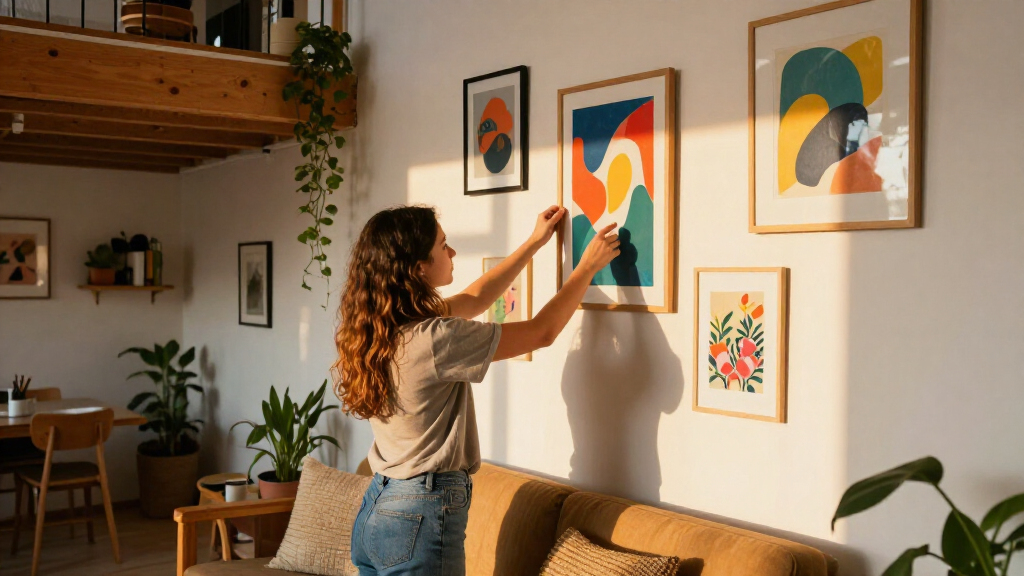
For anyone trying the approach, the designers’ advice in the report is to consider whether the frame fits the artwork, wall and room before building a gallery wall. Alyssa Buzzeo of RS Living recommends repeating finishes such as antique gold, dark wood or black to bring an eclectic collection together. Squire suggests balancing ornate frames with simpler profiles or using a consistent finish if the frames are all elaborate.
Squire also recommends seeking vintage frames at estate sales and flea markets and budgeting for a custom mat, which can leave more space around a small image. She cautions that lightweight resin with a shiny gold finish may look artificial, and that a thick border can overwhelm a small print. The article suggests deciding between a single statement piece, a small grouping and a larger gallery wall; whichever approach is chosen, consistent spacing matters.
Because antique frames can be heavy, the report advises using appropriate anchors and hardware. The supplied article does not specify wall types, product ratings or installation steps, so homeowners should check the frame’s weight and use hardware suitable for the wall; seek professional help if safe mounting is uncertain. No formal next event, market release or follow-up study is announced in the source.
Key Questions
What gallery-wall rule is being challenged?
The report revisits advice from a 1990s House Beautiful issue: do not hang 20th-century art in elaborate Rococo frames. The newer approach pairs modern images with ornate antique frames.
Why do designers say the combination works?
Designers interviewed by House Beautiful say the contrast can give a modern print or poster more visual interest and make the frame part of the room’s design. These are expert opinions, not findings from a formal study.
How can an ornate frame avoid overwhelming the artwork?
Match the frame’s scale to the image and wall, consider adding a custom mat, and balance ornate profiles with simpler frames or repeat a finish across the wall. Squire cautions that a thick frame around a small print can swallow the image.
Are heavy antique frames safe to hang?
They can be heavy, so the report says to use appropriate anchors and hardware. Check the frame’s weight and the wall’s requirements, and get professional help if you are unsure how to mount it securely.
Is this a measured Gen Z trend?
The article describes the approach as a Gen Z design trend, but supplies no survey, sales data or other figures to show how common it is or whether its popularity is growing.
Source: rss