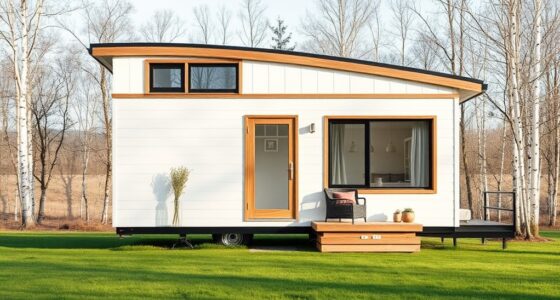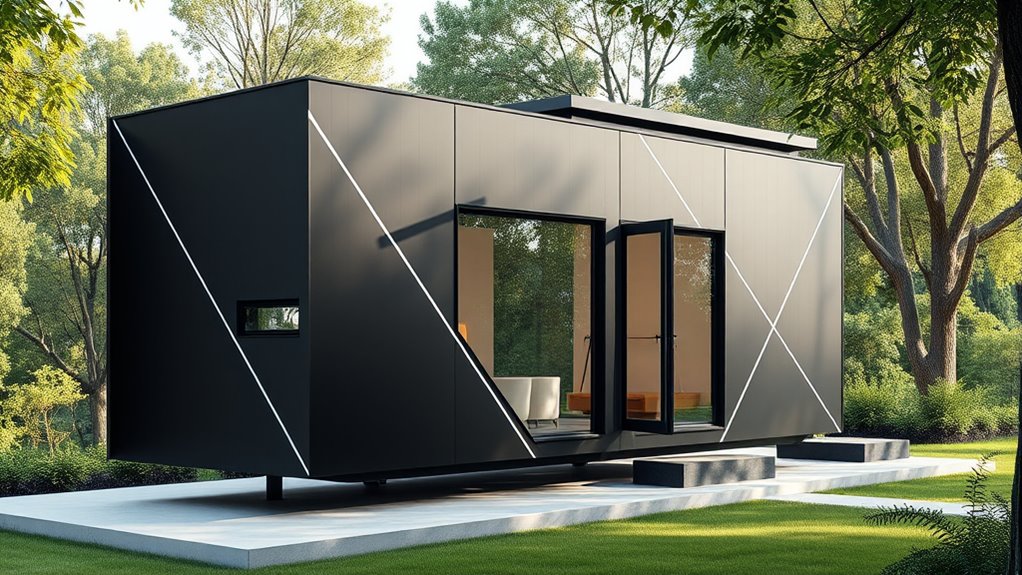

Geometric tiny house designs offer modern builders a creative way to maximize space while achieving sleek aesthetics. By incorporating angular shapes, sharp lines, and symmetrical patterns, you can transform small spaces into functional art. Sustainable materials like reclaimed wood and recycled metal enhance the look and eco-friendliness. Modular construction makes customization easy, allowing you to create unique, scalable homes that balance form and function. Explore further to discover how these principles can elevate your tiny house projects.
Key Takeaways
- Incorporate crisp lines, angular facets, and symmetrical patterns to create visually striking, modern geometric tiny house exteriors and interiors.
- Utilize modular construction techniques for customizable, scalable designs that enhance adaptability and streamlined building processes.
- Optimize interior layouts with geometric principles to define distinct spaces without bulky walls, increasing openness and efficiency.
- Integrate sustainable materials like reclaimed wood, recycled metal, and bamboo into geometric forms to achieve eco-friendly, modern aesthetics.
- Use geometric patterns, built-in angular furniture, and faceted exteriors to elevate both functional space utilization and contemporary style.
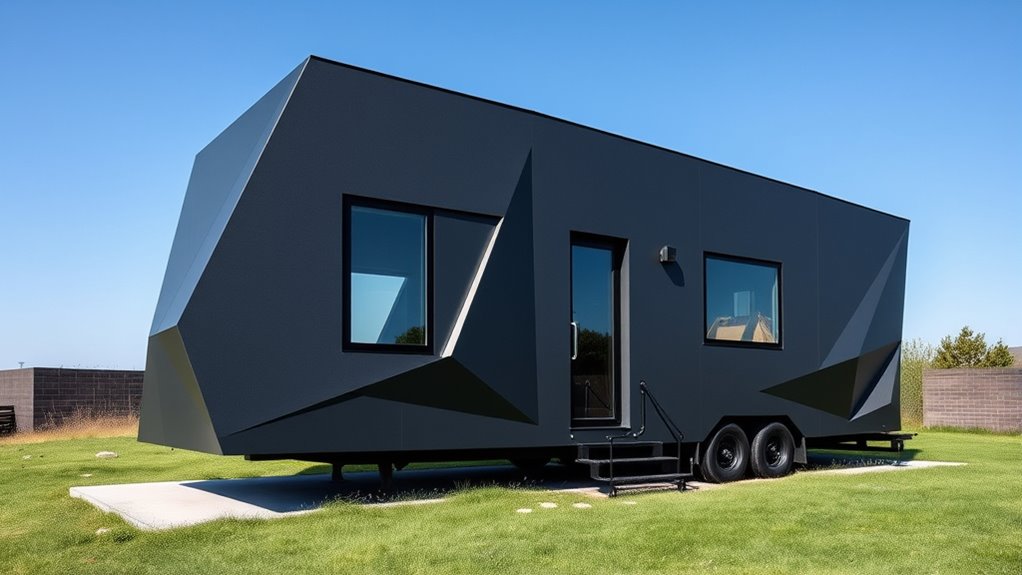
Have you ever wondered how geometric shapes can transform tiny house designs into modern works of art? It’s a fascinating concept that combines form and function in innovative ways. When you incorporate geometric elements into your tiny house, you’re not just creating a visually striking structure—you’re also shaping the interior layout to maximize space and efficiency. The crisp lines, angular facets, and symmetrical patterns of geometric design help you make the most of every square inch. For example, using triangular or polygonal forms can create natural divisions within small spaces, giving each area a distinct purpose without the need for bulky walls or partitions. This strategic approach allows for open, airy interiors that feel larger than they are, while maintaining a sleek aesthetic.
Geometric shapes maximize space and create sleek, modern tiny house interiors.
Equally important is your choice of sustainable materials, which complements the modern geometric look. You want to select eco-friendly options that align with the minimalist and forward-thinking spirit of these designs. Reclaimed wood, recycled metal, and bamboo can be shaped into the sharp angles and clean lines characteristic of geometric homes. These materials not only reduce your environmental footprint but also add texture and warmth to the interior. When you combine sustainable materials with geometric forms, you create a harmonious balance between aesthetics and sustainability. For instance, a faceted exterior clad in recycled metal panels can reflect sunlight beautifully, while inside, reclaimed wood accents can soften the sharpness of the geometry, creating a cozy yet modern atmosphere.
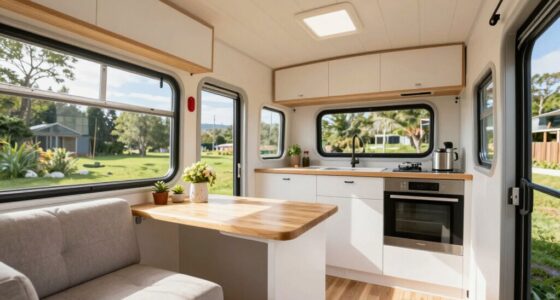
As you plan your tiny house, focus on how the interior layout can be optimized through clever design choices rooted in geometric principles. Built-in furniture with angular shapes fits perfectly into corners and under sloped ceilings, eliminating wasted space. Multi-functional pieces, like fold-away beds or convertible desks, align with the clean lines of the design and help you keep clutter at bay. The use of sustainable materials in these furnishings enhances the overall eco-conscious ethos of your project. Plus, the visual impact of geometric patterns—whether in wall decor, flooring, or cabinetry—serves as a focal point that elevates the entire aesthetic. It’s about creating a cohesive look where form follows function, and every element, from structural components to decor, contributes to a unified, modern style.
In addition, utilizing modular construction techniques can further streamline building and customization processes, making geometric tiny houses more accessible and adaptable to individual needs. It’s about creating a cohesive look where form follows function, and every element, from structural components to decor, contributes to a unified, modern style.

FRCOLOR Scale Tiny House Furniture Black Iron Geometric Round Side Table for Living and Dining Scene Decoration
Dollhouse decors–manufactured with smooth and stable material, with excellent durability and practicality,dollhouse end tables
As an affiliate, we earn on qualifying purchases.
As an affiliate, we earn on qualifying purchases.
Frequently Asked Questions
What Are the Best Materials for Constructing Geometric Tiny Houses?
You should choose sustainable materials like bamboo, reclaimed wood, and recycled metal for your geometric tiny house. These materials support modern construction while reducing environmental impact. Opt for lightweight, durable options like insulated panels and eco-friendly concrete to guarantee stability and energy efficiency. Using sustainable materials not only enhances your tiny house’s aesthetic but also aligns with eco-conscious living, making your build both stylish and environmentally responsible.
How Do Geometric Designs Impact Energy Efficiency in Tiny Homes?
You’re really on to something when considering how geometric designs boost energy efficiency. They often enhance solar orientation, allowing you to maximize sunlight for passive heating and cooling. Plus, their shape lends itself well to insulation strategies, reducing heat loss. Keep in mind, a well-thought-out design can turn your tiny home into a model of sustainability, proving that sometimes, less is more in keeping energy bills low and comfort high.
Can Geometric Tiny Houses Be Customized for Accessibility Needs?
Yes, you can customize geometric tiny houses for accessibility needs by incorporating universal design principles and adaptive features. You might add wider doorways, lowered countertops, and ramps to guarantee ease of movement. Using geometric shapes allows you to create functional, stylish spaces that meet diverse needs. These adaptable elements make your tiny home more inclusive, helping you enjoy comfort and independence without sacrificing the modern aesthetic you want.
What Are the Zoning Restrictions for Geometric Tiny House Placements?
The zoning restrictions for geometric tiny house placements can feel like steering a labyrinth. You need to check local zoning codes and placement regulations, as they vary widely by area. Some zones outright prohibit tiny houses or limit their size, while others require special permits. Before you start building, verify setbacks, height limits, and land use rules to avoid costly surprises and guarantee your tiny home fits perfectly within your community’s legal landscape.
How Do Geometric Shapes Influence Interior Space Utilization?
You find that geometric shapes influence interior space utilization by enabling better floor plan optimization and creating a striking aesthetic appeal. Sharp angles and clean lines help you maximize small areas, making spaces feel more open and functional. Plus, the bold geometric design adds visual interest, enhancing your tiny house’s overall appeal. By intentionally choosing geometric shapes, you improve both the practicality and style of your interior, making every inch work for you.
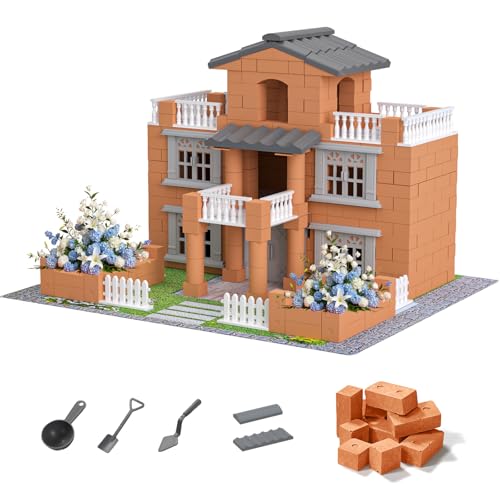
Mini House Building Kit for Kids 8+, Tiny House STEAM Creation with Real Bricks & Tiles, Miniature House Kit Craft Set, Tiny Home Kit DIY Small House Construction Toy
STEAM CREATION: This mini house building kit invites kids to learn while having fun. As they stack real…
As an affiliate, we earn on qualifying purchases.
As an affiliate, we earn on qualifying purchases.
Conclusion
Think of these geometric tiny house designs as your compass in uncharted territory. They guide you through a landscape of modern creativity, transforming small spaces into bold statements. Just like a skilled sailor navigates by the stars, you can carve your unique path with these innovative shapes. Embrace the adventure, trusting that each angular turn brings you closer to a home that’s not just built, but truly inspired—your personal masterpiece in a world of endless possibilities.

Wall!Supply 3D Wall Panels – Reclaimed Modern Asian Teak Wood – Home Decor Wallpaper Alternative for Living Room, Bedroom & Office – Easy DIY Installation – 10 Pack, Covers 9.6 Sq Ft
Premium real wood wall panels: beautiful hand-selected reclaimed and upcycled Asian teak wood wall panels
As an affiliate, we earn on qualifying purchases.
As an affiliate, we earn on qualifying purchases.

Alpine 40 Gallon Commercial Outdoor Trash Can with Lid – Modern Heavy Duty Large Outdoor Garbage Can with Durable Plastic Bin, Slatted Recycled Plastic Panels for Patio, Parks, Trails & Resorts (Grey)
Large Capacity: Alpine industrial garbage can holds up to 40 gallons, offering visible, spacious waste management without taking…
As an affiliate, we earn on qualifying purchases.
As an affiliate, we earn on qualifying purchases.