
Installing a green roof on your tiny home boosts sustainability by absorbing rainwater, reducing runoff, and filtering pollutants, which benefits local waterways and the environment. It also helps regulate temperature, lowering energy costs, and creates a habitat for pollinators and small wildlife, supporting urban biodiversity. Plus, it enhances your home’s aesthetics and value while promoting eco-friendly living. Keep exploring to learn more about how green roofs can transform your tiny home lifestyle.
Key Takeaways
- Green roofs improve energy efficiency by providing insulation, reducing heating and cooling costs in tiny homes.
- They promote stormwater management by absorbing rainfall, lowering flood risks and easing urban drainage systems.
- Green roofing enhances biodiversity, creating habitats for pollinators and supporting local ecosystems in small-scale settings.
- Installation is simple and affordable, using lightweight materials suitable for tiny home roofs without structural modifications.
- Green roofs boost property value and aesthetic appeal, fostering sustainable living and environmental stewardship.
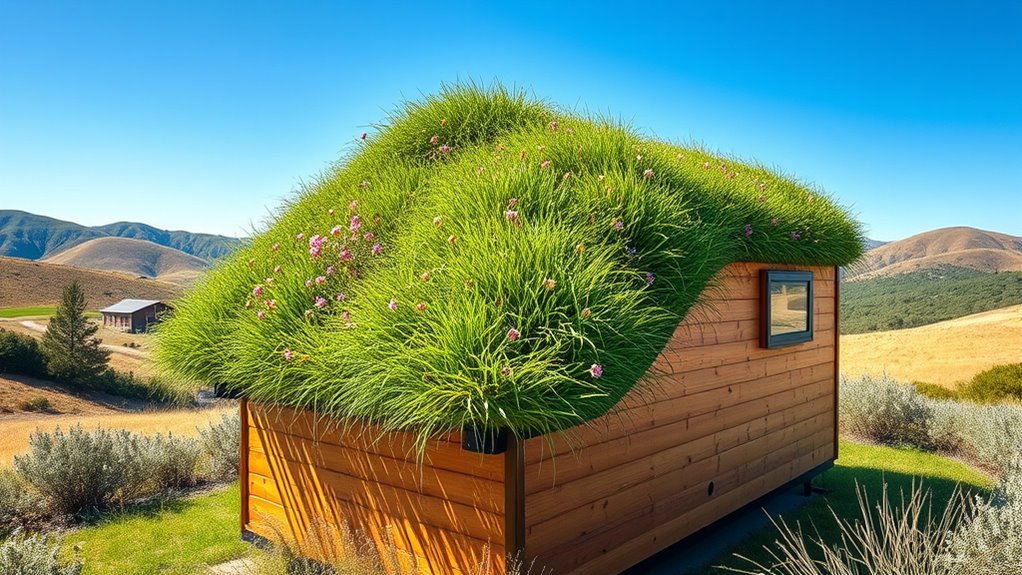
Green roofing has become a popular choice for tiny homes aiming to reduce their environmental impact. When you choose a green roof, you’re not just adding visual appeal—you’re actively contributing to better stormwater management. Unlike traditional roofs that shed water quickly, a green roof absorbs rainfall, slowing runoff and preventing overwhelming local drainage systems. This means less risk of flooding and reduced strain on city infrastructure, especially during heavy storms. By installing a green roof, you help filter rainwater naturally, removing pollutants before they reach waterways. This process keeps local streams and lakes healthier, which benefits your community and the environment.
Green roofs enhance stormwater management and protect local waterways.
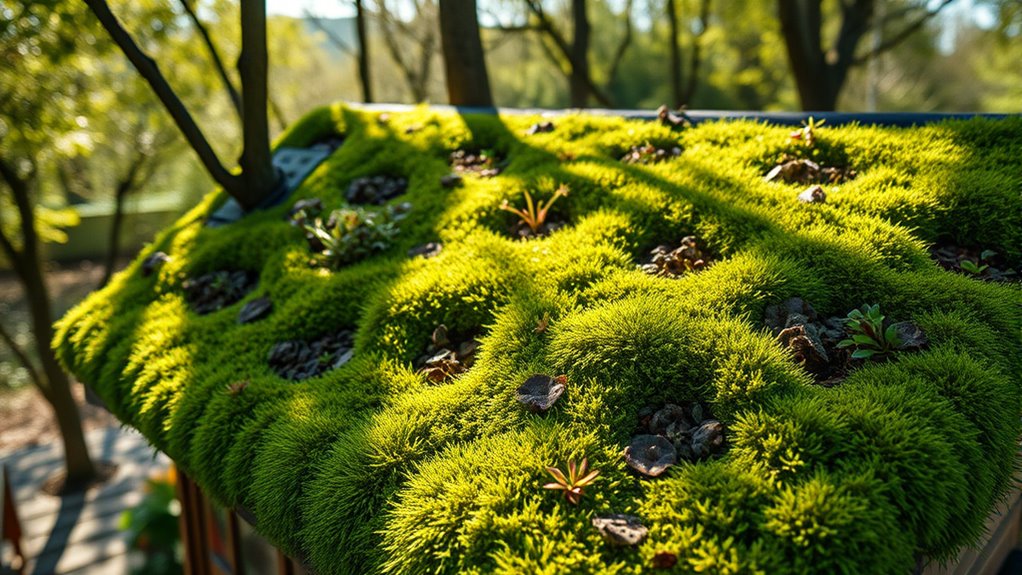
Beyond managing stormwater, a green roof can markedly enhance biodiversity. You might think of tiny homes as small spaces, but they can become essential mini-ecosystems. Installing native plants or drought-resistant species creates habitats for insects, birds, and pollinators. This biodiversity boost is critical, especially in urban or developed areas where natural habitats are limited. As you nurture plants on your roof, you’re creating a small sanctuary that attracts beneficial insects like bees and butterflies, which are essential for pollination. Over time, this can lead to increased ecological diversity in your neighborhood and help support local flora and fauna. Additionally, green roofs can extend the lifespan of your roof by protecting it from UV rays and harsh weather conditions, which is an important environmental benefit.
The process of installing a green roof might seem complex, but many systems are designed with simplicity and affordability in mind. You’ll typically lay down a waterproof membrane first, then add a root barrier, followed by a lightweight soil medium suited for your chosen plants. You don’t need a sprawling yard to make a difference—your tiny home’s roof becomes a focal point for ecological benefits. Plus, green roofs can improve insulation, reducing heating and cooling costs, which aligns with your goal of sustainability.
As you consider this upgrade, think about how it aligns with your values. A green roof isn’t just about aesthetics; it’s a practical step toward environmental stewardship. It helps you manage stormwater more effectively while providing a haven for local wildlife. You’ll enjoy the personal satisfaction of knowing you’re contributing to a healthier planet, all from your tiny home. The added benefits—like energy savings, increased property value, and a unique living space—make a green roof an investment that pays off on many levels. Embracing this sustainable design helps you reduce your ecological footprint and promotes urban resilience, making your tiny home a true example of eco-friendly living.
Frequently Asked Questions
How Long Does a Green Roof Typically Last on a Tiny Home?
A green roof on your tiny home typically lasts 20 to 40 years, depending on material durability and maintenance. You should choose high-quality, durable materials like root-resistant membranes and sturdy growing mediums to maximize roof longevity. Regular inspections and proper upkeep can extend its lifespan, ensuring your eco-friendly roof remains functional and vibrant for decades. Proper installation and ongoing care are key to getting the most out of your green roof.
What Maintenance Is Required for a Green Roof?
Maintaining a green roof means managing moisture, mulch, and meticulous plant choices. You’ll need to regularly check for debris and weeds, ensuring plants are thriving. Watering needs vary based on plant selection and weather, so monitor soil moisture and water accordingly. Periodic inspections help prevent leaks and maintain the roof’s integrity. By caring for your green roof thoughtfully, you preserve its lush look and sustainable benefits for years to come.
Are Green Roofs Suitable for All Climates?
Green roofs can suit many climates if you consider climate adaptability and plant selection. You’ll need to choose plants suited for your specific environment, whether it’s hot, cold, or humid, to make sure they thrive. Proper insulation and drainage are vital in extreme conditions. With the right planning and plant choices, green roofing can be a sustainable option for tiny homes across diverse climates, offering benefits like energy efficiency and environmental impact.
How Much Does Installing a Green Roof Cost?
Think of installing a green roof as planting a lush garden on your tiny home’s rooftop. The cost varies like a mosaic, influenced by factors such as size, material options, and your climate. On average, expect to spend between $10 to $25 per square foot, with higher-end materials and complex designs increasing the price. Budget for installation, waterproofing, and ongoing maintenance to keep your rooftop garden thriving.
Can a Green Roof Support Additional Weight From Snow or Rain?
Yes, a green roof can sustain extra weight from snow or rain if designed properly. You need sufficient soil depth and effective drainage systems to manage the added load. Soil depth provides stability, while drainage prevents water buildup that could increase weight and cause damage. Regular inspections and proper maintenance help guarantee your green roof remains safe and durable during heavy weather conditions.
Conclusion
So, why settle for a boring roof when you can have a lush, eco-friendly garden up top? Green roofing for tiny homes isn’t just a trend; it’s a tiny rebellion against dull, gray skies. You get to save energy, boost your curb appeal, and pretend you’re a modern-day gardener, all from the comfort of your compact castle. Who knew that tiny living could be so big on green? Go ahead, make your roof the envy of the neighborhood!