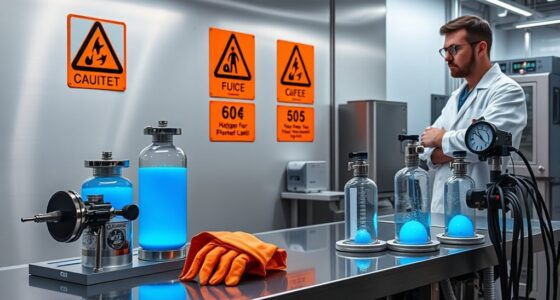

When choosing between green and blue hydrogen, the key factor is their environmental impact. Green hydrogen, produced with renewable energy, offers a near-zero carbon footprint, but its costs and technology are still evolving. Blue hydrogen, made from natural gas with carbon capture, is currently more affordable but raises questions about long-term sustainability. Which option will truly lead the way in reducing global emissions? The answer might surprise you.
Key Takeaways
- Green hydrogen produces zero emissions during electrolysis powered by renewable energy sources.
- Blue hydrogen emits some CO2 during production, even with carbon capture and storage (CCS).
- The environmental impact of blue hydrogen depends on the effectiveness of CCS technology.
- Green hydrogen’s carbon footprint is minimal but depends on the renewable energy source’s sustainability.
- Overall, green hydrogen has a lower carbon footprint compared to blue hydrogen.
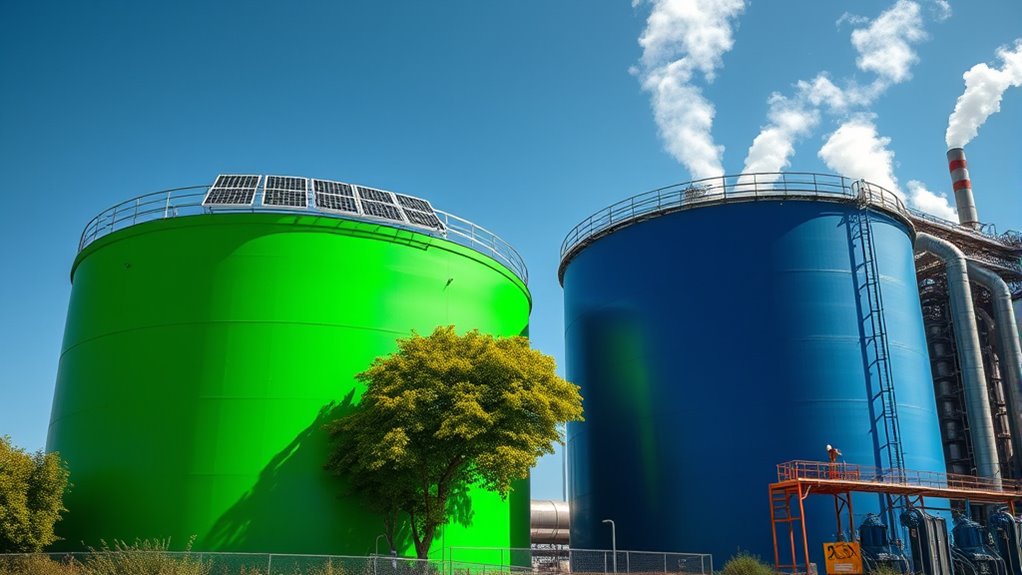
Have you ever wondered which clean energy source will dominate the future? When it comes to hydrogen, the debate often revolves around green versus blue hydrogen, especially regarding their environmental impact and practicality. Green hydrogen is produced through electrolysis powered by renewable energy sources like wind or solar. It’s touted as the truly sustainable option because it emits no carbon during production. However, before you get fully convinced, consider the production costs and technological scalability involved. Currently, green hydrogen remains more expensive than blue hydrogen, mainly because renewable energy infrastructure and electrolysis technology are still developing. The costs of installing large-scale electrolysis plants and ensuring a stable, renewable power supply can be significant. Plus, scaling up green hydrogen production to meet global demand requires substantial investment and technological advancements, which are progressing but not yet at the level needed for mass deployment.
On the other hand, blue hydrogen is produced from natural gas through a process called steam methane reformation. What makes it appealing is that it’s more mature and has a relatively lower production cost compared to green hydrogen. Natural gas infrastructure is well-established, and with carbon capture and storage (CCS) technology, blue hydrogen aims to minimize emissions. Yet, the effectiveness of CCS remains uncertain, and the process still releases some CO2, raising questions about its true environmental benefits. The scalability of blue hydrogen is promising because natural gas is abundant and the technology for its production is proven. But, as more regions push for decarbonization, the reliance on fossil fuels even with CCS might face increasing scrutiny and regulatory hurdles.
The key factors influencing which hydrogen type becomes dominant are tied to technological scalability and economic viability. Green hydrogen’s future depends heavily on decreasing production costs through technological breakthroughs in electrolysis efficiency and renewable energy integration. As these technologies improve and become more affordable, green hydrogen could become more competitive. Conversely, blue hydrogen’s reliance on existing natural gas infrastructure gives it a head start in current markets, but its environmental footprint remains a concern, especially if CCS technology doesn’t advance as hoped. For you, understanding these aspects helps clarify why the race between green and blue hydrogen isn’t just about emissions but also involves economic practicality and the pace of technological innovation. Both options have potential, but their success hinges on how quickly costs drop and how effectively scalable solutions are implemented worldwide. Additionally, the integration of renewable energy sources is crucial for making green hydrogen more feasible on a global scale.
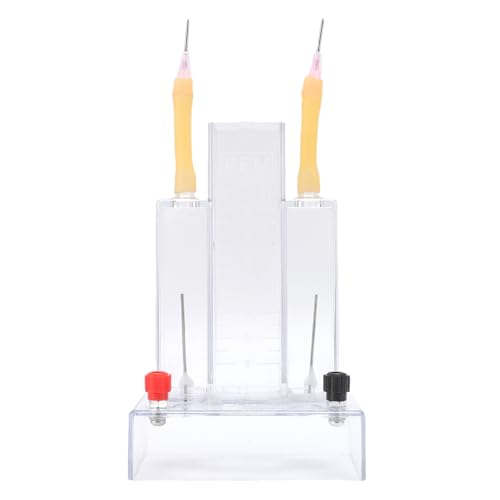
Sunicon PEM Water Electrolysis Demonstrator,Chemical Hydrogen Oxygen Generation Experiment Kit for Laboratory School Teaching Aid
[TRANSPARENT DESIGN]: The robust container is crafted from thickened materials, allowing for easy observation of the experimental process…
As an affiliate, we earn on qualifying purchases.
As an affiliate, we earn on qualifying purchases.
Conclusion
Ultimately, choosing green over blue hydrogen is like steering your spaceship away from the asteroid belt—it’s about prioritizing a sustainable future. While blue hydrogen’s current infrastructure offers convenience, green hydrogen’s zero carbon footprint makes it the clear hero in this showdown. As you navigate today’s energy landscape, remember that embracing renewables today echoes the pioneering spirit of the Renaissance—pushing us toward a cleaner, brighter tomorrow. The future is in your hands, so make the eco-friendly choice.

Jack's Classic 7-3-3 Hydrangea Blue Water-Soluble Fertilizer with Micronutrients to Enhance Blue Flowers, 1.5lbs
7-3-3 Analysis – Great for promoting lush leaves and enhance and maintain blue color in many pink and…
As an affiliate, we earn on qualifying purchases.
As an affiliate, we earn on qualifying purchases.

Wind Hydroelectric Generator Model | STEM Physics Teaching Equipment | Renew
Professional demonstration model designed for teaching the principles of AC wind power generation in physics education.
As an affiliate, we earn on qualifying purchases.
As an affiliate, we earn on qualifying purchases.

Carbon Capture and Storage
As an affiliate, we earn on qualifying purchases.
As an affiliate, we earn on qualifying purchases.