Upgrading your home insulation is the key to reducing energy loss and lowering utility bills. By adding better insulation in your attic, walls, and basement, you create effective thermal barriers that keep warm air inside during winter and outside in summer. Sealing gaps around windows and doors enhances these benefits. Proper installation is essential for maximum efficiency. Keep exploring ways to boost your home’s energy savings and comfort through smarter insulation solutions.
Key Takeaways
- Upgrading attic and wall insulation enhances thermal resistance, reducing heat transfer and energy loss.
- Using high-quality materials like spray foam or blown-in cellulose ensures thorough coverage and sealing gaps.
- Sealing leaks around windows, doors, and vents prevents conditioned air from escaping, improving insulation efficiency.
- Combining insulation upgrades with air sealing maximizes energy savings and minimizes drafts.
- Proper installation and material choice are essential for optimal insulation performance and reduced energy costs.
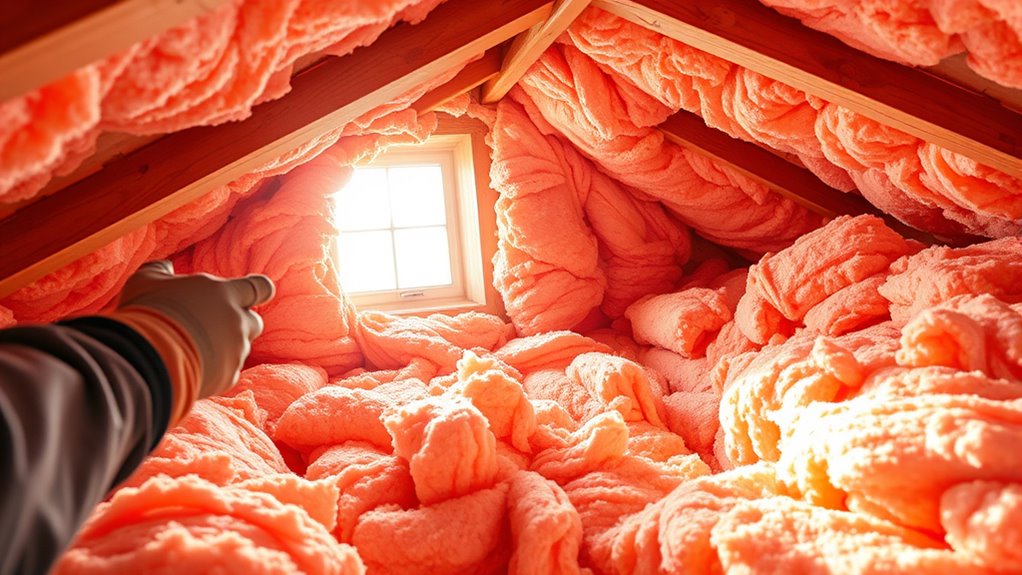
Upgrading your home insulation is one of the most effective ways to improve energy efficiency and reduce heating and cooling costs. When you focus on enhancing your insulation, you’re creating thermal barriers that keep warm air inside during winter and outside during summer. These barriers are essential because they directly influence how well your home resists heat transfer. To achieve this, choosing the right insulation materials is critical. Modern options include fiberglass, spray foam, cellulose, and mineral wool, each offering unique benefits in forming effective thermal barriers.
Enhancing home insulation creates vital thermal barriers that boost energy efficiency and cut heating and cooling costs.
Fiberglass insulation remains a popular choice due to its affordability and ease of installation. It works by trapping air within its fibers, which slows down heat flow and creates a thermal barrier. Spray foam, on the other hand, provides superior sealing capabilities because it expands to fill gaps and cracks, preventing air leaks that can undermine insulation efforts. Cellulose insulation, made from recycled paper products, offers good thermal resistance and is environmentally friendly. Mineral wool is fire-resistant and durable, making it ideal for areas prone to high temperatures or potential fire hazards. When selecting insulation materials, consider their R-value, which measures thermal resistance. A higher R-value indicates better insulation performance and a stronger thermal barrier.
Proper installation of these insulation materials is essential. If gaps or compressions occur, the effectiveness of the thermal barriers diminishes considerably. For example, blown-in cellulose or spray foam can be applied to reach tight spaces and irregular areas, ensuring thorough coverage. You should also pay attention to areas like attics, walls, and basements, where heat loss tends to be most significant. Upgrading your attic insulation can drastically reduce energy bills by preventing heat from escaping through the roof. Similarly, insulating basement walls and exterior walls enhances overall thermal performance and minimizes drafts.
Another important aspect is air sealing, which complements your insulation efforts. You should look for leaks around windows, doors, and vents and seal them with weatherstripping or caulk. This step prevents conditioned air from escaping and unconditioned air from entering, further strengthening the thermal barriers created by your insulation materials. Remember, insulation isn’t just about adding more; it’s about ensuring that your existing insulation performs efficiently by eliminating leaks and gaps. Additionally, understanding the role of insulation in energy conservation can help you prioritize which areas to insulate first for maximum savings.
Frequently Asked Questions
How Often Should Insulation Be Inspected or Replaced?
You should inspect your insulation every 3 to 5 years to guarantee it’s in good condition. The replacement frequency depends on the type and age of your insulation; for example, fiberglass or cellulose may last 15-20 years, but damaged or compressed insulation needs replacement sooner. An inspection schedule helps you catch issues early, saving energy and maintaining comfort. If you notice drafts or increased energy bills, consider an inspection sooner.
What Are the Signs of Inadequate Insulation?
You notice cold drafts or uneven temperatures, like icy fingers slipping through thermal gaps. Walls feel damp or show signs of moisture intrusion, hinting insulation isn’t doing its job. You might see increased energy bills or mold growth, signaling inadequate insulation. These signs suggest your home’s thermal barrier has weak spots, allowing heat to escape or moisture to seep in, compromising comfort and efficiency. Addressing these issues restores warmth and saves energy.
Does Insulation Upgrade Qualify for Energy Efficiency Rebates?
Yes, insulation upgrades often qualify for energy efficiency rebates. By improving your home’s insulation, you can boost energy savings and reduce heating and cooling costs. Check with your local utility or government programs to see if your project meets rebate eligibility criteria. Upgrading insulation not only enhances comfort but also helps you save money through available incentives, making it a smart choice for energy-conscious homeowners.
How Long Does Insulation Installation Typically Take?
Oh, you’ll love how quick the insulation process is—usually, installation takes just a day or two, depending on your home’s size and the installation timeline. You might think it’s a lengthy ordeal, but in reality, it’s a swift upgrade. From start to finish, the installation timeline is designed to minimize disruption, so you can enjoy improved energy efficiency without sacrificing your valuable time.
Are There Any Health Risks Associated With Insulation Materials?
You might worry about health risks from insulation materials, but generally, they’re safe when properly installed. However, some insulation can emit chemical emissions that affect indoor air quality, especially if disturbed or damaged. To minimize risks, guarantee professional installation and choose low-emission, non-toxic options. Regular ventilation helps improve indoor air quality, reducing potential health concerns related to chemical exposure.
Conclusion
Upgrading your home insulation isn’t just about saving energy—it’s about reclaiming comfort and peace of mind. Think of it as wrapping your home in a warm, protective blanket, shielding you from rising costs and unpredictable weather. Don’t let energy loss steal your comfort; take action now. Remember, every small upgrade builds a fortress of efficiency, making your home a sanctuary that stands strong against the elements—because a well-insulated home isn’t just better for your wallet, it’s better for your life.