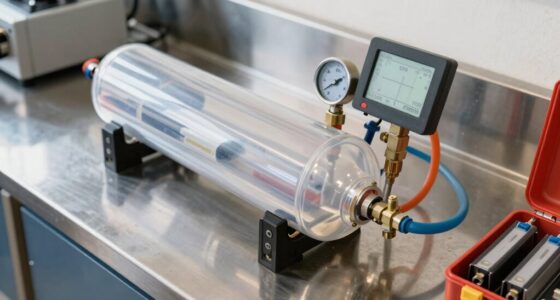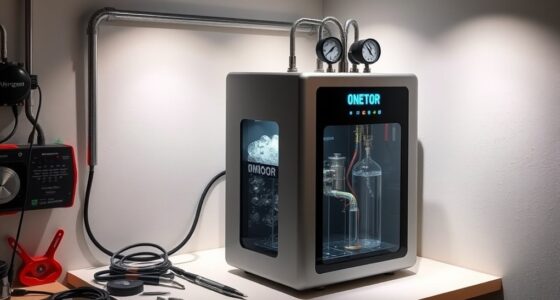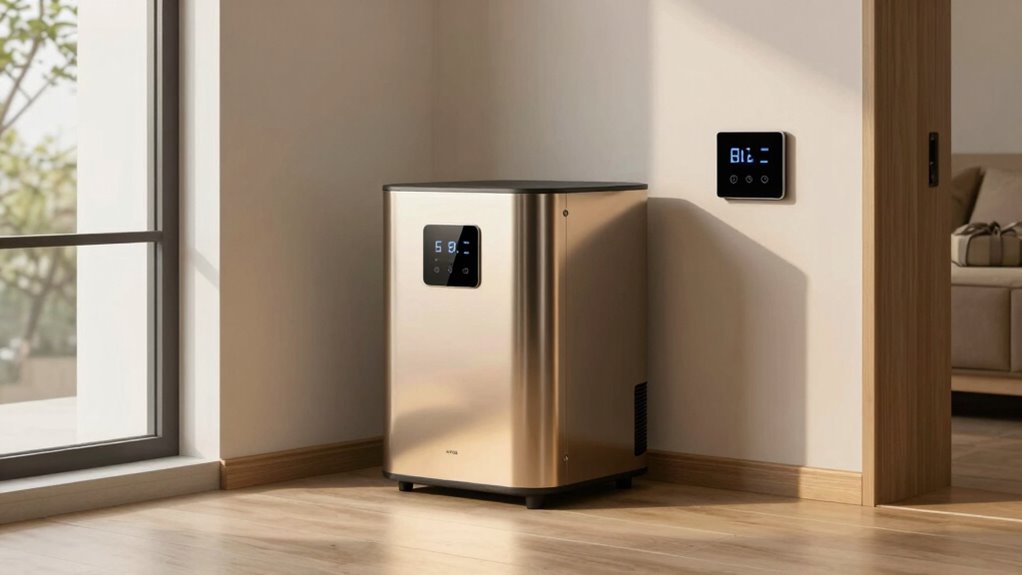

Hydrogen backup systems can fit small homes by converting renewable energy, like solar or wind, into hydrogen, which is stored safely for later use. They provide a reliable power source during outages and reduce reliance on traditional batteries, all while supporting sustainable living. These systems are becoming more compact, affordable, and safe with technological advances. To discover how these innovative solutions could transform your home’s energy independence, keep exploring the details below.

Get compact home essentials delivered free — and shop member deals
- Fast, free delivery on millions of items
- Access to Prime Big Deal Days deals on October 6–7
- Prime Video, Amazon Music and more included
Key Takeaways
- Hydrogen backup systems provide a scalable, long-lasting energy storage solution suitable for small homes’ backup power needs.
- They utilize renewable energy sources like solar or wind to produce hydrogen, promoting energy independence.
- Compact and efficient designs are increasingly suited for residential spaces, fitting within small home environments.
- Safety measures, including durable storage and leak detection, ensure secure integration into home systems.
- Hydrogen fuel cells deliver reliable power during outages, enhancing resilience without requiring large battery installations.
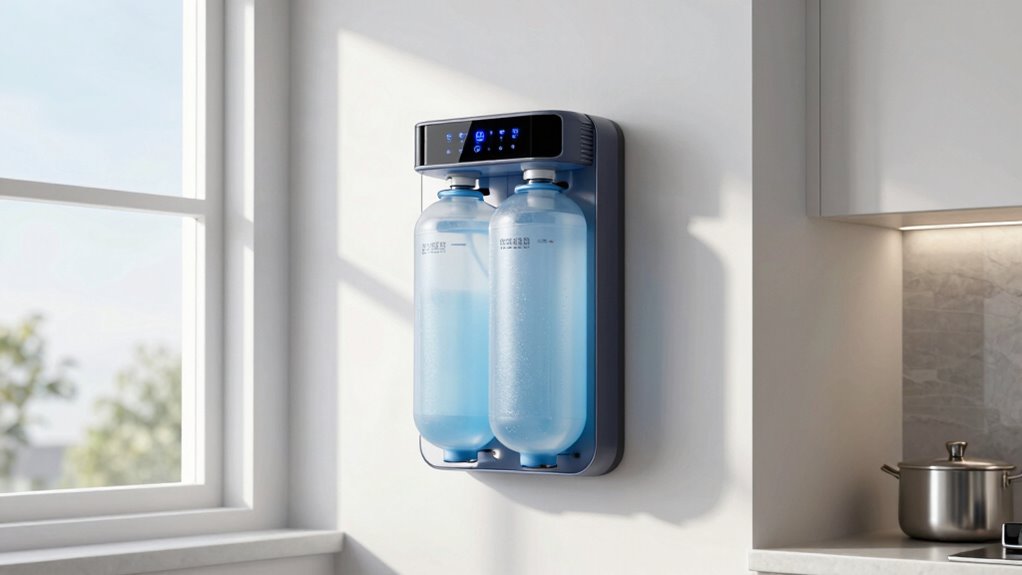
Have you ever wondered how small homes can guarantee a reliable power supply during outages? One innovative solution gaining attention is hydrogen backup systems. These systems harness renewable energy sources to produce hydrogen, which can then be stored and used to generate electricity when the grid goes down. Unlike traditional batteries, hydrogen systems offer a longer-lasting and scalable backup option, making them appealing for small homes seeking energy independence. By integrating renewable energy, such as solar or wind, into the hydrogen production process, you can reduce reliance on fossil fuels, making your home more sustainable and environmentally friendly.
Implementing a hydrogen backup system involves careful planning around safety considerations. Hydrogen is highly flammable, so safety measures are paramount. The storage tanks must be designed with robust materials to prevent leaks, and proper ventilation is essential to avoid the buildup of explosive concentrations. You’ll also need sensors and automatic shutoff mechanisms to detect leaks early and safeguard your home and family. Proper installation by trained professionals ensures that safety standards are met, and regular maintenance keeps the system operating safely over time. Being aware of these safety considerations is key to confidently adopting hydrogen technology for your home. Additionally, ongoing advancements in hydrogen storage safety are making these systems more secure and accessible for residential use.
Safety is crucial with hydrogen backup systems—proper design, ventilation, sensors, and professional installation ensure secure, reliable home power.
One of the biggest advantages of hydrogen backup systems is their ability to provide reliable power during outages, especially when paired with renewable energy sources. When the sun is shining or the wind is blowing, excess renewable energy is used to produce hydrogen through electrolysis. This stored hydrogen can then be converted back into electricity via fuel cells during power outages, ensuring your home stays powered without interruptions. This process also offers the benefit of energy storage without the space constraints typical of batteries, making it an attractive option for smaller properties. Moreover, the development of renewable energy integration technologies is further enhancing the efficiency and feasibility of these systems.
Additionally, hydrogen backup systems can enhance your home’s energy resilience. As the technology advances, costs are expected to decrease, and systems are becoming more compact and efficient. This means small homeowners like you could soon access a clean, reliable backup power source that doesn’t compromise space or safety. The improvements in hydrogen storage materials and safety standards are making these systems more accessible and practical for residential use. While still emerging, hydrogen backup systems hold the potential to revolutionize how small homes approach energy independence, all while aligning with renewable energy goals and maintaining strict safety standards. The AI impact on renewable energy technology is accelerating innovation in this field, making these systems more feasible and attractive for everyday use. If you’re looking for a sustainable and dependable way to safeguard your home’s power supply, keeping an eye on hydrogen technology could be a smart move for the future.
hydrogen backup system for small home
As an affiliate, we earn on qualifying purchases.
As an affiliate, we earn on qualifying purchases.
Frequently Asked Questions
What Is the Cost Comparison Between Hydrogen Backup Systems and Traditional Generators?
Hydrogen backup systems often have higher upfront costs compared to traditional generators due to fuel storage and technology expenses. However, they can be more cost-efficient in the long run because hydrogen offers cleaner, sustainable fuel, reducing maintenance and fuel costs over time. While initial investment might be significant, the savings on fuel and environmental benefits can make hydrogen systems a competitive, eco-friendly alternative for small homes seeking reliable backup power.
How Long Can a Hydrogen Backup System Power a Small Home?
A hydrogen backup system can power your small home like a gentle tide, lasting roughly 24 to 48 hours depending on your energy needs. With adequate hydrogen storage, you can store enough fuel for several days of backup. The fuel cell efficiency plays a key role, converting hydrogen into electricity smoothly. To extend your backup time, consider increasing storage capacity or optimizing energy consumption during outages.
Are Hydrogen Backup Systems Safe for Residential Use?
Hydrogen backup systems can be safe for residential use when properly designed and maintained. Hydrogen safety protocols, like leak detection and ventilation, are essential for preventing hazards. Residential integration involves using secure storage and regulatory compliance to guarantee safety. If you follow these guidelines, hydrogen systems become a reliable, clean backup power source, offering peace of mind without compromising safety for your home.
What Maintenance Is Required for Hydrogen Backup Systems?
You’ll find that maintaining hydrogen backup systems is straightforward, especially with proper attention to hydrogen storage and system durability. Regularly check for leaks, inspect storage tanks for corrosion, and guarantee valves operate smoothly. Keep the system clean and follow manufacturer guidelines for component replacements. This proactive approach minimizes risks, guarantees safety, and ensures your hydrogen backup system functions reliably when you need it most, providing peace of mind for your small home.
How Environmentally Friendly Are Hydrogen Backup Systems?
Hydrogen backup systems are quite environmentally friendly because they utilize renewable sources, like wind or solar, to produce hydrogen, reducing reliance on fossil fuels. When in use, they emit only water vapor, contributing to emission reduction efforts. This clean energy approach minimizes greenhouse gases, making hydrogen backup systems a sustainable choice for your home. You help lower your carbon footprint while ensuring reliable backup power.
Conclusion
Hydrogen backup systems could revolutionize small home energy solutions, offering a clean, reliable power source. Did you know that hydrogen storage can last for days or even weeks, ensuring your home stays powered during outages? As technology advances, these systems become more affordable and efficient, making them a practical choice for many households. Embracing hydrogen backups means you’re not just protecting your home—you’re contributing to a sustainable future.
Fall Picks
fall essentials
As an affiliate, we earn on qualifying purchases.