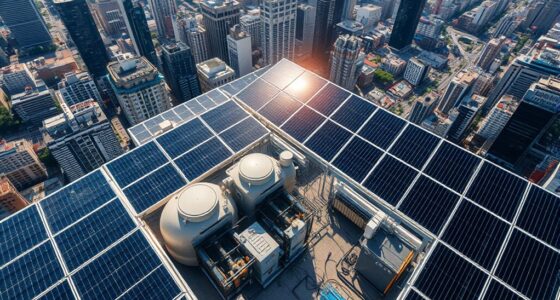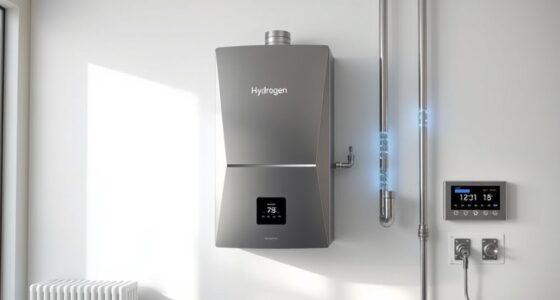

During recent storms, communities that relied on centralized power grids faced prolonged outages, highlighting the need for resilient energy solutions. Hydrogen as last‑mile energy storage offers a promising approach to enhance community preparedness by providing a reliable, high-density power source during emergencies. By integrating hydrogen into microgrids, you can better safeguard critical infrastructure and ensure continuity when traditional systems fail—yet, comprehending how this technology can transform resilience strategies requires exploring its potential and challenges.

Get compact home essentials delivered free with Prime
- Fast, free delivery on millions of items
- Prime Video, Amazon Music and more included
- Member-only deals all year
Key Takeaways
- Hydrogen provides high-density, long-term energy storage, enabling microgrids to operate independently during outages.
- It stores excess renewable energy via electrolysis for reliable power during emergencies.
- Fuel cells convert stored hydrogen back into electricity, ensuring continuous supply to critical infrastructure.
- Integrating hydrogen with microgrids enhances community resilience and reduces dependence on centralized systems.
- Investment in hydrogen infrastructure boosts energy security and supports sustainable, adaptive resilience planning.
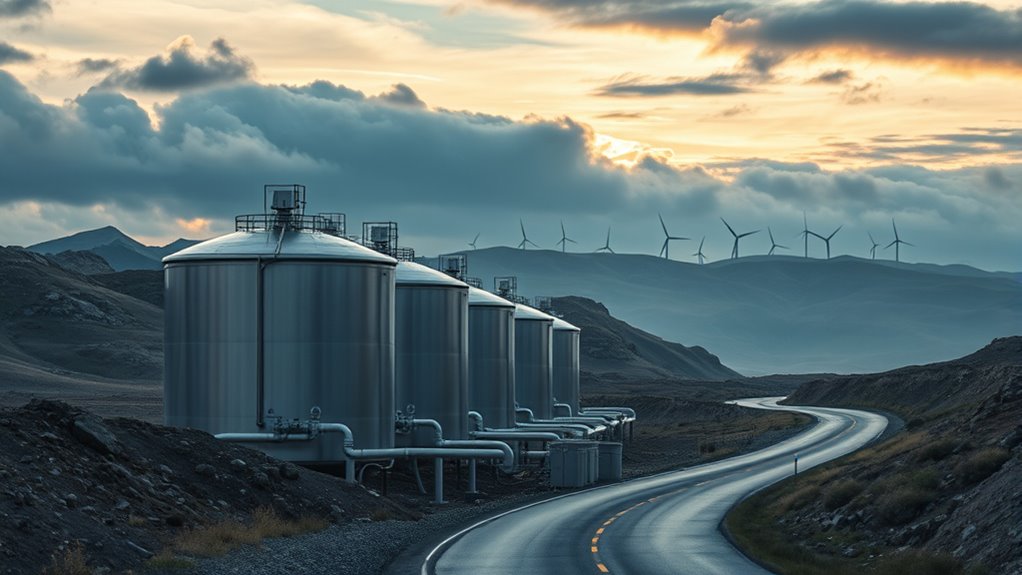
Have you ever wondered how communities bounce back from unexpected disruptions? It’s a pivotal question, especially as our reliance on stable energy sources grows. Resilience planning plays a fundamental role in guaranteeing that when disruptions happen—be it storms, grid failures, or other emergencies—communities can recover quickly and efficiently. One innovative approach involves integrating hydrogen as last-mile energy storage. This strategy isn’t just about having backup power; it’s about creating a resilient, flexible energy system that can adapt to sudden changes and keep essential services running.
Resilience planning with hydrogen ensures quick recovery and continuous vital services during disruptions.
Microgrid integration is at the heart of this resilience. By connecting local energy sources—such as renewable power, batteries, and hydrogen storage—you can create an independent energy network that can operate autonomously if the main grid goes down. Microgrids enhance emergency preparedness by allowing communities to manage their energy locally, reducing dependency on distant centralized systems. When a disruption occurs, these microgrids can isolate from the main grid and draw on stored hydrogen, providing a reliable power source without delay. This seamless shift ensures critical infrastructure like hospitals, emergency services, and communication networks stay operational, even during severe disruptions.
Hydrogen’s role in last-mile energy storage is especially promising because it offers high energy density and long-term storage capacity. Unlike batteries, hydrogen can be stored for extended periods without significant loss, making it ideal for emergency preparedness. During normal operations, excess renewable energy—like wind or solar—can be used to produce hydrogen through electrolysis. When the grid is compromised, this stored hydrogen can be converted back to electricity via fuel cells, providing a clean and reliable power source. This approach not only supports immediate recovery efforts but also promotes a sustainable energy future by reducing reliance on fossil fuels.
Incorporating hydrogen into resilience planning requires thoughtful integration with existing infrastructure. It demands investments in hydrogen production, storage facilities, and fuel cell technology. However, the benefits are substantial: enhanced energy security, reduced downtime during crises, and a resilient community capable of withstanding and recovering from shocks more efficiently. By combining microgrid integration with hydrogen storage solutions, you’re building a smarter, more adaptable energy system. It’s about empowering communities to face emergencies with confidence, knowing they have a reliable, sustainable backup energy option ready to deploy whenever needed. Ultimately, resilience planning isn’t just about protecting assets; it’s about guaranteeing the well-being and continuity of the communities you care about most. Additionally, implementing robust fraud detection techniques can help safeguard these critical energy systems from cyber threats.
As an affiliate, we earn on qualifying purchases.
Conclusion
So, next time a storm knocks out the power, just remember you’ve got hydrogen quietly waiting in the wings—because nothing says “prepared” like a high-density energy storage that’s more reliable than your neighbor’s Wi-Fi. Who needs centralized grids when you can have a futuristic fuel cell tucked away? Resilience planning isn’t just smart; it’s the superhero cape your community deserves—saving the day one bubble of hydrogen at a time.
Columbus Day / Indigenous Peoples' Day Picks
long weekend sales
As an affiliate, we earn on qualifying purchases.