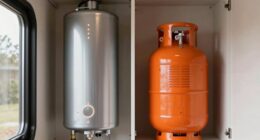
To maintain hydrogen fuel cells safely, regularly inspect and test leak detection systems and safety devices like valves and pressure reliefs. Keep ventilation areas clear to disperse any accidental leaks quickly. Follow proper emergency protocols, including staff training and clear instructions, to respond quickly if needed. Conduct routine maintenance to catch corrosion or damage early. Staying updated with new safety technologies and best practices helps keep operations secure. Continue exploring for more essential safety tips.
Key Takeaways
- Regularly inspect and maintain leak detection systems to ensure early leak identification and system responsiveness.
- Incorporate automatic shut-off valves and pressure relief devices to contain leaks and prevent system failure.
- Ensure proper ventilation in storage and operational areas to disperse hydrogen and reduce accumulation risks.
- Conduct routine safety checks for corrosion, wear, and damage on critical components of fuel cell systems.
- Train staff on emergency protocols, warning signs, and safe handling procedures to respond effectively during incidents.

Are hydrogen fuel cells safe to use? That’s a common question, especially given the flammable nature of hydrogen. The truth is, with proper safety measures in place, hydrogen fuel cells are quite safe. The key lies in effective hydrogen leak detection and well-designed emergency response protocols. Hydrogen is lightweight and disperses quickly in the air, but it can pose risks if leaks go unnoticed. That’s why installing reliable hydrogen leak detection systems is critical. These sensors can identify even tiny leaks early, triggering alarms and shutdown procedures before any danger escalates. Regularly testing and maintaining these detectors ensures they stay responsive and accurate.
Hydrogen fuel cells are safe with proper leak detection and emergency protocols in place.
When working with hydrogen fuel cells, you need to understand emergency response protocols thoroughly. This means knowing exactly what steps to take if a leak occurs or if an incident happens. Immediate action might include evacuating the area, shutting down the system, and venting hydrogen safely to prevent accumulation. Training staff or anyone involved in handling hydrogen to recognize warning signs and follow established protocols can prevent accidents from worsening. Having clear, accessible instructions on-site makes a huge difference in crisis situations.
Additionally, the design of the fuel cell system itself plays a crucial role in safety. Modern fuel cells are built with multiple safety features, such as automatic shut-off valves and pressure relief devices, which activate if a leak or pressure spike is detected. These safety measures work together to contain any issues and minimize risk. Regular inspections and maintenance are essential to ensure all safety devices function properly. This includes checking for corrosion, wear, or damage that could compromise system integrity. Furthermore, advancements in AI-powered safety systems are increasingly being integrated into hydrogen fuel cell technology to enhance monitoring and response capabilities.
You should also be aware of the importance of proper ventilation in areas where hydrogen is used or stored. Good airflow helps disperse any leaked hydrogen quickly, reducing the chance of accumulation and ignition. Combining this with hydrogen leak detection and emergency protocols creates a thorough safety approach.

FJC – Nitrogen/Hydrogen Electronic Leak Detection System (5109)
Made To Withstand Even The Toughest Jobs
As an affiliate, we earn on qualifying purchases.
As an affiliate, we earn on qualifying purchases.
Frequently Asked Questions
How Often Should Hydrogen Fuel Cell Safety Audits Be Conducted?
You should conduct hydrogen fuel cell safety audits at least annually, aligning with your inspection schedules and maintenance protocols. Regular inspections help identify potential issues early, ensuring safety and efficiency. Depending on usage and environment, more frequent audits might be necessary. Staying consistent with these audits keeps your system compliant, reduces risks, and maintains peak performance. Always review manufacturer guidelines and local regulations to determine the most appropriate inspection frequency.
What Are the Best Emergency Procedures for Hydrogen Leaks?
Imagine a hydrogen leak occurs in your facility; your immediate emergency response should be to evacuate the area and activate the alarm. Use a fire extinguisher rated for gas fires if safe, and avoid sparks or open flames. Ventilate the zone if possible, and shut off the hydrogen supply. Quickly inform emergency services, and ensure everyone stays clear until professionals confirm the leak is sealed and safe.
Are There Specific Training Requirements for Handling Hydrogen Fuel Cells?
You need to follow specific training protocols when handling hydrogen fuel cells. This includes understanding proper handling procedures, safety measures, and emergency responses. You should receive thorough instruction on leak detection, ventilation, and fire prevention. Regular drills and ongoing education are essential to stay updated on safety standards. By adhering to these training requirements, you’ll be better prepared to handle hydrogen safely and respond effectively in case of emergencies.
How Do Weather Conditions Affect Hydrogen Fuel Cell Safety?
Weather impact and temperature fluctuations can substantially affect hydrogen fuel cell safety. When temperatures rise or fall sharply, it can cause pressure changes within the system, increasing the risk of leaks or damage. Cold weather may lead to freezing issues, while heat can accelerate material degradation. You should monitor weather conditions regularly and implement protective measures, such as insulation and pressure regulation, to guarantee safe operation in varying environmental conditions.
What Are the Long-Term Health Risks of Hydrogen Fuel Cell Exposure?
Exposure to hydrogen fuel cells over the long term could impact your lung health, potentially causing irritation or respiratory issues if leaks occur. You might also experience neurological effects, like headaches or dizziness, especially with prolonged or high-level exposure. To protect yourself, make certain proper ventilation, use safety gear, and regularly check for leaks. Staying informed and cautious helps minimize these risks and keeps your health safeguarded.

KyuerWK Petcock Fuel Shutoff Valve, 1/4 Gas Inline Fuel Shut Off Valve On-Off Switch for 50/70/ 90/110/ 125/140/ 150cc Motorcycle, ATV, Go Kart, Dirt Bike, Mini bike, Scooter, Baja, Tao Tao (2 PCS)
Applicable to 50/ 70/ 90/ 110/ 125/ 140/ 150cc Motorcycle, ATV, Go Kart, Dirt Bike, Mini bike, Scooter,…
As an affiliate, we earn on qualifying purchases.
As an affiliate, we earn on qualifying purchases.
Conclusion
To keep hydrogen fuel cells safe, you must monitor their systems, follow proper handling procedures, and stay informed about safety updates. You should inspect regularly, maintain vigilance, and prioritize safety at every step. By doing so, you guarantee safety for yourself, others, and the environment. Remember, safety isn’t just a task; it’s a mindset. Embrace caution, practice awareness, and stay committed to safety—because when it comes to hydrogen fuel cells, safety is your best fuel.
hydrogen safety pressure relief device
As an affiliate, we earn on qualifying purchases.
As an affiliate, we earn on qualifying purchases.

Horizon Fuel Cell Technologies Solar Hydrogen Education Kit
Horizon puts renewable energy technology into the hands of our future scientists
As an affiliate, we earn on qualifying purchases.
As an affiliate, we earn on qualifying purchases.