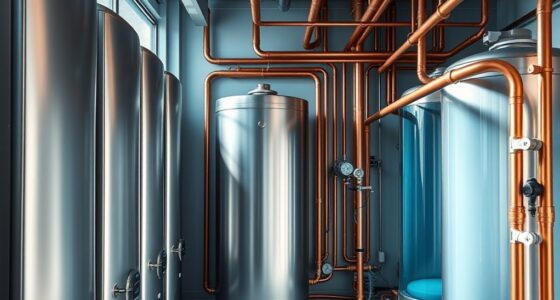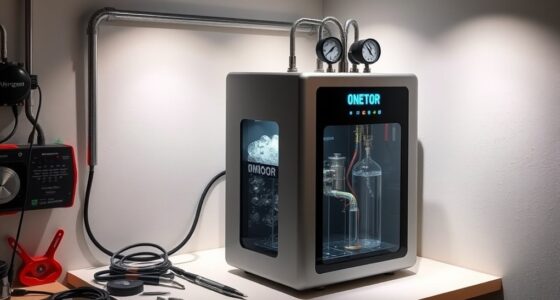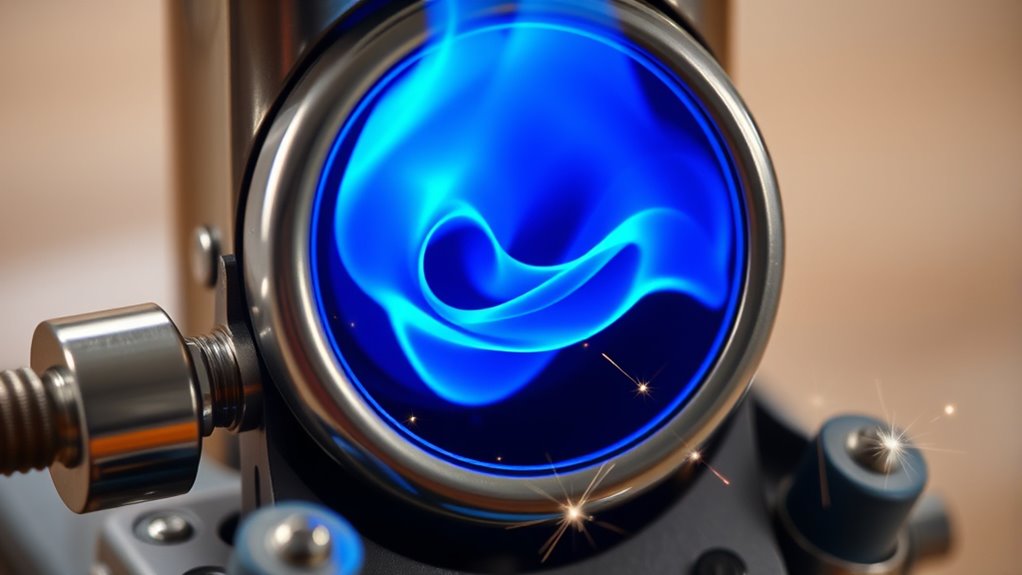

Hydrogen heaters work by using stored or supplied hydrogen to produce heat through combustion or electrochemical fuel cells. In combustion, hydrogen reacts with oxygen to create a high-temperature flame, while fuel cells generate electricity that heats your space efficiently. Because hydrogen is eco-friendly and produces only water vapor, these systems are a cleaner alternative to traditional heaters. To find out more about how these innovative heaters operate and their safety features, keep exploring further.
Key Takeaways
- Hydrogen heaters use stored hydrogen, either as compressed gas or liquid, to generate heat through combustion or fuel cell reactions.
- In combustion systems, hydrogen reacts with oxygen, producing a high-temperature flame that heats the target area.
- Fuel cell heaters convert hydrogen and oxygen into electricity, which then produces heat for space or water heating.
- Safety features like leak detection sensors and proper ventilation are essential to prevent hydrogen leaks and ensure safe operation.
- System safety protocols include secure storage, automatic shut-off valves, and adherence to standards to minimize fire and explosion risks.
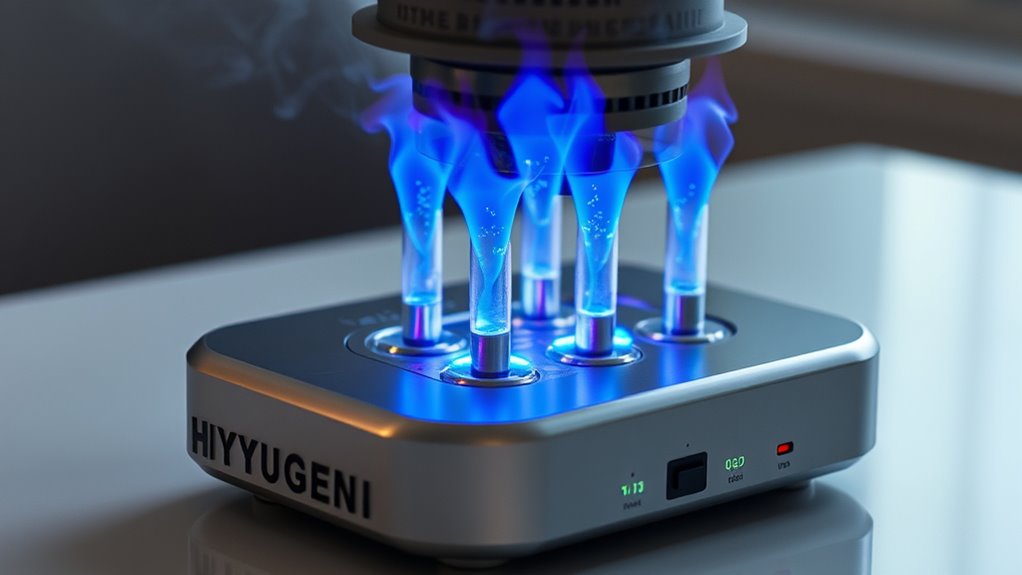
Have you ever wondered how hydrogen heaters generate warmth? At their core, these systems rely on hydrogen as a fuel source, which is produced through specialized processes. Hydrogen production typically involves methods like electrolysis, where electricity splits water into hydrogen and oxygen, or steam methane reforming, which extracts hydrogen from natural gas. Once produced, hydrogen is stored either as a compressed gas or in a liquid state, ready to be used as a clean, efficient fuel. When you activate a hydrogen heater, hydrogen flows into a combustion chamber or a fuel cell, depending on the system’s design. In a combustion-based heater, hydrogen reacts with oxygen from the air, creating a high-temperature flame that heats air or water. In fuel cells, hydrogen reacts with oxygen electrochemically, generating electricity and producing heat as a byproduct. This process is highly efficient and produces no harmful emissions besides water vapor, making it an eco-friendly alternative to traditional heating methods. Additionally, the technology behind hydrogen heaters continues to evolve, improving safety features and efficiency standards. However, handling hydrogen requires careful safety considerations. Because hydrogen is highly flammable and has a very low ignition point, strict safety protocols are essential. When designing or operating a hydrogen heater, you need reliable leak detection systems, proper ventilation, and secure storage to prevent accidental leaks. Hydrogen’s small molecules can easily escape through tiny openings, increasing the risk of combustion if not managed properly. Consequently, safety considerations are integrated into every stage of hydrogen heater use—from production and storage to distribution and combustion. Modern systems include sensors that detect leaks instantly, automatic shut-off valves, and robust insulation to minimize risks. Building codes and safety standards strictly regulate hydrogen handling, ensuring that users are protected from potential hazards. Training and awareness are equally important, so you should always follow manufacturer guidelines and safety procedures when working with hydrogen-based heating systems.
Top picks for "hydrogen heater work"
Open Amazon search results for this keyword.
As an affiliate, we earn on qualifying purchases.
Frequently Asked Questions
What Safety Precautions Are Necessary for Hydrogen Heater Operation?
When operating a hydrogen heater, you should follow safety protocols like ensuring proper ventilation and checking for leaks regularly. Always keep fire extinguishers nearby and avoid open flames around the heater. Familiarize yourself with emergency procedures, such as shutting off the system quickly and evacuating if necessary. Wear appropriate protective gear, and never operate the heater if you notice any signs of damage or leaks.
How Long Does a Hydrogen Heater Typically Last?
You can expect a hydrogen heater to last around 15 to 20 years with proper maintenance. That’s like almost two decades of reliable warmth, making it a durable choice. Regular upkeep, such as inspecting seals and cleaning components, extends its lifespan and guarantees efficiency. The durability lifespan depends on usage and care, so staying vigilant with maintenance requirements helps your hydrogen heater serve you well over time.
Can Hydrogen Heaters Be Used Outdoors Effectively?
Yes, hydrogen heaters can be used outdoors effectively. They’re designed with outdoor durability and weather resistance in mind, so they withstand various conditions like rain, wind, and cold temperatures. Just guarantee you install the heater properly and follow manufacturer guidelines for outdoor use. With the right setup, you’ll enjoy efficient heating outdoors without worrying about weather-related damage or reduced performance.
What Are the Environmental Impacts of Hydrogen Heaters?
Hydrogen heaters substantially reduce emissions when powered by renewable energy sources, making them an eco-friendly choice. For example, if a community switches to hydrogen heating from fossil fuels, they can lower their carbon footprint and promote sustainable practices. However, producing hydrogen responsibly is essential to avoid environmental harm. Overall, hydrogen heaters support emission reduction goals, but their environmental benefits depend on clean hydrogen production methods.
How Does the Cost Compare to Traditional Heating Systems?
You’ll find that hydrogen heaters generally have a higher initial cost than traditional heating systems, but the cost comparison improves over time thanks to energy savings. They use cleaner fuel, which can reduce your utility bills and environmental impact. While the upfront investment might be steep, the long-term benefits include lower operating costs and a smaller carbon footprint, making them a smart choice if you prioritize sustainability and energy efficiency.
Conclusion
So, now you’ve got a hydrogen heater humming along, turning water into warm bliss. Just imagine, next time you crank it up, you’re basically fueling a tiny, eco-friendly rocket ship right in your basement—minus the astronaut suit. Who knew that splitting water could warm your home while making you feel like a futuristic wizard? Just don’t forget to thank those tiny hydrogen atoms for their fiery party—your house’s new best friends in the climate-friendly revolution.