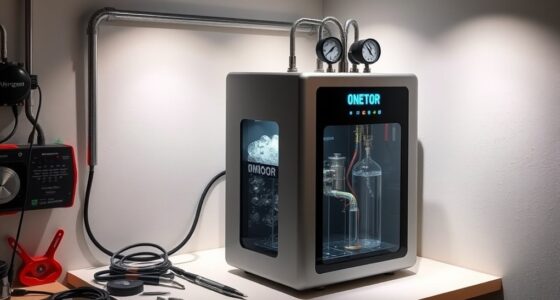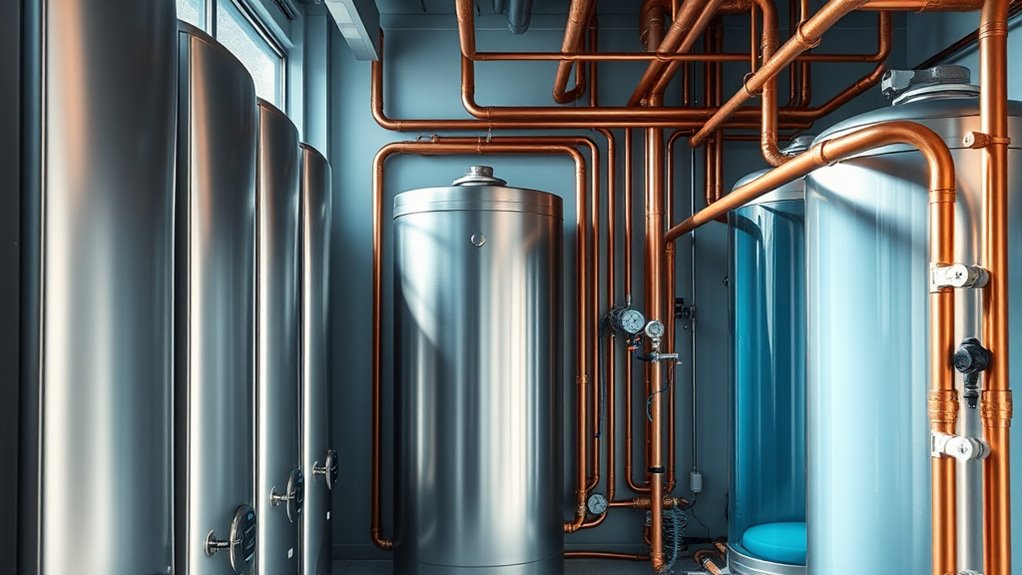

Integrating hydrogen heating and water systems involves ensuring safe storage, leak detection, and proper ventilation to prevent hazards. You should have professional installation with secure connections and sensors that automatically shut off in case of leaks. Regular maintenance and safety features like shutoff valves enhance reliability. Following safety protocols makes your system safer and more efficient. Keep exploring to discover key safety measures and how they make hydrogen energy a practical household option.
Key Takeaways
- Ensure proper system design with secure connections and leak detection for safe hydrogen heating and water integration.
- Follow safety protocols during installation, including ventilation and pressure controls, to prevent hazards.
- Incorporate safety features like sensors and automatic shutoff valves for real-time leak detection and system safety.
- Conduct regular maintenance and inspections to maintain system safety and reliable operation.
- Provide household members with clear emergency procedures and safety training for hydrogen system use.
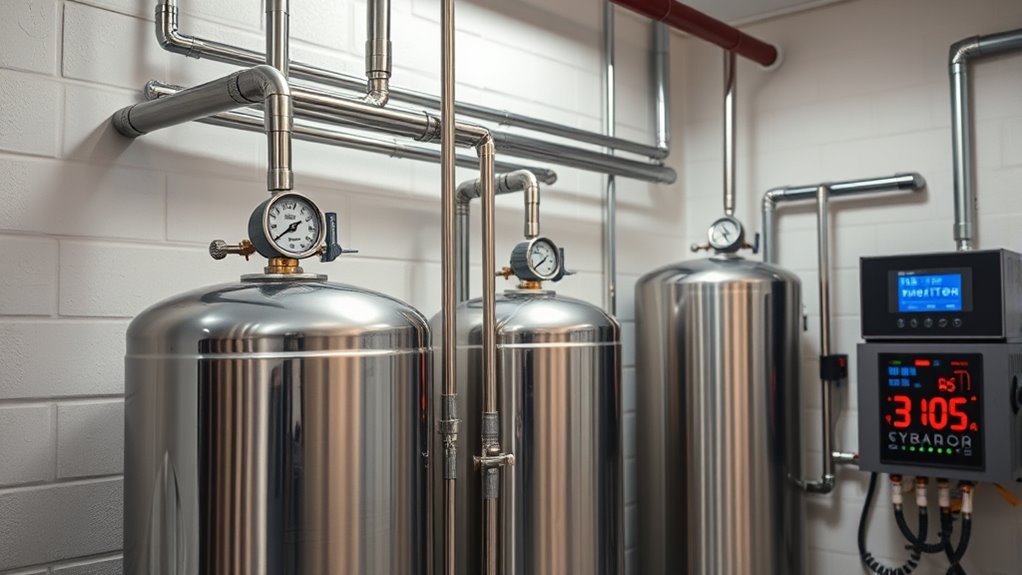
Hydrogen heating and water systems are emerging as promising alternatives to traditional energy sources, offering a cleaner and more sustainable way to manage household energy needs. As you consider integrating these systems into your home, understanding how hydrogen storage plays a crucial role is vital. Hydrogen storage involves safely containing the gas in tanks or other reservoirs until it’s needed for heating or hot water. Proper storage solutions are designed to prevent leaks, minimize risks, and ensure a steady supply. The challenge lies in handling hydrogen’s flammability, which is why safety protocols are paramount. These protocols include rigorous leak detection, ventilation standards, and regular maintenance to prevent accidents. When stored correctly, hydrogen can be a safe, reliable energy carrier, significantly reducing your carbon footprint.
Switching to hydrogen-based systems means adopting strict safety measures. You’ll want to work with professionals who prioritize safety protocols during installation and maintenance. They ensure that hydrogen is stored under the right pressure and temperature conditions, and that all connections are secure. Installing sensors to detect leaks and automatically shut off the system if necessary is also essential. These safety features help build confidence in using hydrogen for everyday applications. Additionally, clear guidelines about handling and emergency procedures should be communicated to everyone in your household. Adhering to safety protocols not only protects your family but also ensures compliance with local regulations, which are becoming increasingly stringent as hydrogen technology becomes more widespread.
Furthermore, understanding the importance of emotional support can help families adapt more smoothly to these technological changes, ensuring safety and well-being during the transition. Incorporating hydrogen heating and water systems isn’t just about technology; it’s about creating a safe environment for your home. The safety protocols surrounding hydrogen storage may seem complex initially, but they are designed to make your progression to cleaner energy seamless and secure. You’ll find that many modern systems include built-in safety features that minimize risks, such as automatic shutoff valves and advanced sensors. Regular inspections and maintenance are critical to keep everything running smoothly and safely. By following these protocols diligently, you can enjoy the benefits of hydrogen—such as reduced emissions and enhanced energy independence—without compromising safety.

H2S Gas Detector, Portable Hydrogen Sulfide Detector Gas Leak Detectors & Alarms Electrochemical H2S Monitor Meter Single Gas H₂S Sensor Poisoning Alarm with Clip and LCD Screen Backlight
H2S Monitor: The H2S Monitor gas monitor is widely used in petroleum, chemical, environmental protection, metallurgy, refining, gas…
As an affiliate, we earn on qualifying purchases.
As an affiliate, we earn on qualifying purchases.
Frequently Asked Questions
What Are the Initial Costs of Integrating Hydrogen Systems?
The installation costs for integrating hydrogen systems can be significant, often ranging from moderate to high depending on your home’s size and existing infrastructure. You’ll face some integration challenges, like upgrading your water and heating systems to handle hydrogen safely. These initial costs include equipment, safety measures, and professional installation, but they can vary widely based on the complexity of the setup and local regulations.
How Long Is the Lifespan of Hydrogen Heating Components?
Hydrogen heating components typically last around 15 to 20 years, depending on their component durability and usage. Regular system maintenance is essential to guarantee longevity and peak performance. You should check for corrosion, leaks, and wear, especially in high-pressure parts. Proper maintenance helps prevent early failures, extends the lifespan, and keeps your hydrogen heating system running efficiently for many years.
Are There Government Incentives for Adopting Hydrogen Water Systems?
Is the promise of government incentives a beacon guiding your decision? Yes, you can access government grants and policy support when adopting hydrogen water systems. These incentives aim to reduce costs and encourage clean energy solutions. By leveraging available programs, you make a smart move toward sustainability, knowing that government backing can ease your *shift* to innovative, eco-friendly technology. Take advantage of these opportunities to turn your water system into a greener, more efficient investment.
How Do Hydrogen Systems Impact Overall Energy Efficiency?
Hydrogen systems boost your overall energy efficiency by supporting renewable integration and storage optimization. They allow you to store excess renewable energy, reducing waste and ensuring a steady power supply. This means you use energy more effectively, lowering costs and carbon footprint. By integrating hydrogen, you enhance your system’s flexibility, balancing supply and demand, and making your energy use smarter and more sustainable.
What Safety Measures Are Necessary for Hydrogen System Maintenance?
Remember, safety first—”Better safe than sorry.” When maintaining hydrogen systems, you need strict emergency protocols and leak detection measures. Always wear appropriate protective gear, check for leaks regularly with sensors, and keep emergency shut-off valves accessible. Guarantee proper ventilation and train staff on handling hydrogen safely. These steps help prevent accidents and ensure smooth, safe operation of your hydrogen heating and water systems.

Watts Little Firefighter Earthquake Gas Shutoff Vertical Valve for Natural Gas and Propane Lines, 3/4" Connection, 5.4 Magnitude, Bracket and Assembly Kit, Silver
EARTHQUAKE GAS SHUTOFF VALVE: The Watts Little Firefighter Earthquake Gas Shutoff Vertical Valve automatically activates to shut off…
As an affiliate, we earn on qualifying purchases.
As an affiliate, we earn on qualifying purchases.
Conclusion
Imagine a future where your home breathes with clean, whispering warmth from hydrogen-powered systems. As you turn on the tap, see the gentle flow of water fueled by innovative technology, symbolizing a sustainable world. By embracing hydrogen heating and water solutions, you become part of this bright, hopeful landscape—where every flicker of warmth and ripple of water paints a cleaner, greener horizon for generations to come. Your choice fuels the future.

Propane/Hydrogen/Nitrogen Professional Gas Reservoir Tank, Heavy Duty Air Compressor Storage Gas Vacuum With Mounting Kit, Large Capacity High Pressure Air Containers(6L/1.56Gal (30x16x21cm))
Carbon steel Air Tank : Our gas canisters are made of 2 mm thick carbon steel material and…
As an affiliate, we earn on qualifying purchases.
As an affiliate, we earn on qualifying purchases.
H2S Gas Detector, Portable Hydrogen Sulfide Detector Gas Leak Detectors & Alarms Electrochemical H2S Monitor Meter Single Gas H₂S Sensor Poisoning Alarm with Clip and LCD Screen Backlight
H2S Monitor: The H2S Monitor gas monitor is widely used in petroleum, chemical, environmental protection, metallurgy, refining, gas…
As an affiliate, we earn on qualifying purchases.
As an affiliate, we earn on qualifying purchases.