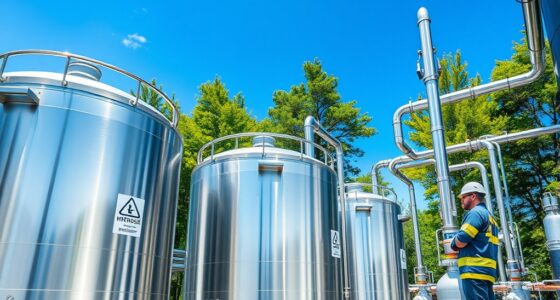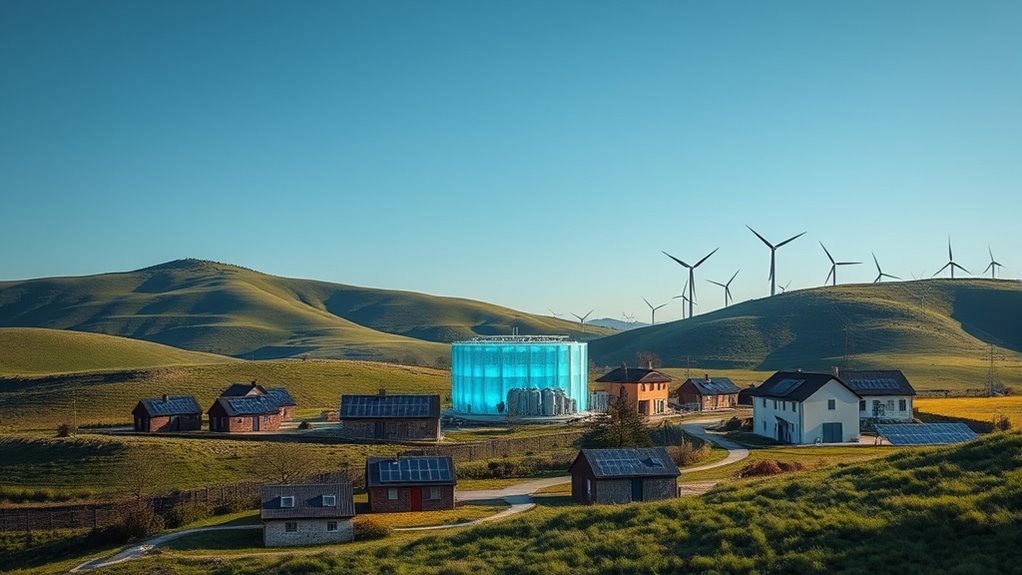

Hydrogen microgrids help small communities access clean, reliable energy by storing excess renewable power as hydrogen. This allows you to generate your own energy, reducing dependence on fossil fuels and increasing stability during demand spikes or low renewable output. Implementing such systems boosts sustainability, creates local jobs, and lowers energy costs. If you’re interested, exploring how these microgrids can transform your community’s energy future can open new opportunities for efficiency and independence.
Key Takeaways
- Hydrogen microgrids provide reliable, clean energy storage for small communities by converting excess renewable power into hydrogen.
- Community involvement enhances project acceptance, ensuring the microgrid aligns with local needs and sustainability goals.
- These microgrids increase energy resilience, reducing dependence on external power sources and supporting emergency preparedness.
- Hydrogen storage solutions enable communities to utilize surplus renewable energy during low production periods.
- Collaboration with local stakeholders promotes economic growth, job creation, and smoother regulatory approval processes.
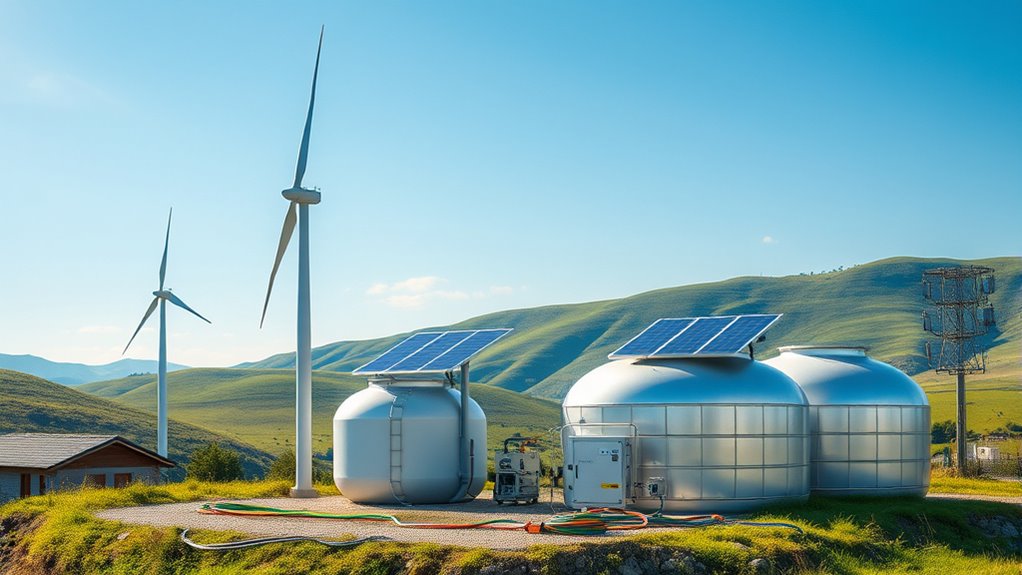
Have you ever wondered how small communities can achieve reliable, sustainable energy? One innovative solution gaining momentum is hydrogen microgrids. These systems use hydrogen as a clean energy source, storing it efficiently for use when needed. Hydrogen storage is a vital component because it allows communities to hold onto excess energy generated during periods of low demand or high renewable output. By converting surplus renewable energy—like wind or solar—into hydrogen through electrolysis, communities can create a stable energy reserve. This process not only guarantees energy availability but also reduces reliance on fossil fuels, making the community’s power supply more sustainable. Incorporating evidence‑based insights into planning ensures more effective and reliable implementation.
Implementing hydrogen microgrids isn’t just about technology; it’s about fostering community engagement. When residents understand the benefits of hydrogen energy—such as reduced emissions and energy independence—they’re more likely to support and participate in the transition. Education campaigns, local workshops, and transparent communication are essential to build trust and enthusiasm. Engaging the community early on helps address concerns about safety and cost, which are common barriers to adopting new energy solutions. When people feel involved, they’re more inclined to embrace the change, advocate for the project, and even contribute ideas for its improvement.
Community engagement fosters trust, addresses concerns, and encourages participation in hydrogen microgrid projects.
As you consider deploying a hydrogen microgrid, community engagement also involves collaboration with local leaders, businesses, and organizations. This collective effort ensures that the project aligns with the community’s specific needs and values. It encourages local investment, whether through funding, labor, or innovative ideas. When residents see tangible benefits—like lowered energy bills or job opportunities—they become active supporters, which boosts the project’s success. Furthermore, community buy-in can facilitate smoother regulatory approvals and foster partnerships with renewable energy providers and technology developers.
Hydrogen storage technology continues to evolve, becoming safer and more cost-effective. Small communities can leverage these advancements to create resilient energy systems that withstand disruptions, reduce carbon footprints, and promote local economic growth. By integrating community engagement with cutting-edge hydrogen storage solutions, tiny communities can transform their energy landscape. They move from dependency on distant power plants to self-sufficient, clean energy hubs. This shift not only enhances local resilience but also sets an example for other small communities aiming for sustainability. In the end, the success of hydrogen microgrids depends on a blend of technological innovation and active community participation—both of which are essential for a sustainable energy future.
Frequently Asked Questions
What Are the Initial Costs of Implementing Hydrogen Microgrids?
The initial costs of implementing hydrogen microgrids vary, but generally, you can expect significant investments in infrastructure and technology. While the economic feasibility improves as you scale and optimize, technological challenges like storage and distribution still exist. You’ll need to budget for equipment, safety measures, and integration with existing systems. Although upfront costs are substantial, long-term savings and sustainability benefits can make hydrogen microgrids a worthwhile investment.
How Do Hydrogen Microgrids Compare Environmentally to Traditional Power Sources?
Hydrogen microgrids are a game-changer for the environment, far surpassing traditional power sources. You’ll see significant emission reductions because they enable renewable integration and produce zero emissions during operation. Unlike fossil fuels, hydrogen microgrids don’t release greenhouse gases, making them a cleaner, sustainable choice. By adopting them, you help combat climate change and create a healthier planet, proving that green energy can be powerful and effective.
What Safety Measures Are Necessary for Hydrogen Storage and Use?
You need to follow strict storage protocols, like using appropriate containers and maintaining proper pressure levels, to guarantee hydrogen safety. Regularly inspect storage systems for leaks and corrosion. Implement emergency procedures, such as evacuation plans and immediate shutdown protocols, to handle potential leaks or fires swiftly. Training community members on these safety measures is essential. By adhering to these guidelines, you minimize risks and promote safe hydrogen use in your microgrid system.
How Scalable Are Hydrogen Microgrids for Growing Communities?
Hydrogen microgrids are quite scalable as your community grows, thanks to ongoing technological advancements. They integrate smoothly with existing energy systems, allowing you to expand capacity as needed. As your community develops, you can increase hydrogen production and storage, ensuring reliable energy supply. Continuous innovation makes these microgrids more cost-effective and efficient, supporting your community’s sustainable growth without significant infrastructure overhauls.
What Maintenance Is Required for Hydrogen Microgrid Systems?
You might worry about maintenance, but hydrogen microgrid systems are designed for easy upkeep. Regular maintenance routines include checking system inspections, monitoring hydrogen storage, and guaranteeing fuel cells operate smoothly. You’ll need to perform these tasks periodically to prevent issues and ensure efficiency. With proper upkeep, your microgrid stays reliable and safe, giving you peace of mind while enjoying clean, sustainable energy for your community.
Conclusion
As you consider the potential of hydrogen microgrids, remember they’re more than just energy solutions—they’re lifelines for tiny communities. Imagine a future where clean power fuels your neighbors’ homes and dreams, breaking the chains of dependency. With every innovation, you hold the power to ignite hope and resilience. Embrace this change, for it’s not just about energy; it’s about empowering hearts and shaping a brighter tomorrow.