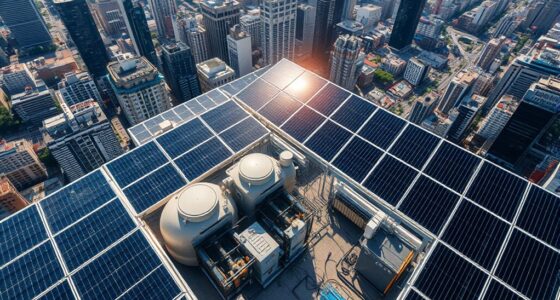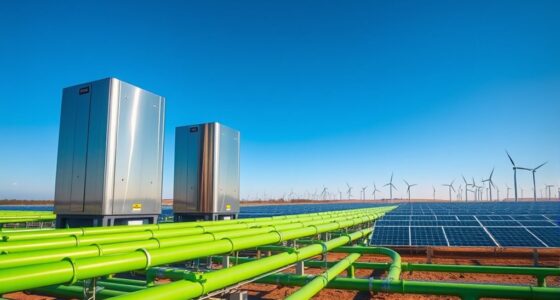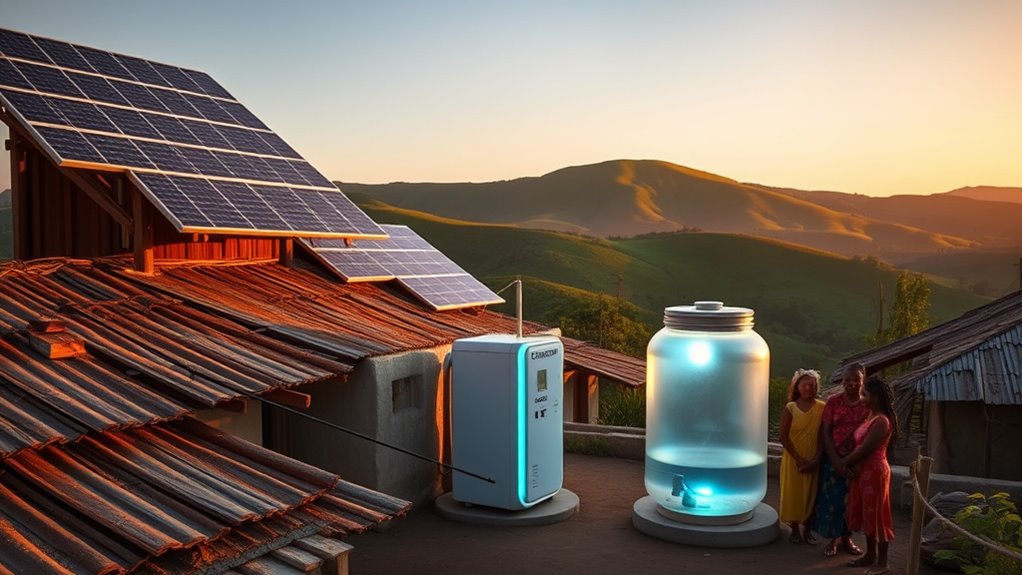

Hydrogen plays a key role in powering off-grid communities by providing a clean, reliable energy source that overcomes traditional fuel limitations. It allows you to store excess renewable energy, like solar and wind, for later use, ensuring a steady power supply no matter weather or time of day. With its environmental and economic benefits, hydrogen helps these communities become more self-sufficient and resilient. Keep exploring to discover how hydrogen can transform remote energy systems even further.
Key Takeaways
- Hydrogen provides a clean, reliable energy source for off-grid communities lacking traditional infrastructure.
- It enables storage of excess renewable energy, ensuring continuous power despite weather or time-of-day fluctuations.
- Hydrogen systems enhance energy security by offering long-term storage and backup power during emergencies.
- Utilizing locally produced hydrogen reduces reliance on fossil fuels and lowers environmental impact.
- Scalable hydrogen solutions empower remote areas to achieve energy independence and support sustainable development.
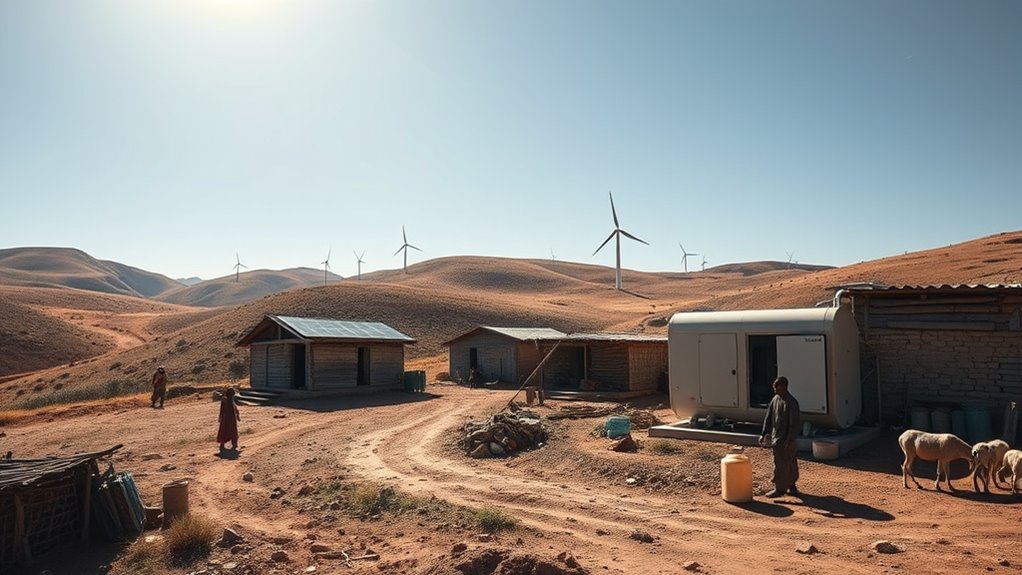
Hydrogen is emerging as a pivotal solution for powering off-grid communities, especially where traditional energy infrastructure is lacking or unreliable. In these settings, access to consistent electricity can be a major challenge, hindering development and quality of life. Hydrogen offers a versatile and clean energy source that can be stored and transported efficiently, making it ideal for remote areas. One of the key advantages of hydrogen is its ability to facilitate renewable integration. By converting excess renewable energy—like solar or wind—into hydrogen, communities can store this energy for later use, smoothing out supply fluctuations and ensuring a steady power supply regardless of weather conditions or time of day.
Hydrogen enables renewable energy storage and reliable power for off-grid communities.
Hydrogen storage plays an essential role in making this system practical. Unlike batteries, hydrogen can be stored in large quantities for extended periods without significant losses. This allows off-grid communities to build a reliable energy reserve, reducing dependence on fossil fuels or unpredictable energy imports. When renewable generation surpasses immediate needs, excess power is used to produce hydrogen through electrolysis. This stored hydrogen can then be converted back into electricity when renewable sources are insufficient, ensuring continuous power supply. This cycle not only enhances energy security but also maximizes the value of renewable resources, turning intermittent inputs into a reliable energy flow.
Furthermore, integrating hydrogen into off-grid energy systems helps reduce carbon emissions, aligning with global efforts to combat climate change. Since hydrogen can be produced using renewable energy, it acts as a clean energy carrier, minimizing environmental impact. This is especially important in remote communities where diesel generators or coal-fired plants might be the only options, often resulting in high emissions and operational costs. Hydrogen’s potential to be produced locally means communities can become more self-sufficient, lowering their reliance on imported fuels and fostering local economic development.
Implementing hydrogen solutions also opens up new opportunities for energy resilience. In emergencies or natural disasters, stored hydrogen can serve as a backup power source, keeping essential services running. As technology advances, the infrastructure for hydrogen storage and renewable integration will become more affordable and scalable, making it increasingly feasible for off-grid communities to adopt. By harnessing hydrogen’s capabilities, you can create a more sustainable, reliable, and environmentally friendly energy system that empowers remote areas to thrive independently of centralized grids.

Green Hydrogen in Power Systems (Green Energy and Technology)
As an affiliate, we earn on qualifying purchases.
As an affiliate, we earn on qualifying purchases.
Frequently Asked Questions
What Are the Safety Concerns With Hydrogen Storage?
You should be aware that hydrogen storage safety concerns include the risk of leaks, which can lead to fires or explosions. To prevent this, prioritize leak prevention measures such as proper sealing and regular inspections. Always handle hydrogen in well-ventilated areas and use certified storage containers. By maintaining strict safety protocols, you can minimize hazards and guarantee safe storage of hydrogen in off-grid communities.
How Cost-Effective Is Hydrogen Compared to Other Energy Sources?
Hydrogen isn’t always the most cost-effective energy source compared to solar or wind, especially when considering economic feasibility and supply chain challenges. While hydrogen can be produced locally, the infrastructure costs and energy input make it pricier initially. However, as technology advances and supply chains improve, hydrogen’s costs could decrease, making it a more competitive option in off-grid communities seeking reliable, sustainable energy solutions.
Can Hydrogen Infrastructure Be Easily Scaled for Small Communities?
Yes, hydrogen infrastructure can be scaled for small communities, but it requires careful planning around community integration and technological scalability. You’ll need to adapt existing systems to local needs and guarantee that the infrastructure can grow as demand increases. While the process involves initial investments, modular and flexible designs help make scaling manageable, allowing small communities to benefit from cleaner energy sources without overwhelming their resources.
What Are the Environmental Impacts of Hydrogen Production Methods?
You might wonder about hydrogen’s environmental impacts, and here’s the truth: production methods vary in their sustainability. When you use renewable sources like wind or solar, emissions reduction is significant, making hydrogen greener. But if fossil fuels power the process, it can lead to higher emissions and environmental harm. So, choosing clean energy for hydrogen production is vital for minimizing environmental impacts and supporting a sustainable future.
How Long Does It Take to Implement Hydrogen Systems in Off-Grid Areas?
Implementing hydrogen systems in off-grid areas typically takes several months to a few years, depending on the deployment timeline and infrastructure development. You’ll need to plan for initial assessments, securing funding, and building the necessary infrastructure like production units and storage facilities. Fast deployment is possible in smaller communities, but larger or remote areas may require more extensive planning and longer timelines to guarantee safe, reliable hydrogen integration.
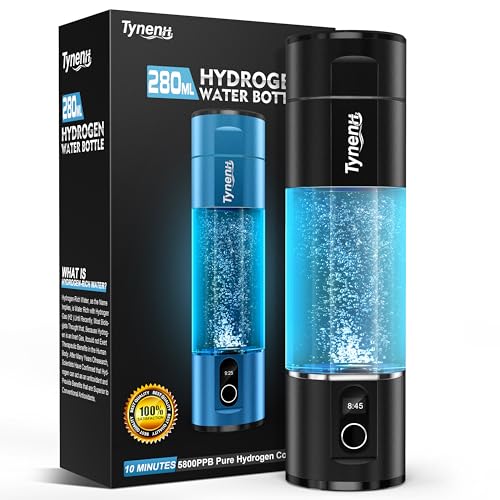
Portable Hydrogen Water Bottle Generator: 280ML Water lonizer Machine with 5800PPB+,SPE/PEM Technology,5/10min,Rechargeable Aquahealth Hydrogen Water,for Travel,Office Fitness Drinking (Black)
💧Hydrogen Water:Hydrogen Water Bottle Generator produces up to 5800 PPB of hydrogen in just 10 minutes to get…
As an affiliate, we earn on qualifying purchases.
As an affiliate, we earn on qualifying purchases.
Conclusion
By now, you see how hydrogen can transform off-grid communities, providing clean, reliable energy where it’s needed most. It offers a sustainable solution that reduces dependence on fossil fuels and promotes independence. But isn’t it worth asking—could embracing hydrogen open a future where remote areas thrive without compromising our planet’s health? Embracing this technology might just be the key to a more equitable, sustainable energy landscape for everyone.

PRETYZOOM Electrolysis Kit Water Electrolysis Demonstration Scientific Apparatus Teaching Aid for Students and Teachers Educational Lab Experiment Equipment 6.49X4.52X2.75In
Core Functionality: This scientific apparatus experiment kit is designed specifically for water electrolysis demonstration, enabling clear visualization of…
As an affiliate, we earn on qualifying purchases.
As an affiliate, we earn on qualifying purchases.

Horizon Fuel Cell Technologies Solar Hydrogen Education Kit
Horizon puts renewable energy technology into the hands of our future scientists
As an affiliate, we earn on qualifying purchases.
As an affiliate, we earn on qualifying purchases.