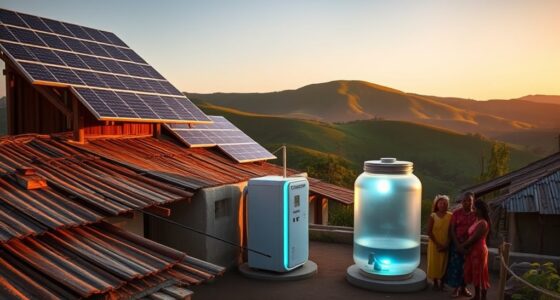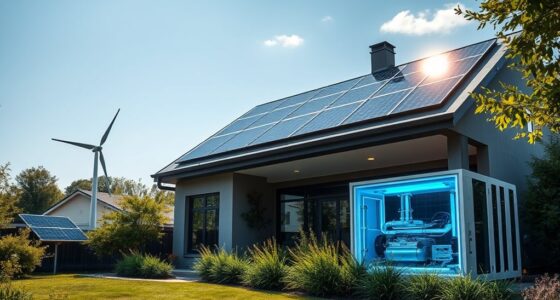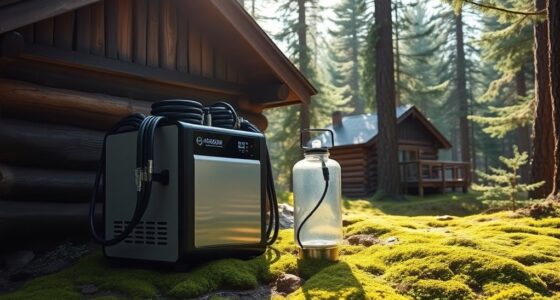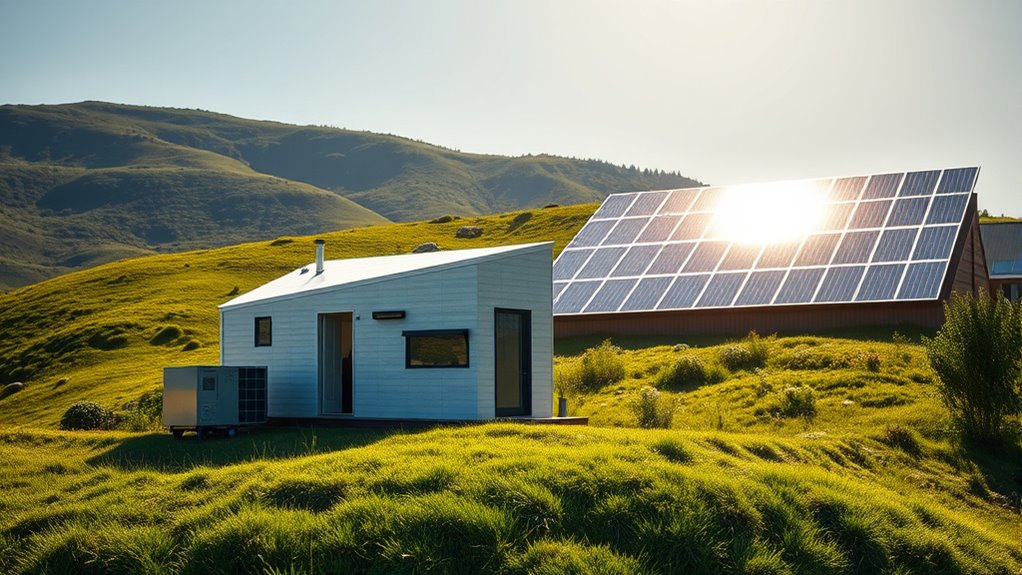

For tiny living, solar power generally makes the most practical choice due to its simplicity, low maintenance, and affordability. Installing solar panels is straightforward and can often be DIY, making it perfect for small spaces. Hydrogen energy, while promising environmentally, involves complex systems, safety concerns, and higher costs that can be challenging for tiny homes. If you want to explore a smarter, easier energy option that suits small-scale living, there’s more to contemplate.
Key Takeaways
- Solar energy is more cost-effective and easier to install for tiny homes, requiring minimal infrastructure.
- Hydrogen systems involve complex equipment, higher costs, and safety concerns, making them less practical for small spaces.
- Solar power offers low maintenance and reliable operation, ideal for tiny living environments.
- Hydrogen production depends on renewable energy sources, but current infrastructure costs limit its feasibility for small-scale use.
- Overall, solar energy provides a simpler, more accessible, and economical solution for tiny homes compared to hydrogen.

Have you ever wondered which renewable energy source holds more promise for the future: hydrogen energy or solar power? When it comes to tiny living spaces, like tiny homes or small cabins, this question becomes especially relevant. Both options have unique advantages and challenges, but understanding their cost efficiency and installation complexity can help you make an informed decision.
Hydrogen energy is often praised for its high energy density and potential for clean, emission-free power. However, regarding cost efficiency, it’s not quite there yet. Producing hydrogen, especially through electrolysis, requires significant energy input and costly infrastructure. This means that, initially, setting up a hydrogen system can be expensive. While operational costs might decrease over time, the upfront investment remains steep compared to solar. additionally, the technology behind hydrogen storage and fuel cells adds to the complexity. You’d need specialized equipment to safely store and handle hydrogen, which can be intimidating if you’re looking for a simple, low-maintenance energy solution for your tiny living space.
Hydrogen energy offers high power potential but involves costly infrastructure and complex storage solutions.
On the other hand, solar power shines in its simplicity and affordability. Installing solar panels has become more straightforward over the years, thanks to advances in technology and widespread availability. Most tiny homes can be outfitted with a compact solar system in a day or two, and the installation process is generally manageable, even for DIY enthusiasts. When it comes to cost efficiency, solar has made impressive progress. The initial investment might seem substantial, but government incentives, declining panel prices, and the longevity of solar systems make it a cost-effective choice in the long run. Plus, maintenance is minimal—just occasional cleaning and inspections—making solar a low-hassle option for tiny living.
In terms of installation complexity, solar wins again. You don’t need specialized skills or heavy equipment to set up a solar panel system, especially if you choose a DIY approach or work with a local installer. Hydrogen energy, by contrast, involves complex components like electrolyzers, fuel cells, and storage tanks, which require professional handling and adherence to safety standards. For someone living in a small space who values simplicity and low upfront costs, solar power generally offers a more practical and manageable solution. Furthermore, the development of crochet styles for locs demonstrates how innovative and adaptable solutions can enhance everyday life, just as choosing the right energy source can improve tiny living experiences.
Frequently Asked Questions
What Are the Long-Term Maintenance Costs for Hydrogen Energy Systems?
You’ll find that the long-term maintenance costs for hydrogen energy systems are generally moderate, thanks to their system durability. Regular inspections, occasional part replacements, and system cleaning are necessary, but these costs are often outweighed by savings in energy expenses over time. A thorough cost analysis shows that, while initial investment might be higher, upkeep remains manageable, making hydrogen a viable, low-maintenance option for tiny living.
How Do Hydrogen and Solar Energy Compare in Extreme Weather Conditions?
Imagine living in a tiny home during a hurricane. Solar panels might get damaged or lose efficiency, affecting your energy reliability. Hydrogen systems, on the other hand, are more weather resilient since they’re typically stored indoors or in protected areas. In extreme weather, hydrogen provides more consistent energy, ensuring your tiny living setup stays powered. So, hydrogen offers better weather resilience and energy reliability in harsh conditions.
Are There Government Incentives for Installing Hydrogen or Solar Systems?
Yes, you can get government incentives like grants and tax credits for installing hydrogen or solar systems. These programs aim to encourage renewable energy adoption and reduce carbon footprints. You should check local, state, or federal websites to find current offers. Taking advantage of these incentives can markedly lower your upfront costs and make your tiny living setup more sustainable and affordable.
How Scalable Are Hydrogen and Solar Solutions for Tiny Homes?
Think of hydrogen and solar solutions as seedlings, with room to grow. You’ll find their scalability faces challenges, like limited infrastructure and high costs. However, both have promising expansion potential, especially as technology advances and economies of scale improve. For tiny homes, solar tends to be more immediately scalable, while hydrogen might need more time to overcome scalability challenges before it becomes a widely practical energy source.
What Safety Concerns Are Associated With Hydrogen Energy Storage?
Hydrogen storage poses safety concerns mainly due to hydrogen leaks and storage hazards. If a leak occurs, hydrogen can ignite easily, creating fire risks. You should guarantee your storage containers are well-maintained and monitored for leaks. Proper ventilation is essential to prevent gas accumulation, which could lead to explosions. Always follow safety guidelines and use certified storage systems to minimize risks associated with hydrogen energy storage in your tiny home.
Conclusion
Imagine you’re off-grid in a tiny home. Using solar panels, you rely on sunlight, but on cloudy days, energy dips. With a hydrogen energy system, you store excess power as hydrogen, ensuring a steady supply regardless of weather. For example, a tiny eco-village combines solar and hydrogen to maintain constant energy. Both options have pros, but mixing them offers you reliable, renewable power, making your tiny living truly sustainable no matter the conditions.