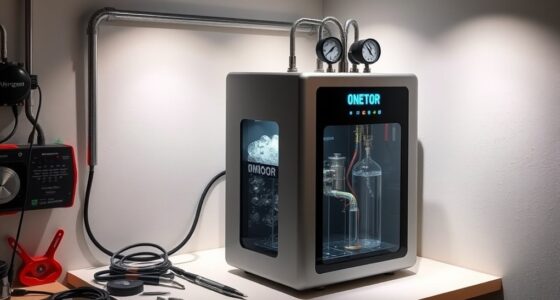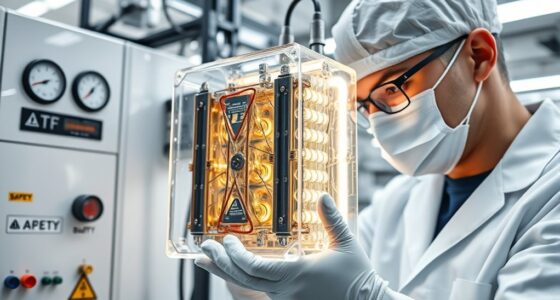
Hydrogen-powered water purification systems provide a clean and sustainable way to treat water, especially in remote areas with limited infrastructure. They use hydrogen fuel cells generated through renewable energy sources like solar or wind, reducing carbon emissions and operating quietly. These systems are scalable and adaptable, making them ideal for small communities or large industries. By choosing this technology, you support eco-friendly water management—keep exploring to discover how these innovative solutions work.
Key Takeaways
- Uses hydrogen fuel cells to provide clean, efficient water purification in remote or off-grid locations.
- Operates with renewable energy sources, reducing carbon emissions and environmental impact.
- Offers scalable solutions suitable for small communities or large industrial water treatment needs.
- Enables easy storage and transport of hydrogen, ensuring reliable power supply regardless of weather or location.
- Provides environmentally friendly, low-waste water treatment with long-term cost savings and operational flexibility.

Hydrogen-powered water purification systems are emerging as a sustainable and efficient solution to address global water scarcity. These systems leverage hydrogen as a clean energy source, making them an innovative addition to the domain of water treatment. As you explore this technology, you’ll see how integrating renewable energy with hydrogen fuel cells can revolutionize the way we purify water, especially in areas lacking reliable power grids. Unlike conventional methods that depend heavily on electricity from fossil fuels, hydrogen-based systems harness renewable energy sources like solar or wind to produce hydrogen through electrolysis. This process ensures that your water treatment solutions are not only effective but also environmentally friendly, reducing carbon emissions significantly.
In your pursuit of sustainable water treatment options, you’ll find that hydrogen-powered systems are highly adaptable. They can operate in remote locations where traditional infrastructure is limited, providing a consistent supply of clean water without relying on grid electricity. By utilizing renewable energy to generate hydrogen, you eliminate the need for fossil fuels, which not only cuts costs but also minimizes ecological impact. This approach aligns with global efforts to transition toward cleaner energy sources, making your water purification process more resilient and sustainable over time. Furthermore, these systems are scalable, meaning you can adapt them for small community needs or larger industrial applications, depending on your specific requirements.
Another advantage you’ll appreciate is the efficiency of hydrogen fuel cells in water treatment processes. They produce minimal waste and operate quietly, which is beneficial in sensitive environments. As you implement such systems, you’ll notice that they can be integrated with existing water infrastructure or set up as standalone units, offering flexibility in deployment. The use of renewable energy to produce hydrogen also means you’ll be less susceptible to energy price fluctuations, providing long-term cost savings. Plus, since hydrogen is a versatile fuel, it can be stored and transported easily, ensuring a steady supply of clean energy for your water treatment needs regardless of weather or energy demands. Additionally, understanding the signs of spoilage in consumable liquids like lemon juice highlights the importance of sustainable and safe practices, which parallels the need for reliable and environmentally conscious water purification solutions.
Frequently Asked Questions
What Is the Lifespan of Hydrogen Fuel Cells in These Systems?
You can expect hydrogen fuel cells in water purification systems to last around 5,000 to 10,000 hours of operation, depending on fuel cell durability and degradation factors. Regular maintenance helps minimize wear and tear, extending their lifespan. High-quality materials and proper operation reduce degradation, ensuring efficient performance over time. Keep an eye on performance indicators, and replace components as needed to maximize the lifespan of your fuel cell system.
Are Hydrogen-Powered Systems Suitable for Large-Scale Industrial Use?
You can use hydrogen-powered systems for large-scale industrial applications, but they face scalability challenges and infrastructure requirements. These systems need significant hydrogen supply, storage, and distribution infrastructure, which can be costly and complex to establish. While they offer clean energy benefits, you’ll need to carefully evaluate whether the existing infrastructure can support your scale and ensure safety standards are met for efficient, sustainable operation.
How Do Maintenance Costs Compare to Traditional Water Purification Methods?
Maintenance costs for hydrogen-powered water purification systems are generally lower than traditional methods, thanks to their enhanced component durability. You’ll find they offer better cost efficiency over time, as fewer replacements and repairs are needed. While initial setup might be higher, the long-term savings in maintenance make them a smart choice. You’ll enjoy reliable performance with less downtime, ultimately reducing your overall operational costs.
Can These Systems Operate in Remote or Off-Grid Locations?
Yes, hydrogen-powered water purification systems can operate in remote deployment and off-grid locations. They are designed for off-grid viability because they rely on hydrogen, which can be generated locally or supplied via mobile infrastructure. This flexibility makes them ideal for areas lacking traditional power sources. You can deploy these systems in isolated regions, ensuring access to clean water without dependence on centralized electrical grids or extensive infrastructure.
What Safety Measures Are Implemented for Hydrogen Storage and Handling?
Imagine a secure vault, where hydrogen safety is prioritized with strict storage protocols. You handle hydrogen with care, using leak detectors, ventilation, and pressure relief valves to prevent accidents. Regular safety training and monitoring guarantee safe storage and handling. These measures create a safe environment, reducing risks associated with hydrogen, so you can operate confidently, knowing that proper protocols protect you, your team, and the surrounding environment.
Conclusion
Hydrogen-powered water purification systems offer a promising, eco-friendly solution to clean water access. With the ability to produce up to 80% of their energy from hydrogen, these systems markedly reduce reliance on traditional power sources. As global water demand rises, adopting such innovative technology could be vital. Embracing hydrogen-based solutions not only helps conserve the environment but also guarantees safer, sustainable water for communities worldwide.