Isn’t it ironic how sealing your building tight to save energy can also trap pollutants inside? As you aim for better insulation and lower utility bills, you might unknowingly compromise indoor air quality. Balancing these goals isn’t simple, and the challenge lies in finding the right approach. If you want to learn how to keep your indoor environment both energy-efficient and healthy, understanding this delicate equilibrium becomes essential.
Key Takeaways
- Airtight building envelopes improve energy efficiency but require proper ventilation systems to prevent indoor air quality issues.
- Mechanical ventilation like HRVs and ERVs help maintain fresh air exchange without sacrificing energy savings.
- Managing indoor humidity with exhaust fans, dehumidifiers, and monitoring prevents mold and allergen buildup.
- Balancing sealing with controlled ventilation ensures healthy indoor air while minimizing energy loss.
- Regular maintenance of ventilation and moisture control systems sustains optimal indoor air quality in airtight buildings.
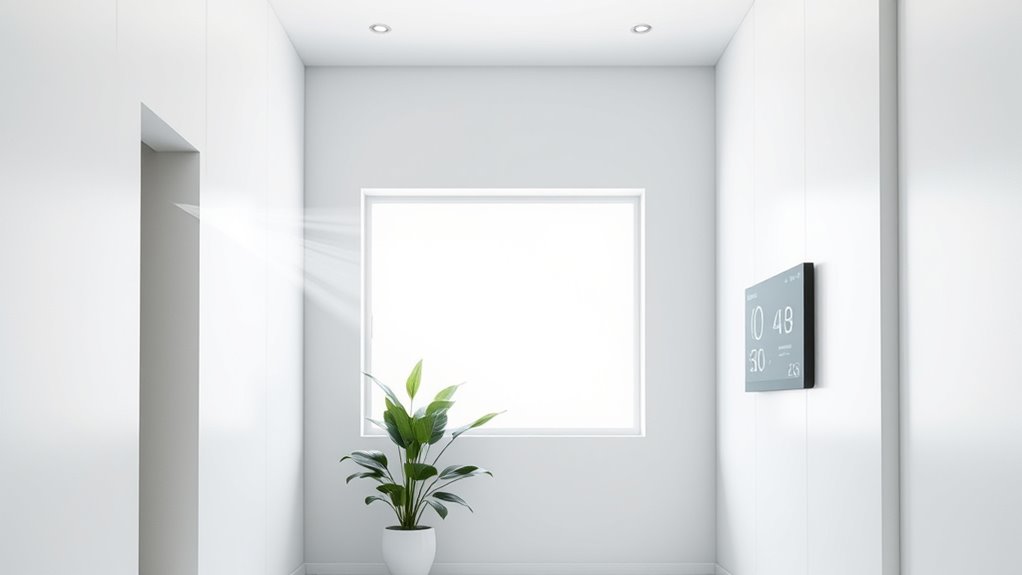
As buildings become more energy-efficient, their tightly sealed envelopes can improve insulation but also pose challenges for indoor air quality. When air leaks are minimized, pollutants, allergens, and excess moisture tend to get trapped inside, which can lead to health issues and structural problems. To address this, you need effective ventilation strategies that bring in fresh air without compromising energy efficiency. Mechanical ventilation systems, like heat recovery ventilators (HRVs) or energy recovery ventilators (ERVs), can help you exchange indoor and outdoor air efficiently. These systems not only improve indoor air quality by removing stale air but also recover heat or coolness from exhausted air, reducing energy costs. Properly designed ventilation strategies ensure you get continuous airflow, diluting indoor pollutants and preventing the buildup of humidity that can foster mold growth.
Moisture control becomes vital in tightly sealed environments. Excess moisture from cooking, bathing, or indoor activities can accumulate if not properly vented, leading to condensation and mold, which negatively impact air quality and building integrity. You need to manage humidity levels carefully, ideally keeping indoor relative humidity between 30% and 50%. Using exhaust fans in kitchens and bathrooms, along with balanced ventilation systems, can help you control moisture effectively. It’s also important to monitor indoor humidity levels with hygrometers, so you can make adjustments as needed. In some cases, dehumidifiers might be necessary to maintain ideal conditions, especially in humid climates or poorly ventilated spaces. Additionally, understanding the contrast ratio of your ventilation and lighting setups can influence perceived air quality and comfort.
Striking a balance between energy efficiency and indoor air quality requires integrating these strategies seamlessly. Sealing the building envelope doesn’t mean sacrificing fresh air; it means controlling how and when air enters and leaves. Incorporate airtight yet ventilated designs that prioritize air exchange without losing heat or coolness. Good moisture control prevents not just mold and structural damage but also reduces airborne allergens and irritants. When you carefully select and maintain your ventilation systems, you ensure the indoor environment remains healthy, comfortable, and energy-efficient.
Ultimately, your goal is to create a space where indoor air quality and building performance coexist harmoniously. By implementing smart ventilation strategies and moisture control techniques, you can enjoy the benefits of a well-insulated, tightly sealed building without compromising your health or comfort. Regular maintenance and monitoring are key to sustaining this balance, ensuring your indoor environment remains safe, fresh, and energy-efficient over time.
Top picks for "indoor quality tight"
Open Amazon search results for this keyword.
As an affiliate, we earn on qualifying purchases.
Conclusion
To truly balance air quality and energy efficiency, you need a well-designed ventilation system. Imagine a tightly sealed home where installing an HRV keeps fresh air flowing while saving energy. Without proper ventilation, pollutants and moisture can build up, causing health issues and damage. By integrating effective ventilation with airtight construction, you create a healthier, more comfortable space. It’s all about finding that sweet spot where efficiency meets fresh, clean air for your home.