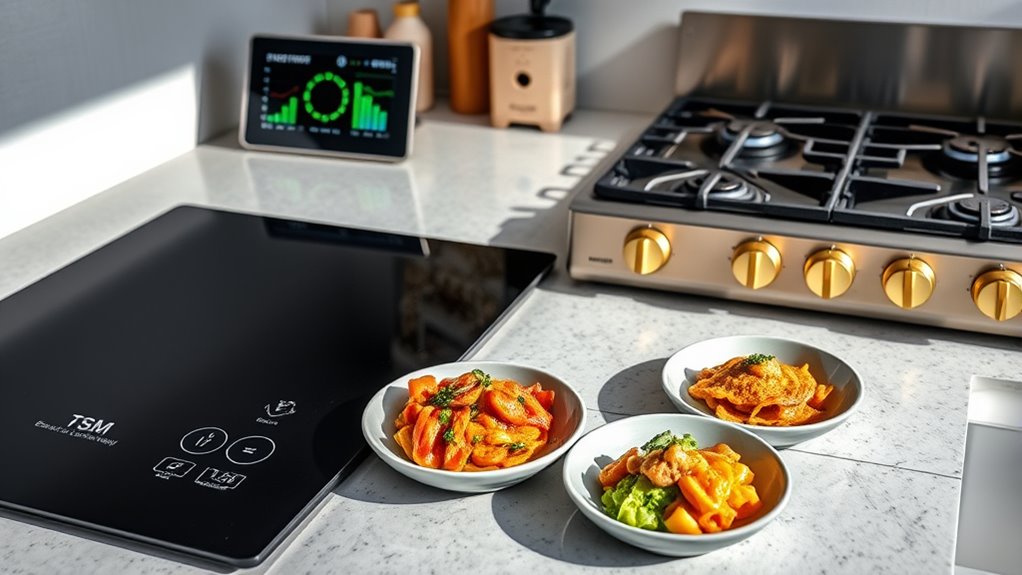

When choosing between induction cooktops and gas stoves, you might wonder which offers better flavor and energy efficiency. Both have their strengths, but understanding how they impact your cooking experience can be complex. You could find yourself leaning toward modern technology or sticking with traditional methods. To make an informed decision, it’s helpful to examine the key differences in taste outcomes and energy use—details that could shape your next kitchen upgrade.
Key Takeaways
- Taste tests often show minimal flavor difference, but some chefs prefer gas for visual control and instant heat adjustments.
- Induction cooktops are more energy-efficient, reducing overall energy consumption compared to gas stoves.
- Gas stoves provide immediate visual feedback with flames, aiding precise temperature control during cooking.
- Induction’s quick heating can enhance certain textures and flavors, depending on the dish and cookware used.
- Safety features of induction reduce burn risks and accidental fires, influencing preferences for healthier and safer cooking.
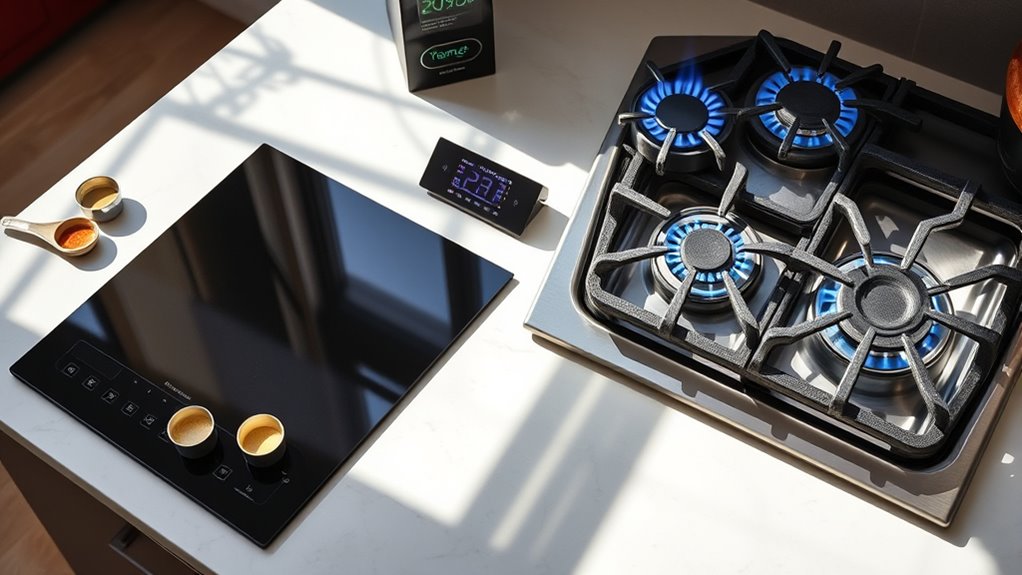
When choosing between induction cooktops and gas stoves, understanding their key differences can help you make an informed decision. One of the most significant factors to consider is energy efficiency. Induction cooktops are highly efficient because they transfer energy directly into the cookware through electromagnetic fields. This means less heat is wasted, and your food heats up faster compared to gas stoves. If you’re looking to save on energy bills and reduce your carbon footprint, induction is a smart choice. Gas stoves, on the other hand, lose more heat to the surrounding air, making them less energy-efficient. However, some cooks prefer gas because it heats instantly and offers precise control, which can sometimes translate into better flavor and texture in certain dishes.
Induction cooktops are more energy-efficient, heating faster and wasting less heat than gas stoves.
Safety features are another vital aspect to consider. Induction cooktops come with built-in safety measures like automatic shut-off if no cookware is detected or if overheating occurs. The surface itself stays relatively cool because heat is generated in the cookware, reducing the risk of burns or accidental fires. This makes induction a safer option, especially in households with children or elderly family members. Gas stoves, while equipped with safety features like flame failure devices that shut off the gas if the flame goes out, inherently carry more risks. Gas leaks, for example, can be dangerous if not properly maintained or ventilated, and open flames pose a fire hazard. If safety is a top priority, induction cooktops offer peace of mind with their modern safety measures and cooler surfaces.
From a practical perspective, induction cooktops are easier to clean since spills don’t burn onto a hot surface but stay on the smooth glass top, which can be wiped clean quickly. Gas stoves have grates and burners that can trap food and grease, requiring more effort to clean thoroughly. When it comes to safety features, induction cooktops’ automatic shut-off and cool surfaces make them more user-friendly, especially for busy households or those with children. Gas stoves, although traditional and beloved by many chefs for their control and visual feedback, demand careful handling and regular maintenance to ensure safety.
Ultimately, your choice depends on what matters most to you—whether it’s energy efficiency, safety, cooking style, or convenience. Both options have their strengths, but understanding these key differences can steer you toward the appliance that best fits your needs and lifestyle.
Conclusion
Ultimately, choosing between induction and gas is like picking your favorite brushstroke in a masterpiece. Induction offers sleek efficiency and safety, while gas provides the responsive flames chefs swear by. Your taste buds and cooking style are the compass that guides your decision. Whichever you choose, remember that the right stove can turn your kitchen into a stage where flavors dance and memories are made. The perfect fit makes all the difference in your culinary journey.