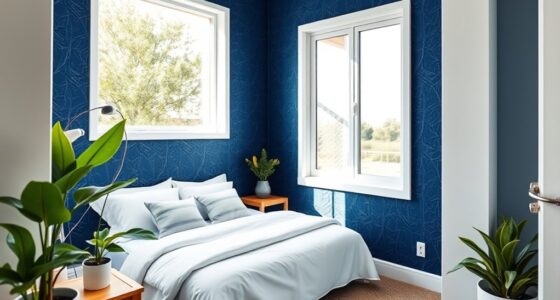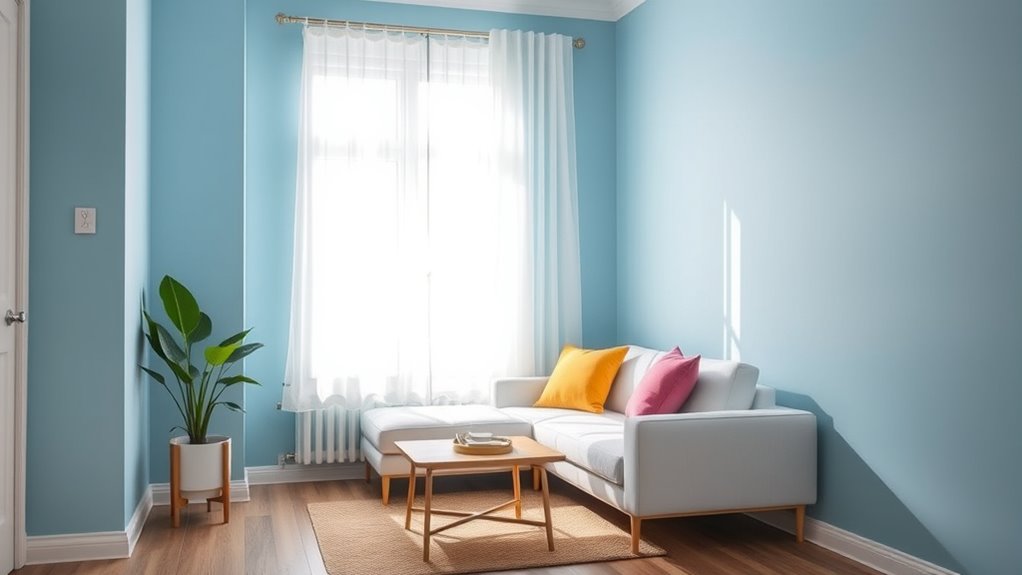

To make small spaces look brighter and feel more open, choose light, neutral colors like soft grays or pastels, and stick to monochromatic schemes for depth. Use quality brushes and steady techniques to guarantee smooth, streak-free coverage, paying careful attention to edges and corners. Proper priming and drying between coats help achieve a flawless finish. Keep consistent colors, finishes, and application methods to enhance the room’s perception of space—more tips are just ahead.
Key Takeaways
- Use light, neutral colors and monochromatic schemes to create the illusion of more space and openness.
- Prepare walls with primer and proper surface prep to ensure smooth, even coverage with fewer coats.
- Apply high-quality brushes and maintain consistent brush strokes for a streak-free, professional finish.
- Focus on proper edge work and detailed areas for a polished look around trims and corners.
- Choose reflective or semi-gloss finishes to enhance light reflection and make small rooms feel larger.
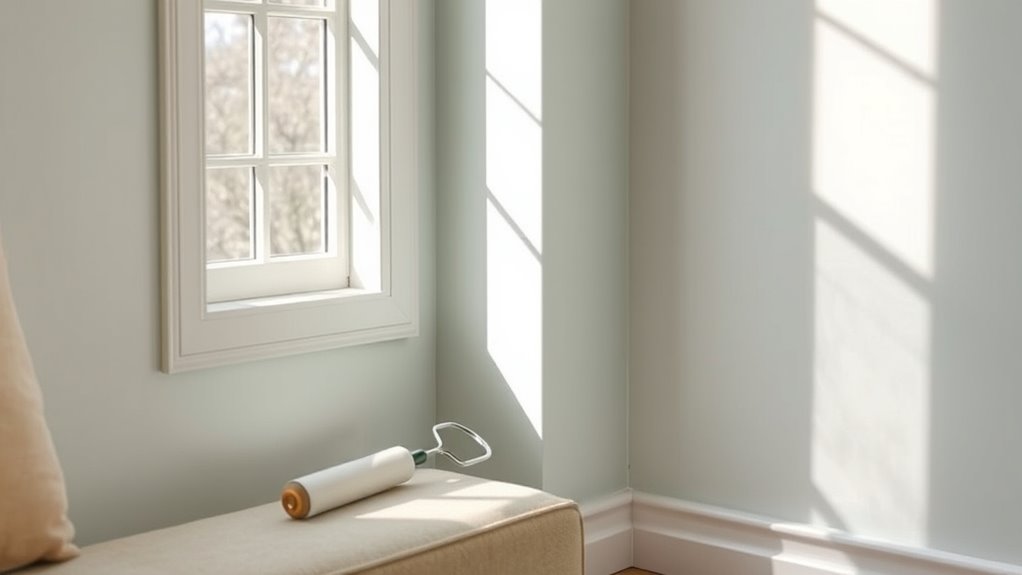
Painting the interior of your home can transform a space and boost its appeal, but it requires careful preparation and technique. When it comes to small spaces, the right choices in color coordination and brush techniques can make all the difference. To start, you want to select colors that create the illusion of more space. Light, neutral tones like soft grays, warm beiges, or pastel shades reflect more light and make a room feel open and airy. You can also play with monochromatic schemes, using different shades of the same color to add depth without overwhelming the space. Keep in mind that bold or dark colors tend to make a room feel smaller, so use them sparingly or as accents.
Choose light, neutral colors to make small spaces appear larger and more open.
Once you’ve picked your color palette, focus on your brush techniques to achieve a seamless finish. For small spaces, precision matters a lot. Use high-quality brushes to get smooth, even strokes, especially along edges and corners. When painting walls, employ long, steady brush strokes to minimize streaks and ensure uniform coverage. For larger areas, a roller can save time, but always follow up with a brush in corners, around trim, and along edges to prevent missed spots and uneven lines. When cutting in at the edges, use a small, angled brush to create crisp, clean lines that contrast well with the walls, giving the room a polished look.
Another essential tip is to contemplate the direction of your brush strokes. For walls, paint in vertical or horizontal strokes depending on your preference, but always try to keep your strokes consistent throughout the project. This consistency helps avoid visible brush marks and creates a professional finish. If you’re working with a darker color over a lighter one, applying a primer beforehand can prevent bleed-through and reduce the number of coats needed. When applying multiple coats, let each layer dry fully before adding the next, which prevents uneven textures and ensures a smooth appearance. Additionally, selecting appropriate paint finishes can influence how well your walls hold up over time and how they reflect light, further enhancing the space.
In small rooms, paying attention to color coordination and brush techniques helps maximize space. Light colors combined with proper application techniques create a bright, cohesive environment that feels larger than it is. With patience and precision, your interior painting project will leave your space looking fresh, inviting, and expertly finished.
Frequently Asked Questions
How Can I Make Small Rooms Appear Larger With Paint?
To make small rooms look larger, choose light, neutral colors to reflect more light and create an open feel. Use color contrast wisely by painting trim or accents slightly darker for depth. Highlight ceiling height by painting the ceiling a lighter shade than the walls, which draws the eye upward. Keep the walls simple and avoid clutter, enhancing the spacious illusion with these paint techniques.
What Color Schemes Are Best for Maximizing Space?
Ever wondered which color schemes make your small space feel bigger? Opt for monochromatic palettes to create a seamless look that enhances openness. Using lighter shades on walls, paired with darker accents, can add depth without crowding the room. Consider accent wall strategies to add visual interest without overwhelming the space. Wouldn’t you love a room that feels spacious and welcoming? These techniques help you achieve that effortlessly.
Should I Use Gloss or Matte Paint in Small Rooms?
For small rooms, choose a gloss vs matte finish based on your desired look and practicality. Gloss paint reflects more light, making the space feel brighter and larger, which is great for kitchens or bathrooms. Matte finish minimizes imperfections and offers a softer, more subdued appearance, ideal for bedrooms or cozy areas. Consider your finish selection carefully; gloss enhances space, while matte creates a warm, inviting atmosphere.
How Do I Prevent Paint From Making a Space Feel Cramped?
Prevent paint from making your space feel cramped by choosing light, luminous colors that reflect light and create an open atmosphere. Use contrasting shades for the ceiling and walls to enhance ceiling height, making the room seem larger. Keep the contrast subtle to avoid overwhelming the senses. Opt for matte or eggshell finishes that diffuse light softly, avoiding glossy finishes that can create unnecessary shadows and a cramped feeling.
Are There Specific Painting Techniques to Enhance Small Spaces?
To enhance small spaces, try using smooth wall textures that reflect light and make the area feel larger. Consider creating an accent wall with a bold color or subtle pattern to add visual interest without overwhelming the room. These techniques draw the eye and can make your space appear more open. Keep the overall color palette light and cohesive to maximize the sense of spaciousness and avoid cluttered visuals.
Conclusion
Remember, painting small spaces is like adding a splash of color to a tiny canvas—you want to make it stand out without overwhelming. I once helped a friend brighten her compact living room, and she was amazed how a fresh coat of light blue transformed it into a cozy retreat. Small spaces may seem tricky, but with the right tips, you can turn them into inviting, vibrant areas that feel twice as big. Happy painting!