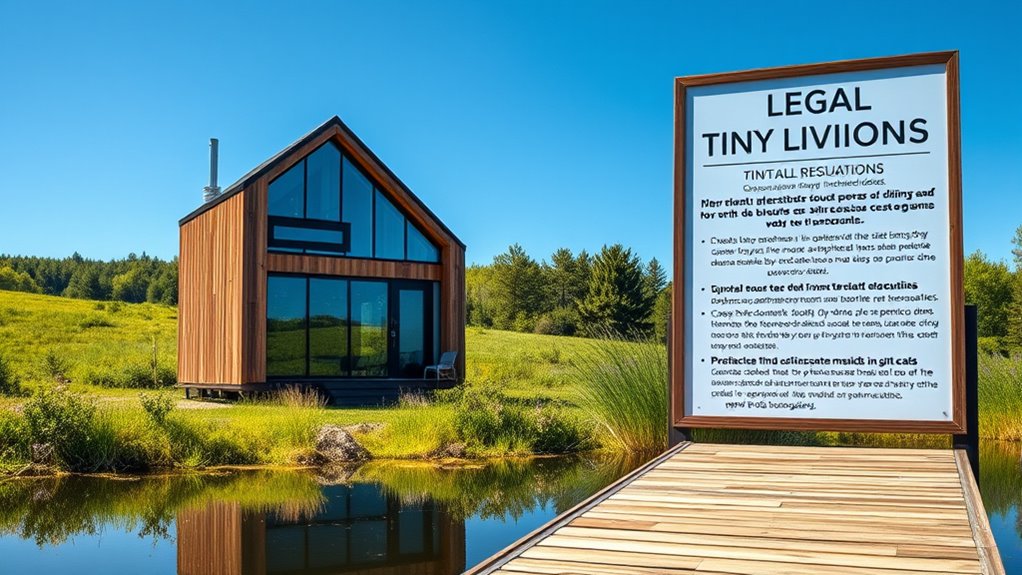

To legally rent out a tiny house in 2026, you must check local zoning laws to confirm it qualifies as a legal dwelling and confirm if short-term rentals are permitted. You’ll also need appropriate permits, such as business licenses and short-term rental permits, and ensure your tiny house complies with building codes, safety standards, and inspections. Staying updated on evolving regulations is essential. Continue exploring to understand how to navigate these requirements effectively.
Key Takeaways
- Verify local zoning laws to ensure tiny houses are classified as legal dwellings for rentals.
- Obtain necessary permits such as business licenses, short-term rental, or special use permits.
- Ensure tiny houses meet current building codes for electrical, plumbing, and safety standards.
- Stay informed about evolving regulations by consulting local authorities regularly.
- Comply with all licensing and safety requirements to avoid fines, eviction, or legal issues.

As tiny house rentals continue to grow in popularity, understanding the legal requirements for operating them in 2026 is essential. One of the first hurdles you’ll need to navigate involves zoning laws. These regulations determine where you can place your tiny house and whether it qualifies as a legal dwelling. Many areas still have strict zoning restrictions that limit tiny houses to specific zones, such as RV parks or designated tiny house communities. If you plan to rent out your tiny house on your property, you must verify that your local zoning laws permit short-term rentals or residential use in that zone. Some jurisdictions may require your tiny house to meet certain standards, be positioned on a foundation, or be classified as a permanent residence rather than an accessory dwelling unit (ADU). Ignoring these laws can lead to fines, eviction, or even forced removal of your rental property.
Alongside zoning laws, licensing procedures are equally critical. Depending on where you operate, you might need to secure multiple permits before you start renting out your tiny house. This could include a business license, a short-term rental permit, or a special use permit, especially if your property is located in a residential zone. The licensing process often involves providing detailed documentation about your tiny house’s construction standards, safety features, and compliance with local building codes. Some jurisdictions might require inspections to verify that your tiny house has proper electrical wiring, plumbing, fire safety measures, and structural integrity. You might also need to register your rental with local authorities or obtain a specific license that allows you to legally host guests. Additionally, understanding zoning laws and how they categorize tiny houses can help you better navigate the legal landscape and avoid potential conflicts.
In addition, it’s wise to stay aware of any updates to these regulations, as local laws can change frequently. Some cities are actively updating their zoning and licensing rules to better accommodate tiny houses, recognizing their rising popularity. To ensure you’re fully compliant, contact your local planning department or zoning office early in the process. They can provide guidance on what specific licenses you’ll need and how to meet zoning requirements. Failing to follow these legal procedures can jeopardize your rental income and lead to costly penalties. Taking the time to understand and adhere to zoning laws and licensing procedures now will save you headaches later and help you operate your tiny house rental smoothly and legally in 2026.
Frequently Asked Questions
Are Tiny House Rentals Tax-Deductible?
Tiny house rentals are generally not tax-deductible, but you can deduct expenses related to tiny house maintenance and operational costs if you rent it out for profit. You must report your rental income on your taxes, and any expenses directly tied to the rental, including maintenance, can reduce your taxable income. Keep detailed records of all income and expenses to ensure accurate rental income reporting and maximize your deductions.
Can I Rent Out My Tiny House Short-Term Legally?
They say, “Knowledge is power.” Yes, you can rent out your tiny house short-term legally, but you need to follow local zoning laws and licensing requirements. Focus on attractive tiny house decor to appeal to renters and set competitive rental pricing strategies. Make sure to stay informed about regulations to avoid legal pitfalls. With proper planning and compliance, you can turn your tiny house into a profitable short-term rental.
What Insurance Is Required for Tiny House Rentals?
You need insurance policies that cover rental liabilities to protect yourself and your guests. These policies typically include general liability insurance, which covers property damage and injuries, and sometimes guest medical insurance. Make sure your insurance explicitly states it covers tiny house rentals, and consider adding extra coverage for theft or natural disasters. Having the right insurance guarantees you’re financially protected if anything goes wrong during a rental.
Are There Specific Zoning Laws for Tiny House Rentals?
You might be surprised to find that tiny house zoning laws and rental licensing often overlap in unexpected ways. Local regulations can vary widely, so you need to check specific tiny house zoning requirements in your area. Some places require rental licensing to operate legally, while others have strict zoning laws that limit tiny house placements. Ensuring compliance helps you avoid fines and makes your rental experience smooth and worry-free.
How Do I Handle Tenant Safety Compliance?
You should prioritize fire safety by installing smoke detectors, fire extinguishers, and clear escape routes. Make sure your tiny house meets accessibility standards, such as ramps and wide doorways, to accommodate all tenants. Regularly inspect safety equipment and stay updated on local safety codes. Communicate safety procedures clearly to your tenants and conduct routine safety drills, ensuring everyone knows how to respond in an emergency.
Conclusion
Staying compliant with the legal requirements for tiny house rentals in 2026 might seem overwhelming, but it’s your key to opening the door to incredible opportunities. By understanding and meeting these rules, you’ll avoid costly pitfalls and turn your tiny house into a thriving rental oasis. Remember, ignoring these laws could lead to disaster faster than you can say “tiny house,” so stay informed and proactive. Your future success depends on it—don’t let legal hurdles crush your dreams!