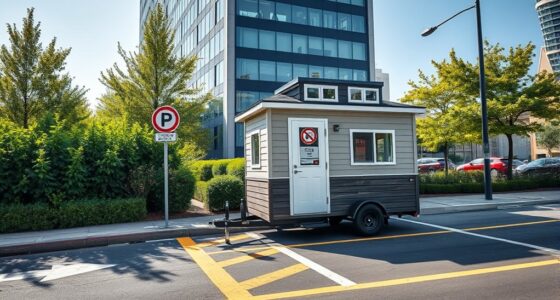
To legally rent out your tiny house, you’ll need to check local zoning laws to guarantee rental use is allowed and your property’s zoning classification. Make sure your insurance covers short-term rentals, including liability and property damage, as standard policies might not suffice. Staying compliant with these regulations helps you avoid fines, legal actions, or removal. If you want to understand the specifics and stay protected, there’s more to explore on how to navigate these legal considerations effectively.
Key Takeaways
- Verify local zoning laws to ensure tiny house rental legality and compliance with land use restrictions.
- Understand whether your property zoning permits short-term rentals or if additional permits are required.
- Check if your tiny house qualifies as a permanent residence, guest accommodation, or temporary rental to avoid legal issues.
- Obtain appropriate insurance coverage that includes liability, property damage, and guest injuries for rental protection.
- Regularly review and adhere to local regulations to prevent fines, legal actions, or forced removal of the tiny house.
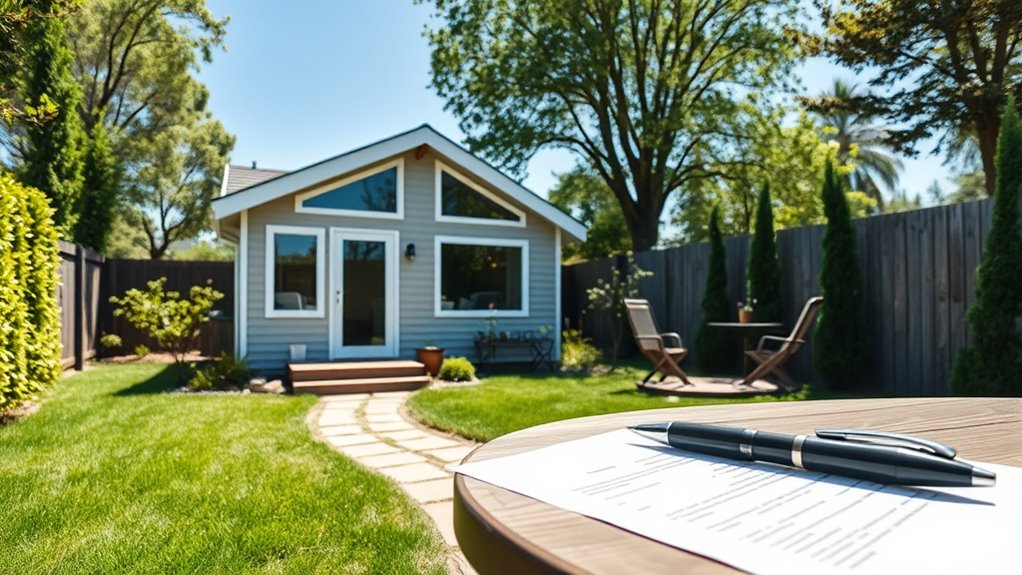
Renting out a tiny house can be a rewarding way to generate income, but it also comes with important legal considerations you need to understand. One of the first things to check is the zoning regulations in your area. Local zoning laws determine whether you can legally rent out a tiny house on your property. Some jurisdictions have specific rules about whether tiny houses qualify as permanent residences, guest accommodations, or temporary rentals. If your property is zoned solely for single-family homes or agricultural use, you might face restrictions or outright bans on short-term rentals. Failing to adhere to these regulations can lead to fines, legal action, or even the forced removal of your tiny house. It’s essential to contact your local zoning office or review city ordinances to ensure your rental plans align with current rules. Understanding what’s permitted helps you avoid costly surprises down the line.
Alongside zoning, you also need to consider insurance requirements. Protecting your investment is crucial, especially when renting out your tiny house. Basic homeowner’s insurance may not cover damages or liability related to rental activities, so you might need a specialized policy or an endorsement that covers short-term rentals. Insurance providers often have specific criteria for tiny houses, particularly if they’re mobile or built on trailers. You’ll want to ensure your coverage includes protection against property damage, theft, liability claims from guests, and possible injuries that occur on your property. Not having adequate insurance can leave you financially vulnerable if an accident or dispute arises. Shop around and speak with insurance professionals who understand tiny house insurance to find a policy that provides comprehensive coverage tailored to your rental situation. Additionally, self watering plant pots can be a useful addition to your tiny house setup to help maintain the property easily.
Frequently Asked Questions
Are Tiny House Rentals Legal in All States?
Tiny house rentals aren’t legal in all states because of varying tiny house regulations and zoning laws. You need to check local ordinances to see if your tiny house qualifies as a legal dwelling. Also, consider rental liability issues—some areas require permits or insurance. Before renting out your tiny house, research your state’s rules to make certain of compliance and protect yourself from potential legal issues.
What Permits Are Needed for Tiny House Rentals?
You’ll need permits like zoning approvals, building permits, and possibly special use permits for tiny house rentals. Check local tiny house design regulations to guarantee compliance. Also, consider tiny house financing options, as some lenders may require specific permits or certifications. Start by contacting your city or county planning department to understand the exact permits needed, and make sure your tiny house meets all legal and safety standards to avoid future issues.
Can I Operate a Tiny House Rental Business From Home?
Like the Pied Piper leading followers, you can operate a tiny house rental business from home if zoning laws and permits allow. Focus on creating appealing tiny house designs that attract guests and develop smart marketing strategies to boost visibility. Make certain your property complies with local regulations, and consider how your home’s layout and features can serve as a selling point. With proper planning, your tiny house rental venture can thrive right from your own backyard.
How Do Zoning Laws Affect Tiny House Rentals?
Zoning laws directly impact your ability to rent out tiny houses, as they determine where you can place and operate them. You may need to explore zoning exceptions or variances to make it work legally. Also, verify your tiny house complies with local building codes, which cover safety and construction standards. Checking with your local planning department helps clarify restrictions and confirms whether your rental plans align with existing regulations.
Are There Insurance Requirements for Renting Out Tiny Houses?
Yes, you need insurance requirements for tiny house rentals. Securing sufficient liability coverage safeguards you from potential property damages and guest injuries. You should prioritize policies that cover property protection, personal liability, and guest-related risks. Don’t delay—diligently discuss your needs with insurance providers to ensure your tiny house rental is properly protected, giving you peace of mind and preventing costly complications from unforeseen incidents.
Conclusion
Finding tiny house rentals is like steering a ship through shifting tides—you need to stay alert to legal currents that can change suddenly. By understanding local laws and securing proper permits, you’re anchoring yourself in safe waters. Ignoring these considerations is like sailing uncharted seas without a map—dangerous and unpredictable. So, chart your course carefully, and enjoy the journey of tiny living without the storm clouds of legal trouble looming overhead.