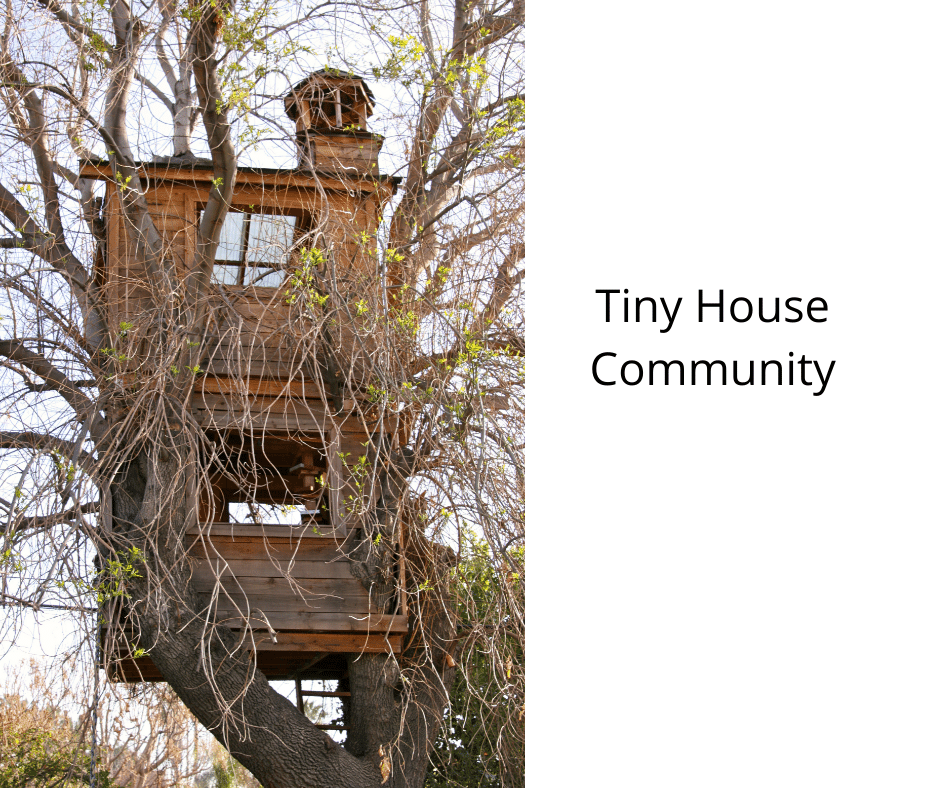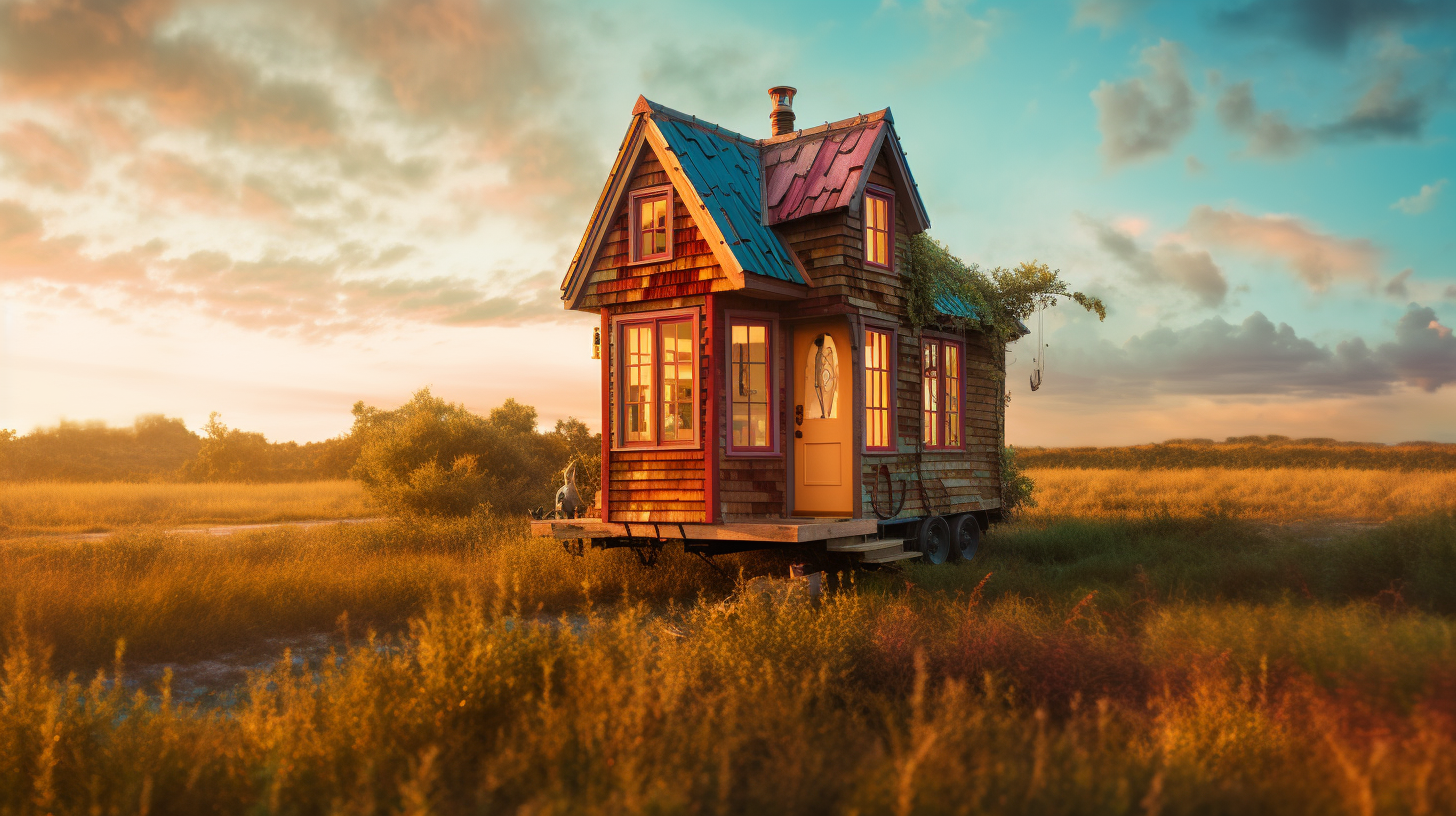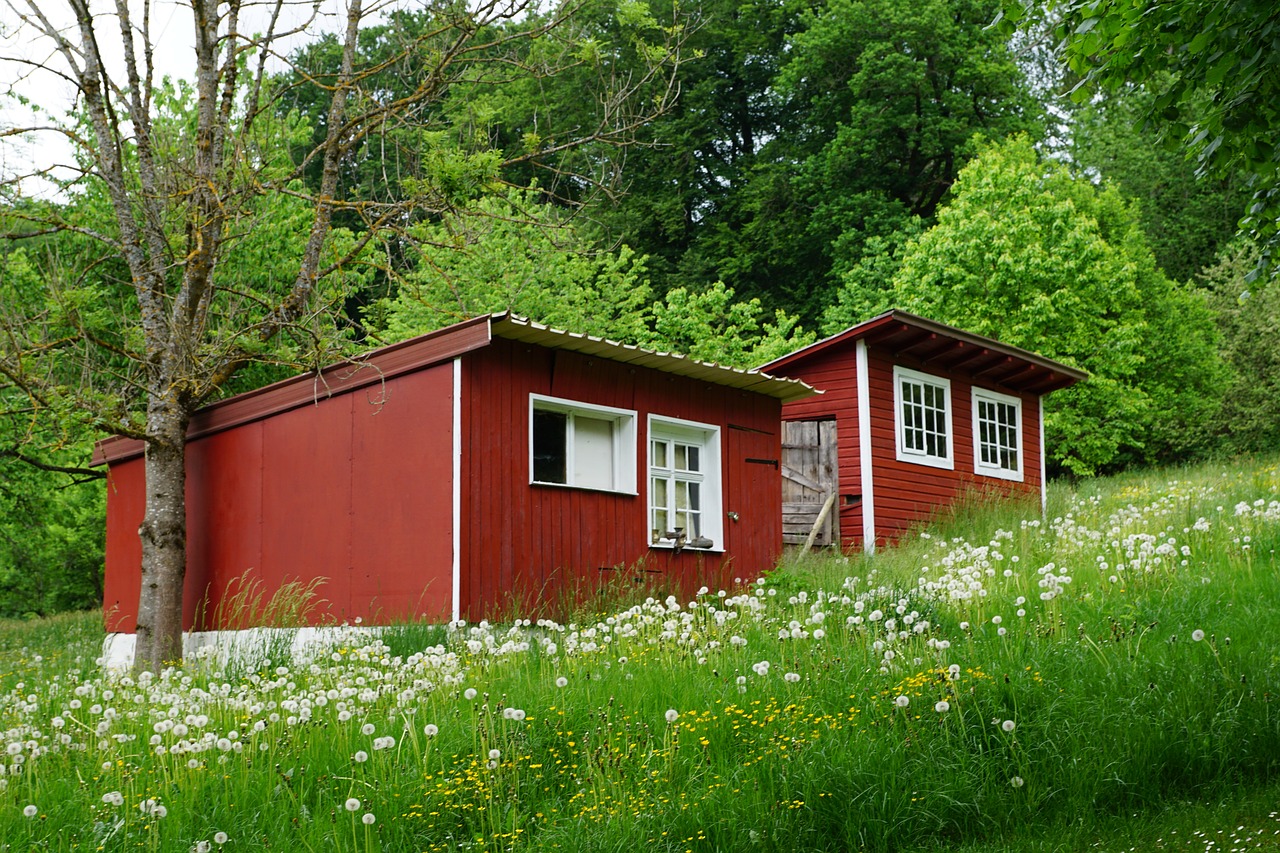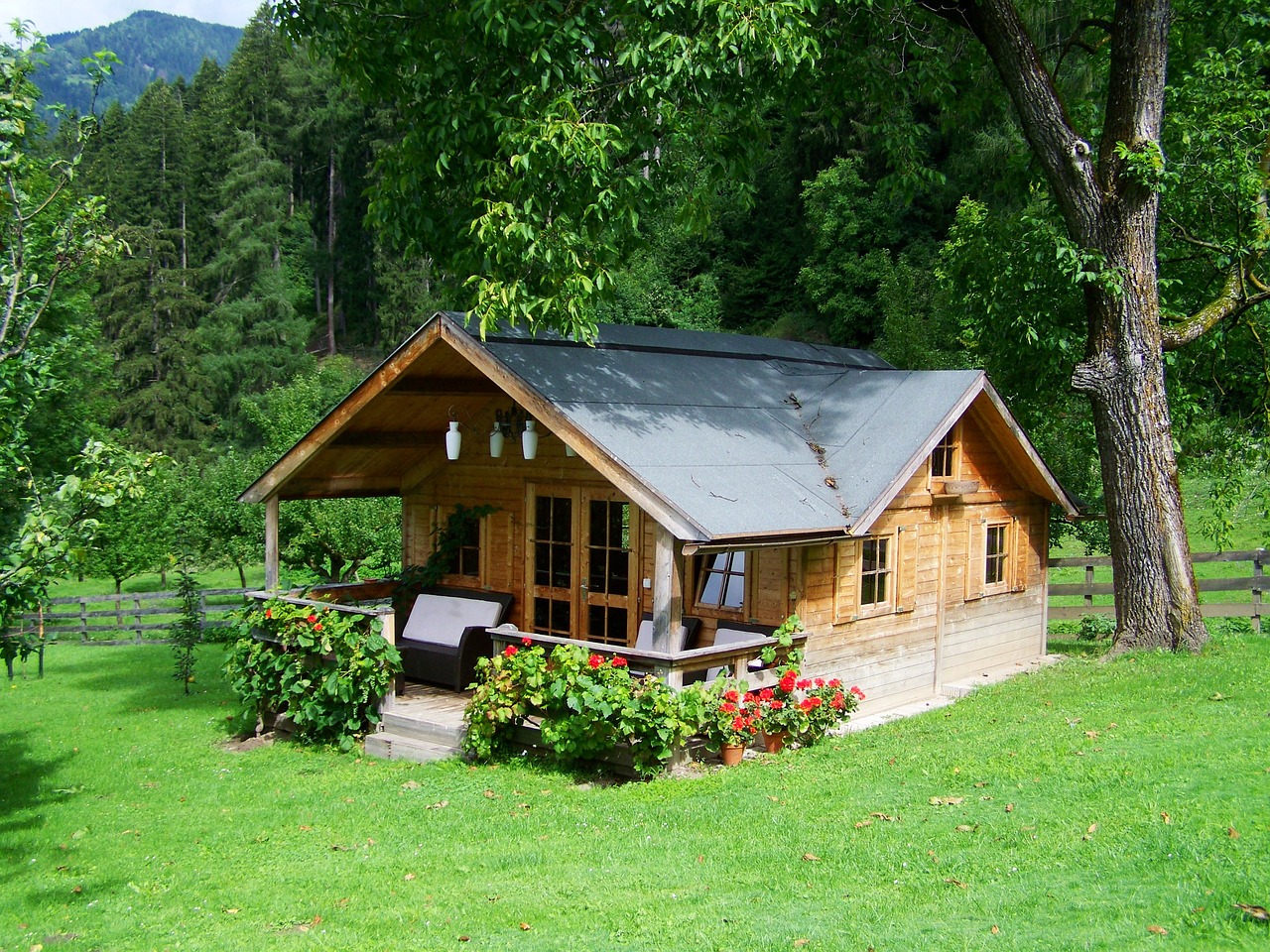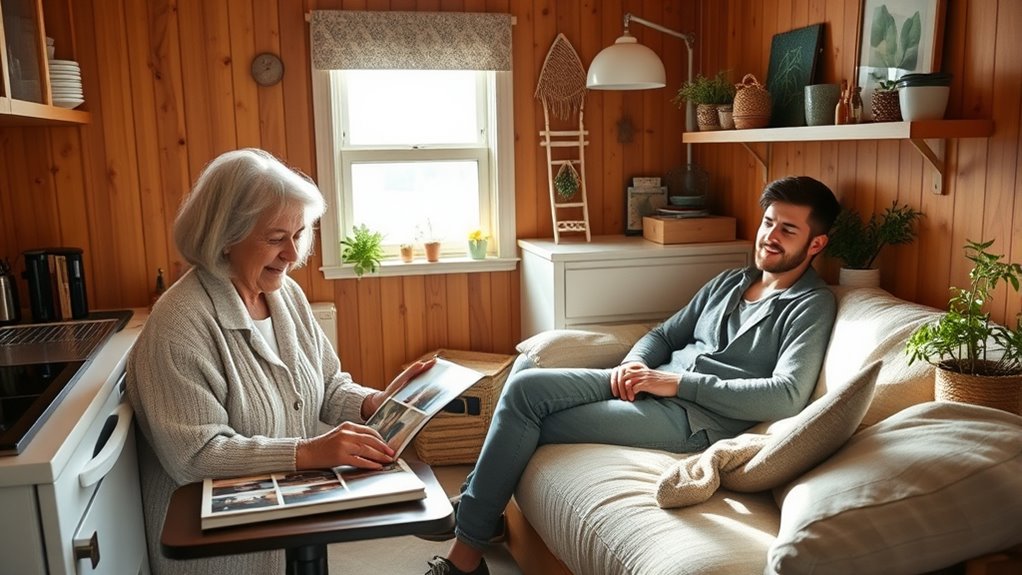

Living long-term in a tiny home teaches you to focus on what truly matters, letting go of clutter and prioritizing experiences over possessions. It encourages building community, fostering connections with neighbors, and sharing resources. You’ll learn to be adaptable, creative with storage, and manage your resources wisely. This lifestyle promotes intentionality, growth, and a proactive mindset. If you’re curious about how these lessons can transform your life, there’s more valuable insight ahead.
Key Takeaways
- Prioritizing belongings and experiences helps residents focus on what truly matters, reducing clutter and financial burdens.
- Living small fosters stronger community bonds through resource sharing and mutual support.
- Adaptability and creative problem-solving are essential for efficient space and resource management.
- Long-term tiny home residents develop intentional routines that emphasize quality and sustainability over quantity.
- Embracing change and taking proactive actions support continuous growth and personal development in tiny living.

Living in a tiny home for the long term teaches valuable lessons about simplicity, intentional living, and adaptability. When you downsize your life, you quickly realize how much unnecessary clutter and possessions can weigh you down. This shift encourages you to perform a cost benefit analysis of your belongings, helping you prioritize what truly matters. You start to see that owning fewer things reduces expenses, minimizes waste, and frees up your resources for experiences rather than possessions. This deliberate approach to possessions extends beyond material goods; it influences how you manage time and energy, encouraging you to focus on quality rather than quantity in your daily routines.
Another key lesson from long-term tiny home living is the importance of community engagement. Living in a small space often means sharing resources and space with neighbors or fellow tiny homeowners. This fosters a sense of connection and mutual support that’s less common in traditional, larger-home living. You learn to lean on others and contribute to a community that values cooperation and shared interests. Whether it’s sharing tools, participating in local events, or simply exchanging conversations, community engagement becomes central to your happiness and well-being. It also teaches you that a sense of belonging can outweigh the need for a large personal space, reinforcing that relationships and social ties are essential.
Flexibility is another fundamental lesson you grasp when living long-term in a tiny home. Unlike traditional homes, tiny homes require you to adapt your lifestyle to limited space and resources. You become more resourceful, finding creative solutions to storage, organization, and daily routines. This flexibility extends to your mindset, too—you learn to accept change more readily and to prioritize what’s truly important, whether that means downsizing further or modifying your environment to suit your needs. Living tiny pushes you to be more intentional about your habits and to appreciate the versatility that comes with minimalism.
Furthermore, cultivating a bias to action can help you embrace the necessary adjustments and seize opportunities for growth in such a dynamic living environment.
Frequently Asked Questions
How Do Tiny Home Residents Handle Long-Term Maintenance Costs?
You handle long-term maintenance costs by staying proactive with financial planning, setting aside a budget for repairs and upgrades. Many tiny home residents also leverage community support, sharing resources, tools, or advice to reduce expenses. By maintaining a careful financial plan and engaging with your tiny home community, you can manage ongoing costs effectively, ensuring your home remains functional and comfortable without unexpected financial burdens.
What Are the Biggest Social Challenges Faced by Tiny Home Dwellers?
You might think tiny home living isolates you, but the biggest social challenge is actually community integration. You could feel lonely if you don’t actively connect, as the close quarters foster a sense of community. To overcome social isolation, engage in local events or neighborhood groups. Building genuine relationships helps you feel rooted, turning your tiny space into a hub of social activity rather than a lonely retreat.
How Do Residents Manage Privacy Within Small Living Spaces?
You manage privacy in small spaces by establishing clear social boundaries and using effective privacy strategies. You might set designated quiet zones or personal areas, use curtains or screens to create visual separation, and communicate openly with housemates about your needs. Regularly respecting each other’s boundaries helps maintain harmony, ensuring that everyone feels comfortable and secure. These strategies help you balance shared living with personal privacy, making tiny home life more enjoyable.
What Legal Issues Do Long-Term Tiny Homeowners Encounter?
You face zoning restrictions and property taxes that challenge tiny home living. Zoning laws may prevent you from parking on certain land or using your tiny home as a permanent residence. Property taxes can still apply, despite the small size. You must navigate legal hurdles, comply with local ordinances, and stay informed about regulations. Managing these issues requires proactive research, clear documentation, and sometimes, legal advice to make certain your tiny home lifestyle remains sustainable.
How Do Residents Plan for Emergencies or Natural Disasters?
You plan for emergencies and natural disasters by prioritizing community safety and emergency preparedness. You establish clear evacuation routes, keep emergency kits stocked, and stay informed about local alerts. Building strong community connections helps you share resources and support each other during crises. Regular drills and updates ensure everyone knows what to do, making your tiny home community resilient and ready to handle unexpected situations effectively.
Conclusion
Living tiny teaches you that less truly is more, like a tree shedding leaves to grow stronger. You learn to cherish what matters, transforming your space into a sanctuary of simplicity and purpose. It’s a journey of rediscovery, where boundaries become your freedom and clutter turns into clarity. Embrace the tiny home life, and watch as your heart expands beyond walls, revealing that true wealth lies in the moments, not the possessions.