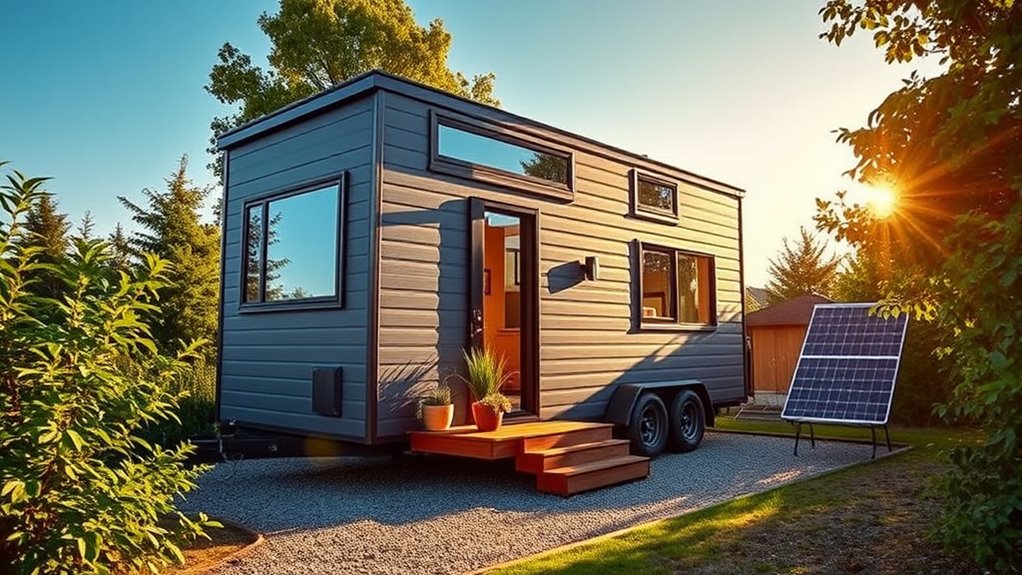

Mobile tiny homes offer remote work nomads an affordable, flexible lifestyle that combines portability, sustainability, and comfort. With features like solar panels, energy-efficient appliances, and smart layouts, you can live off-grid and move anywhere—scenic spots, cities, or nature. These compact homes let you customize your space while supporting eco-friendly living. If you’re curious about how these tiny homes can transform your work and travel life, there’s more to discover below.
Key Takeaways
- Enable remote workers to live and work from scenic, flexible locations with portable, easily relocatable tiny homes.
- Incorporate renewable energy systems like solar panels to support off-grid, sustainable living.
- Maximize space efficiency with multi-purpose furniture and smart interior design tailored for productivity.
- Reduce housing costs and increase lifestyle flexibility through the mobility of trailer-based tiny homes.
- Support personalized, eco-friendly interiors that promote comfort and adaptability for remote work needs.
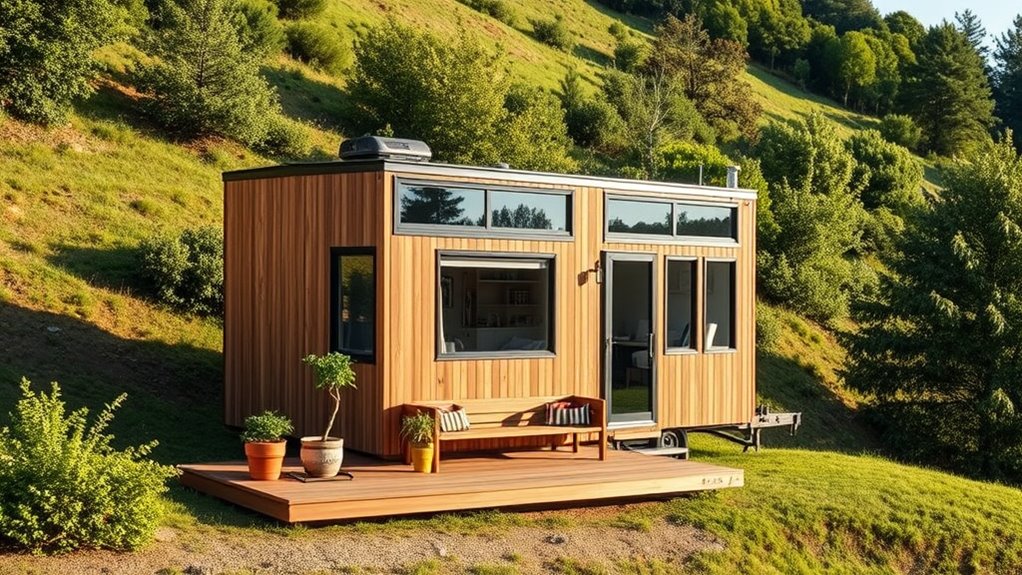
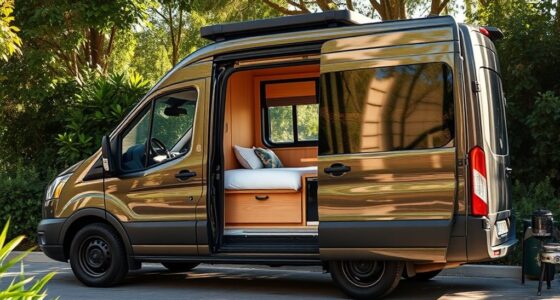
Have you ever dreamed of working from anywhere and living in a space that’s both affordable and flexible? If so, mobile tiny homes are perfect for you. These compact, transportable dwellings give you the freedom to explore new places while maintaining a comfortable work environment. One of the key benefits of these homes is their emphasis on sustainable energy. Many tiny homes incorporate solar panels, energy-efficient appliances, and smart insulation to minimize their ecological footprint. This focus not only reduces your living costs but also aligns with a responsible lifestyle that seeks to lessen environmental impact. You can enjoy off-grid living, knowing that your home harnesses renewable resources, making it easier to stay connected to the modern world without sacrificing sustainability.
Embrace off-grid living with tiny homes featuring solar energy and eco-friendly designs for sustainable, portable comfort.
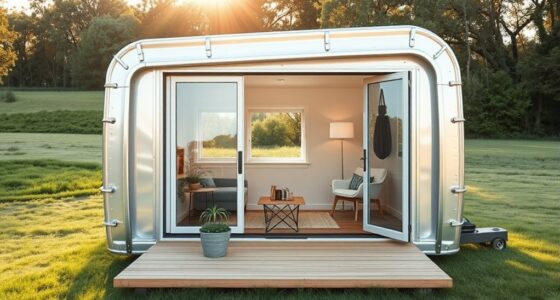
When designing your tiny home, interior design concepts play a essential role in maximizing space and functionality. Clever use of multi-purpose furniture, built-in storage, and open layouts create a sense of openness despite the small footprint. Light colors and strategic placement of windows make the space feel airy and inviting, encouraging productivity and relaxation. Incorporating fold-away desks or Murphy beds allows you to transform your living area into a workspace in seconds. As a remote worker, your environment must support your focus and creativity, and thoughtful interior design helps achieve that balance. You’ll find that customizing your tiny home with your personal style and functional needs makes working remotely feel more comfortable and inspiring. Additionally, incorporating sustainable materials into your interior design can further reduce environmental impact and enhance your eco-friendly lifestyle.
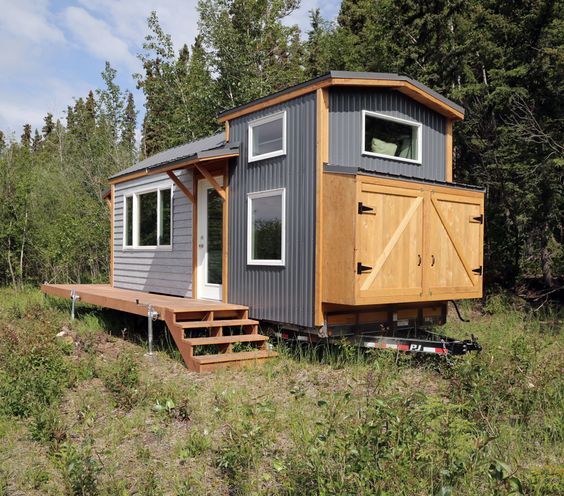
Mobility is the core advantage of these homes, allowing you to chase the best weather, scenery, or work opportunities without being tied down. You can park your tiny home in scenic spots, near national parks, or in vibrant communities, all while maintaining your career. This flexibility means you’re not limited by traditional housing constraints, giving you the freedom to live where you’re happiest. Additionally, many tiny homes are built on trailers, making them easy to relocate whenever your preferences change. This portability also reduces long-term housing costs and offers a sense of adventure that traditional homes can’t match.
In essence, mobile tiny homes equipped with sustainable energy solutions and innovative interior design concepts empower you to live and work on your terms. They combine affordability, environmental responsibility, and mobility into a single package. Whether you’re seeking tranquility in nature or a lively urban backdrop, these homes make it possible to craft a lifestyle that’s tailored to your remote work needs. With a little planning and customization, your tiny home becomes more than just a living space — it’s a portable sanctuary that supports your career and your desire for adventure.
Frequently Asked Questions
How Do Mobile Tiny Homes Handle Extreme Weather Conditions?
Mobile tiny homes handle extreme weather by using high-quality insulation to combat temperature swings and moisture issues. You can choose climate-adapted features like thermal windows, weather-resistant exteriors, and reinforced roofs. These elements help you stay comfortable and protected, regardless of harsh conditions. Proper design and materials guarantee your tiny home adapts well to various climates, making it a reliable, cozy space no matter what weather surprises come your way.
What Are the Legal Zoning Restrictions for Mobile Tiny Homes?
Zoning laws can feel like an intricate maze, but you just need to verify local regulations. Usually, you’ll face permit requirements for mobile tiny homes, especially if you want to park on private land or use them as permanent residences. Some areas restrict them to RV parks or specific zones. Always research local ordinances or consult authorities to guarantee your tiny home complies, avoiding costly legal surprises.
How Is Internet Connectivity Maintained in Remote Locations?
You maintain internet connectivity in remote locations by using satellite internet, which provides reliable service even far from cell towers. Cellular hotspots are another option, utilizing nearby cellular networks to give you internet access. Combining these methods guarantees you stay connected, work efficiently, and access essential online resources no matter how isolated your tiny home is. Make certain to choose the best option based on your specific location and needs.
What Are the Costs Involved in Customizing a Mobile Tiny Home?
You might be surprised, but customizing your mobile tiny home costs depend on various factors. Cost factors include size, materials, and features you choose, while customization options range from adding solar panels to upgrading appliances. Planning carefully helps you stay within budget. Keep in mind, investing in customization can enhance comfort and functionality, making your tiny home uniquely yours. With the right choices, you’ll enjoy a personalized space without breaking the bank.
Are Mobile Tiny Homes Environmentally Sustainable and Eco-Friendly?
Yes, mobile tiny homes can be environmentally sustainable and eco-friendly. You can choose sustainable materials like bamboo or reclaimed wood, reducing your carbon footprint. Incorporating renewable energy sources, such as solar panels, helps you generate clean power and lowers reliance on fossil fuels. By making these conscious choices, you guarantee your tiny home minimizes environmental impact while providing a comfortable, eco-friendly living space on the go.
Conclusion
Imagine waking up in your tiny home on wheels, just like Sarah did, watching mountains roll by as she works remotely. Mobile tiny homes aren’t just a trend; they’re your ticket to freedom and adventure. With mobility, you can chase new landscapes and fresh inspiration anytime. According to recent surveys, over 60% of remote workers are considering tiny homes for this very reason. Embrace the nomad life—you’re not just working; you’re exploring your world.