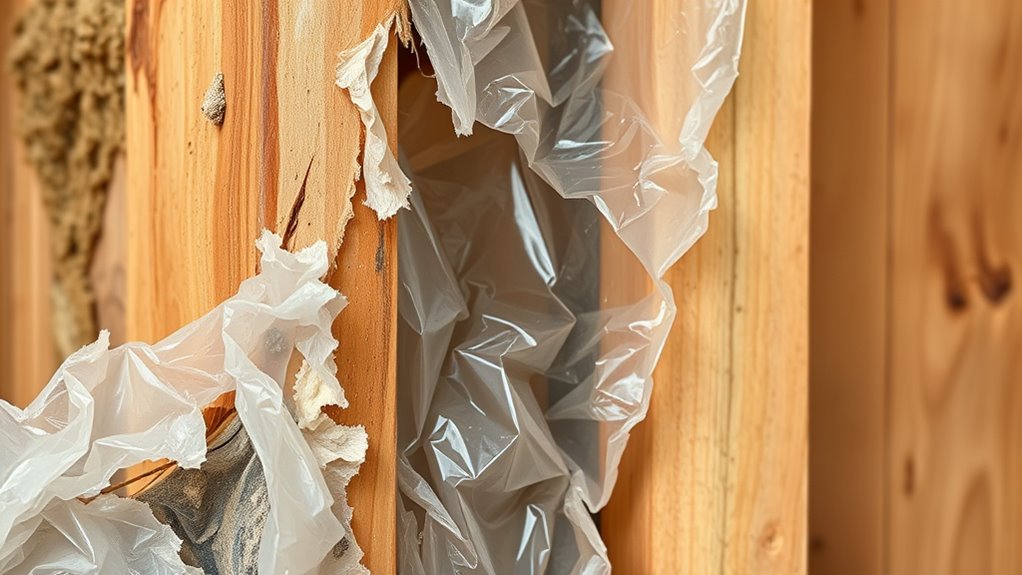

A moisture barrier is the silent guardian of your home’s integrity, yet many builders treat it like an afterthought. Rushing installation or skipping critical steps can create hidden vulnerabilities that lead to long-term damage. When corners are cut, moisture finds its way inside, risking mold, rot, and costly repairs. Understanding where builders often falter helps you recognize the importance of meticulous installation—before small issues become major problems.
Key Takeaways
- Builders often skip or rush overlapping seams, creating gaps that compromise moisture barrier effectiveness.
- Cutting corners with improper sealing or incomplete installation allows water infiltration and long-term damage.
- Using low-quality or high-VOC materials without proper handling increases indoor air pollution and health risks.
- Failing to follow manufacturer guidelines in confined or awkward spaces leads to tears and misalignments.
- Prioritizing speed over thoroughness can result in vulnerabilities that cause costly water damage and structural issues later.
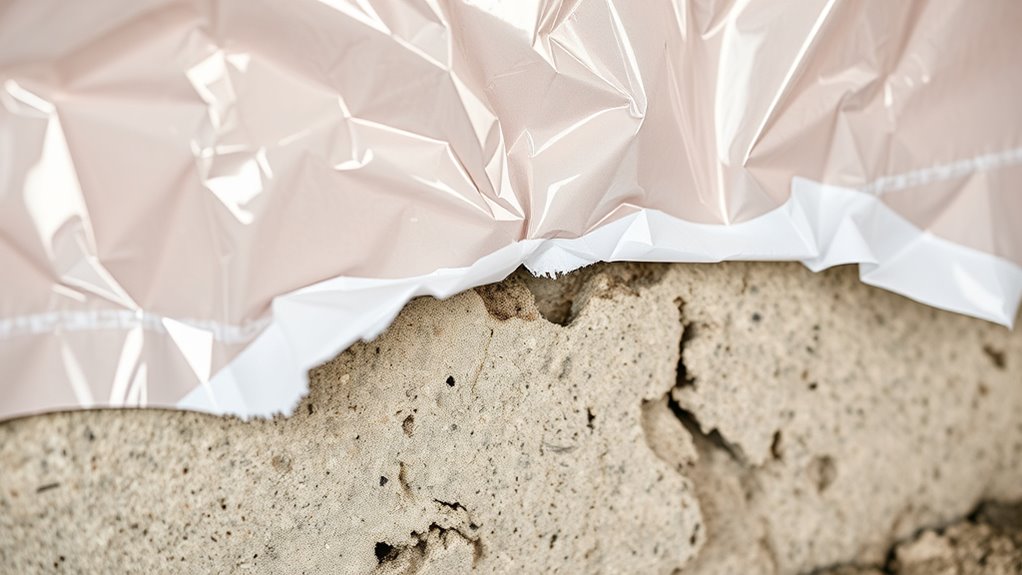
Moisture barriers are essential tools in protecting buildings and homes from water damage. They act as the first line of defense against moisture that can seep through foundations, walls, and floors, ultimately preventing mold growth, structural deterioration, and costly repairs. However, despite their importance, some builders cut corners during installation, which can lead to serious long-term issues. One common oversight involves disregarding proper installation techniques, often due to time constraints or a lack of understanding. Skipping critical steps, such as ensuring a continuous, airtight seal or properly overlapping seams, can create vulnerabilities that water and moisture can exploit. These shortcuts might save a little time initially, but they compromise the barrier’s effectiveness, exposing your property to moisture intrusion and damage.
Cutting corners during moisture barrier installation risks long-term water damage and structural issues.
Another challenge associated with moisture barriers is managing VOC emissions. Volatile Organic Compounds are chemicals released into the air from certain building materials, including some moisture barriers. When VOC emissions are high, they can contribute to poor indoor air quality, causing health issues like headaches, respiratory problems, and allergic reactions. Builders might opt for cheaper moisture barriers with higher VOC emissions to cut costs, but this decision can backfire, especially in tightly sealed homes where indoor air quality is critical. Choosing low-VOC or VOC-free options is a smarter move, not only for health reasons but also for ensuring the barrier’s longevity and effectiveness. It’s essential to balance cost and health considerations, understanding that a quality moisture barrier can prevent costly repairs caused by moisture damage down the line.
Installation challenges further complicate the proper application of moisture barriers. These barriers often need to be installed in confined spaces or awkward angles, which can be difficult without proper training or experience. Improper handling or positioning can lead to tears, gaps, or misaligned seams, all of which weaken the barrier. Working in tight spaces or on uneven surfaces requires patience and skill; rushing through the process increases the likelihood of mistakes. Additionally, environmental conditions like extreme temperatures or moisture during installation can affect the adhesive properties of the barrier, making it less effective. These challenges demand attention to detail and adherence to manufacturer guidelines, but sometimes builders overlook these details to save time, risking future water intrusion. Using proper installation techniques ensures the moisture barrier performs as intended and provides lasting protection.
In the end, cutting corners with moisture barrier installation may seem like a minor shortcut initially, but it can result in significant consequences, including VOC emissions that harm indoor air quality and vulnerabilities that allow moisture infiltration. To truly protect a building’s integrity, you need to prioritize thorough, careful installation and select materials that balance durability, safety, and environmental considerations. Skimping on these crucial steps might save a little money now, but the long-term costs of water damage, health issues, and repairs are far greater.
Top picks for "moisture barrier builder"
Open Amazon search results for this keyword.
As an affiliate, we earn on qualifying purchases.
Conclusion
Think of your moisture barrier like a sturdy shield protecting your home from unseen invaders. When builders rush or skip steps, that shield weakens, leaving gaps for moisture to sneak in. Just as a poorly crafted armor can’t defend a knight, a compromised barrier invites mold, damage, and costly repairs. By insisting on proper installation and quality materials, you’re strengthening your home’s defenses, ensuring it stays safe and dry—because a well-made shield is worth every effort.