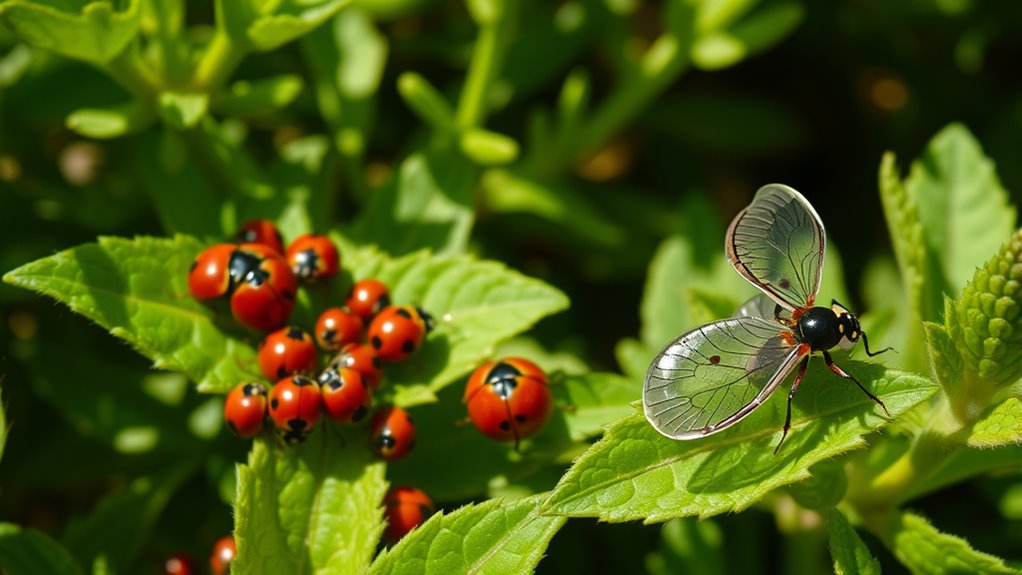

Many gardeners don’t realize that inviting beneficial predatory insects like ladybugs and lacewings can naturally control pests without chemicals. Instead of battling pests with pesticides, you can foster a healthy ecosystem where these helpful insects thrive. The key lies in understanding how to attract and support them effectively. Curious about simple steps to create this balanced environment and reduce harmful chemicals in your garden?
Key Takeaways
- Plant flowering plants like dill, fennel, and marigolds to attract beneficial predatory insects.
- Provide shelter through leaf piles or bark to encourage predatory insect habitation.
- Practice crop rotation to disrupt pest cycles and support a balanced ecosystem.
- Use beneficial nematodes to target soil-borne pests safely and effectively.
- Create a diverse habitat with nectar, pollen, and shelter for a natural, sustainable pest control system.
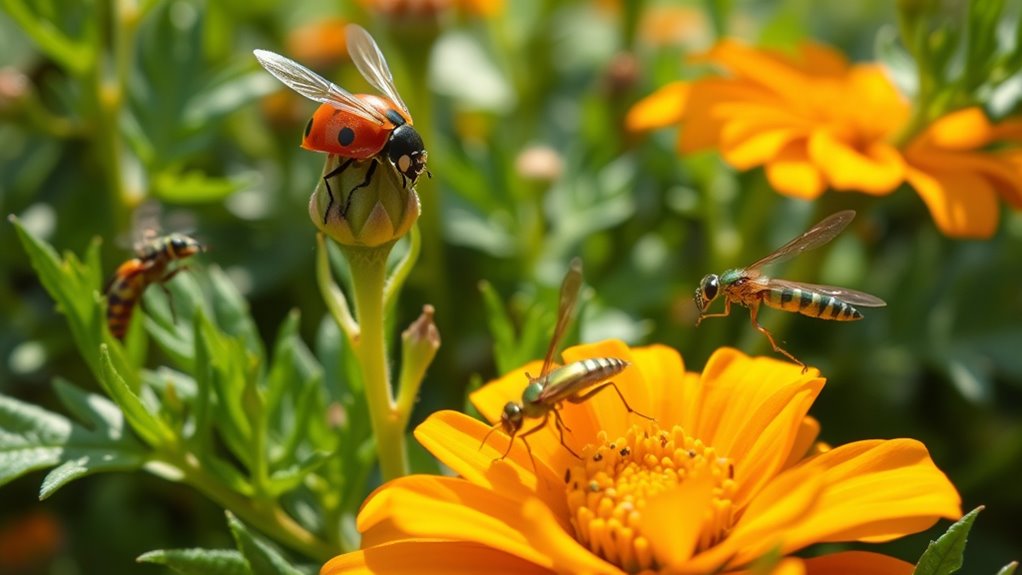
Are you tired of relying on chemical pesticides that can harm your garden and the environment? If so, embracing natural pest control methods can be a game-changer. One effective approach is to invite predatory insects into your garden, allowing them to naturally keep pest populations in check. These beneficial insects prey on common pests like aphids, mites, and caterpillars, reducing the need for chemical interventions. To attract these helpful insects, you can plant a variety of flowering plants that provide nectar and pollen, such as dill, fennel, and marigolds, which serve as food sources for ladybugs, lacewings, and parasitic wasps. Providing shelter, like small piles of leaves or bark, also encourages predatory insects to settle in your garden.
Invite beneficial insects with flowering plants and shelter to naturally control pests in your garden.
In addition to encouraging predatory insects, you should consider crop rotation as a fundamental part of pest management. Rotating crops prevents pests and diseases from establishing a foothold, disrupting their life cycles and reducing their populations over time. For example, if you grow tomatoes in one season, switching to beans or carrots the next can help break pest cycles specific to tomatoes. This practice not only minimizes pest issues but also improves soil health and nutrient cycling. It’s a simple yet powerful step toward sustainable gardening that reduces your reliance on chemical pesticides.
Another natural method to control pests involves the use of beneficial nematodes. These microscopic, soil-dwelling worms prey on pests like root maggots, grubs, and other soil-borne insects. You can purchase beneficial nematodes and apply them to your garden soil, especially during warm, moist conditions when they thrive. Once introduced, they actively seek out and infect pests, helping to control infestations without harming plants or beneficial insects. Beneficial nematodes are safe, environmentally friendly, and easy to use, making them an excellent addition to your integrated pest management strategy. Additionally, understanding the life cycle of pests can help you time your interventions more effectively.
Combining these methods creates a powerful, eco-friendly approach to pest control that relies on nature’s own predators and biological tools. Invite predatory insects by planting a diverse array of flowering plants, practice crop rotation to prevent pest buildup, and introduce beneficial nematodes into the soil. Together, these strategies help you maintain a healthy, balanced garden ecosystem, ensuring your plants thrive without the risks associated with chemical pesticides. With patience and consistency, you’ll find that a garden managed with natural pest control is not only safer for the environment but also more resilient and productive in the long run.

1000 Pyrethrum Seeds – Natural Mosquito Repellent Plants, Multi-Color Blooming Potted Flowers for Gardens, Cold-Hardy & Low-Maintenance
Contains 1000 colorful pyrethrum seeds with multi-color blooms, combining ornamental and practical values;
As an affiliate, we earn on qualifying purchases.
As an affiliate, we earn on qualifying purchases.
Conclusion
By inviting beneficial insects like ladybugs and parasitic wasps into your garden, you support a natural, eco-friendly way to control pests. Did you know that gardens with diverse flowering plants can attract up to 50% more helpful insects? This simple approach not only reduces chemical use but also creates a healthier, more resilient ecosystem. Embrace natural pest control today and enjoy a vibrant, balanced garden that thrives without harmful toxins.

BioLogic's Scanmask Steinernema Feltiae (Sf) Beneficial Nematodes for Natural Insect Pest Control, 5 Million Size
NATURAL PEST CONTROL: Kills over 230 different pests. Safe for people, pets, plants and beneficials!
As an affiliate, we earn on qualifying purchases.
As an affiliate, we earn on qualifying purchases.

NaturesArt 1500 Live Ladybugs – Good Bugs for Garden – Ladybug – Guaranteed Live Delivery!, AR-18000
1500 Live Ladybugs: Each pack contains a generous amount of 1500 ladybugs, providing ample coverage to enhance your…
As an affiliate, we earn on qualifying purchases.
As an affiliate, we earn on qualifying purchases.

Wooden Insect House, Insect Hotel for Bugs, Bees, Butterflys, Ladybirds, Natural Beneficial Insect Habitat for Garden and Yard
Constructed with durable and natural cedar wood, this house includes a ground stake
As an affiliate, we earn on qualifying purchases.
As an affiliate, we earn on qualifying purchases.