TL;DR

Get compact home essentials delivered free with Prime
- Fast, free delivery on millions of items
- Prime Video, Amazon Music and more included
- Member-only deals all year
A Hunker report describes decorating Halloween pumpkins with rhinestones and stick-on gems instead of carving them. The approach avoids cutting and hollowing, but the report does not provide data showing how widespread the social media trend is.
Hunker has reported on a Halloween decorating idea that replaces carved pumpkin faces with rhinestones and stick-on gems, giving people a way to personalize porch displays without cutting into the fruit. The report describes the style as a social media trend, but does not provide figures to show how many people are adopting it.
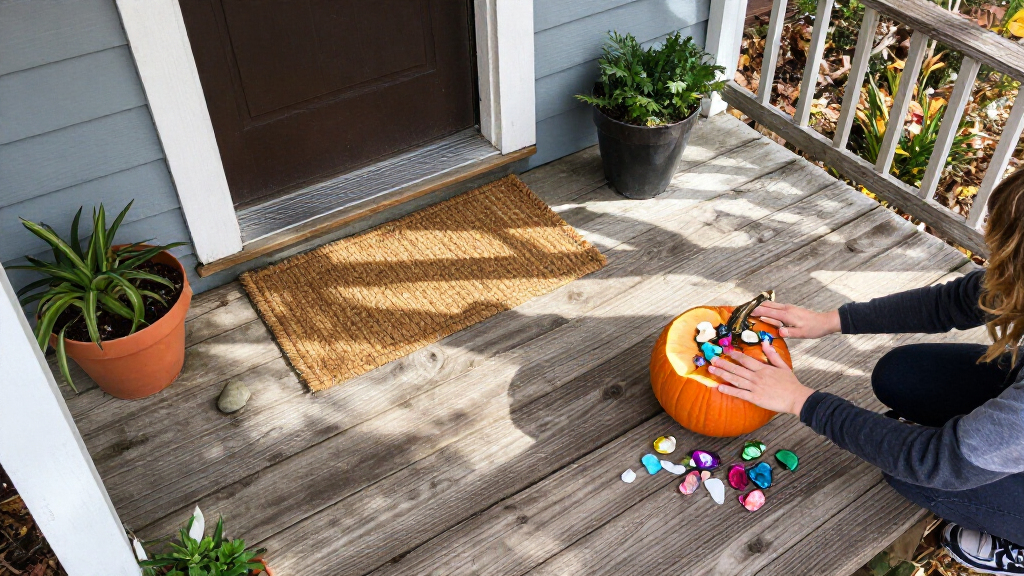
The decorating approach ranges from placing a few oversized gems on a pumpkin to covering it with small rhinestones. The Hunker report says creators arrange gems in patterns, follow the pumpkin’s natural grooves, build flower-like designs around larger stones, or use contrasting colors to make jack-o’-lantern faces. Others scatter stones for a less planned look.
For a basic project, the report advises cleaning the pumpkin and letting it dry before decorating. Makers can plan a design on a work surface, then use tweezers or a rhinestone pickup tool to handle the stones and apply a small amount of glue, such as Gem Tac, to each gem. These are tips from the report, not a tested comparison of adhesives or a guarantee that decorations will remain attached in outdoor weather.
Real and artificial pumpkins can both be decorated. The report says faux pumpkins may last longer and avoid rotting, while real pumpkins vary naturally in shape. Anyone planning to compost a real pumpkin should remove rhinestones, stickers and other noncompostable decorations first.
A Halloween Display Without Carving
The main practical difference is that this method does not require a knife, scooping out the center or committing to a cut design. That can make it a simpler activity for households that want a seasonal display but would rather skip the mess and preparation associated with carving. It also leaves the pumpkin intact while the decorations are on it.
The source characterizes the approach as involving less risk of injury than carving. That is a relative point, not a claim that the activity is risk-free: small gems can pose hazards for young children, and glue should be used according to its instructions. The choice also has an end-of-season consequence. Decorative materials need to be removed before a real pumpkin is composted.
As an affiliate, we earn on qualifying purchases.
From Gem-Decorated Objects to Pumpkins
Hunker places the pumpkin idea within a broader interest in bedazzling, which it also calls “gem-maxxing.” The report says creators have applied decorative gems to everyday items such as water bottles, phones and beauty-product packaging, and links the look to what it describes as a wider “whimsy-maxxing” trend. A pumpkin brings that style into seasonal porch decor.
The report offers several color and material combinations as design suggestions rather than established best practices: clear gems or pearls on a white pumpkin, violet stones on a purple one, gold accents on a pale green-painted pumpkin, or bright decorations against a black faux pumpkin. It presents these as possibilities, not as a ranked list of the season’s most popular designs.
““It’s time to trade in a spooky face for a little sparkle.””
— Hunker report
How Broad Is the Trend?
The source describes gem-decorated pumpkins as a social media trend, but it gives no platform data, survey results, sales figures or time-series comparisons to measure how common the style is or whether its popularity is rising. The report also does not name specific creators or provide examples that can be independently checked from the supplied material.
It does not compare the cost, outdoor durability or removal difficulty of different gems and glues. Whether decorations stay put will depend on the materials and display conditions; the source provides no weather-testing results. Its claim that the idea carries less injury risk than carving is not accompanied by injury statistics.
What Decorators Should Check
The report does not identify a future announcement, event or next milestone for the trend. For people trying the project, the practical next steps are to choose a real or artificial pumpkin, clean and dry its surface, and test a small section if they are unsure how a chosen adhesive will behave. Follow the adhesive label and keep small gems away from young children and pets.
After Halloween, remove decorations before disposing of or composting a real pumpkin. Whether this style becomes more widely adopted, and which designs prove most popular, remains unclear from the available reporting.
Key Questions
What are bedazzled pumpkins?
They are pumpkins decorated with rhinestones, pearls or stick-on gems instead of relying on carving. Designs can use a few large stones, rows along the pumpkin’s grooves or a more scattered arrangement.
How does the Hunker report suggest attaching the gems?
The report suggests cleaning and drying the pumpkin, then applying a small amount of glue, such as Gem Tac, to each gem. It mentions tweezers or a rhinestone pickup tool for handling small stones. The source does not compare adhesives or test how well they hold outdoors.
Can a real pumpkin be composted after decoration?
Yes, but the report advises removing all rhinestones, stickers and other noncompostable decorations first. Leaving them on could introduce materials that do not belong in compost.
Is this a widespread Halloween trend?
The report calls gem-decorated pumpkins a social media trend, but provides no usage or sales data to establish how widespread the idea is. Its popularity cannot be measured from the supplied information.
Source: rss
Halloween Picks
halloween
As an affiliate, we earn on qualifying purchases.