
To master nutrition in a tiny house, focus on simple, nutrient-dense foods like fresh produce, lean proteins, and whole grains. Plan meals ahead and prep ingredients to save space and time. Use smart storage solutions like stackable containers and clear jars to keep everything organized and fresh. Prioritize quality over quantity and avoid bulk buying to prevent clutter. Keep your diet balanced and efficient—more tips await if you continue exploring.
Key Takeaways
- Prioritize nutrient-dense, versatile foods like fresh produce, lean proteins, and whole grains to maximize nutrition in limited space.
- Plan and prep meals in advance using batch-cooked ingredients to save space and time.
- Use compact, multi-purpose storage containers to organize and keep food fresh efficiently.
- Focus on quality over quantity by buying smaller amounts of fresh, perishable ingredients regularly.
- Maintain a balanced diet through thoughtful ingredient combinations and mindful portion control.
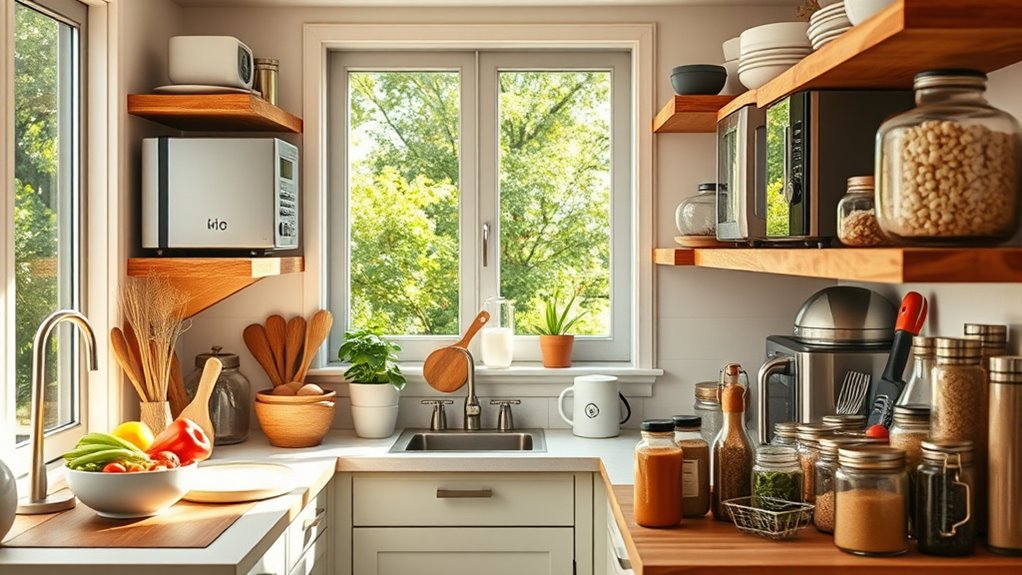
Living in a tiny house challenges you to rethink how you approach nutrition, but it also offers an opportunity to simplify your diet and make healthier choices. With limited space, you can’t just stockpile a pantry full of processed snacks or bulk ingredients. Instead, you learn to focus on essential, nutritious foods that support your well-being without cluttering your small living area. One effective way to do this is through strategic meal prep, which allows you to plan and prepare your meals in advance, reducing daily cooking time and minimizing food waste. Compact, versatile kitchen tools can help you chop, cook, and store ingredients efficiently, ensuring you stay nourished without sacrificing space. When you meal prep, you also control portion sizes, which helps avoid overeating and makes it easier to maintain a balanced diet.
Simplify your diet with strategic meal prep and space-saving storage solutions for healthier living in a tiny house.
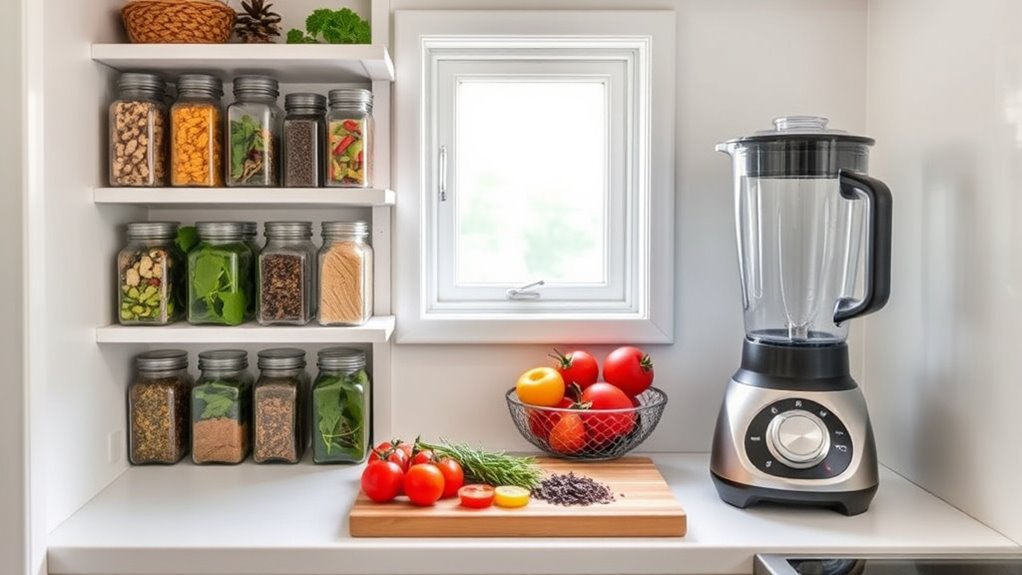
Storage solutions are crucial in tiny house living, as they directly impact your ability to keep healthy foods accessible and fresh. Opt for multi-purpose containers that stack neatly, maximizing vertical space while keeping ingredients organized. Clear, airtight jars and modular shelves can help you see what you have at a glance, reducing the risk of forgotten or expired items. Invest in clever storage hacks, such as magnetic spice racks or under-shelf baskets, to utilize every inch of your limited space. Proper storage not only keeps your food fresh longer but also encourages meal planning, as you can easily see what ingredients you have on hand for nutritious meals. This organization helps you avoid last-minute trips to the grocery store and keeps your diet balanced with fresh produce, lean proteins, and whole grains. Additionally, incorporating healthy convenience foods can further streamline your meal prep process without sacrificing quality.
Living in a tiny house also prompts you to prioritize quality over quantity. Instead of buying in bulk, focus on purchasing smaller amounts of nutrient-dense foods that you can consume quickly. Fresh fruits and vegetables, lean meats, and whole grains become staples because they’re easy to store in small quantities and offer maximum health benefits. When space is tight, you learn to get creative with your meals, combining ingredients in new ways to keep things interesting. You might prep a batch of roasted vegetables or cooked grains at the start of the week, then use them in different salads, wraps, or bowls. This not only saves space but also keeps your diet varied and flavorful.
In the end, tiny house living encourages you to develop a mindful approach to nutrition—one driven by careful meal prep, smart storage solutions, and choosing quality, versatile ingredients. It’s about making the most of every inch of space while ensuring your body gets the nourishment it needs. This lifestyle helps you focus on what truly matters: eating intentionally and maintaining a healthy, sustainable diet that fits your simplified living environment.
compact stackable food storage containers
As an affiliate, we earn on qualifying purchases.
As an affiliate, we earn on qualifying purchases.
Frequently Asked Questions
How Can I Store Fresh Produce Without a Traditional Refrigerator?
You can store fresh produce without a traditional fridge by using creative methods like indoor herb gardening and composting techniques. Keep leafy greens in a damp cloth in a cool, dark spot, and use airtight containers for root vegetables. Incorporate composting to reduce waste, and grow herbs indoors to supplement your diet. These strategies help preserve freshness and maximize space, making tiny house living sustainable and efficient.
What Are the Best Portable Cooking Appliances for Tiny Homes?
Your tiny house’s kitchen deserves appliances that are as powerful as a full-sized setup. Compact appliances like portable induction cooktops or single-burner stoves are perfect, offering efficiency without sacrificing space. Opt for energy-efficient devices that save power and reduce your carbon footprint. These appliances are lightweight, easy to transport, and versatile, making your cooking experience seamless and sustainable in your tiny home adventure.
How Do I Manage Food Waste Efficiently in Limited Space?
To manage food waste efficiently, you should start with composting methods suited for small spaces, like vermicomposting or countertop compost bins. These options help reduce waste and create nutrient-rich soil. Also, practice food preservation techniques such as freezing, drying, or vacuum sealing to extend shelf life. By integrating these methods, you minimize waste, optimize storage, and keep your tiny house organized and eco-friendly.
Are Dehydrated or Freeze-Dried Foods Suitable for Daily Nutrition?
Like a modern knight with a flash of medieval ingenuity, you can consider dehydrated or freeze-dried foods for daily nutrition. They’re lightweight, have long shelf lives, and save space through smart storage solutions. For consistent health, incorporate meal planning, balancing these foods with fresh options. Just remember, while convenient, they may lack some nutrients, so diversify your diet to stay energized and well-nourished in your tiny home adventure.
What Are Quick, Nutritious Meal Ideas for Busy Tiny House Dwellers?
You can whip up quick, nutritious meals by focusing on meal prep with versatile ingredients like pre-chopped vegetables, canned beans, and cooked grains. Make simple salads, wraps, or stir-fries that come together fast. Keep healthy snack options like nuts, dried fruit, or yogurt on hand for busy moments. These ideas help you stay fueled without sacrificing time, making your tiny house lifestyle more manageable and nutritious.

ComSaf Airtight Glass Storage Canister with Lids (0.7Qt/1.2Qt/1.6Qt) Set of 6, Food Storage Container Kitchen Pantry Storage Jar, Glass Jars for Flour Cereal Sugar Tea Coffee Beans Snacks, Square
Versatile Glass Canisters: Experience the versatility of our glass pantry storage containers; ideal for storing cereals, cookie, snacks,…
As an affiliate, we earn on qualifying purchases.
As an affiliate, we earn on qualifying purchases.
Conclusion
Living tiny means you get creative with your meals and prioritize what truly fuels you. As you settle into your small space, you might find that the best snacks come from unexpected places—like that neglected jar of nuts or a forgotten fruit in the corner. It’s funny how a tiny house can lead to big discoveries about your nutrition habits. Embrace the simplicity, and you’ll find staying healthy becomes a natural part of your cozy, compact life.
multi-purpose kitchen tools for small spaces
As an affiliate, we earn on qualifying purchases.
As an affiliate, we earn on qualifying purchases.

Sevenblue 4 Pack Strong Magnetic Spice Rack for Refrigerator, Multipurpose Magnetic Shelf for Fridge with 4 Hooks for kitchen and Bathroom Organization, Black
Magnetic Convenience: Featuring a reliable magnetic design, this spice rack securely attaches to refrigerator doors, providing easy access…
As an affiliate, we earn on qualifying purchases.
As an affiliate, we earn on qualifying purchases.