Did you know that homes with open-concept layouts sell for up to 10% more than those with traditional, segmented spaces? As you consider how to add value to your property in 2025, it’s important to weigh the appeal of spacious, social environments against the privacy and comfort of defined areas. Understanding which design trend aligns best with future market demands could make a significant difference in your investment—so, what’s the smarter choice?
Key Takeaways
- Open-concept layouts can increase property value through enhanced social appeal and spaciousness.
- Defined spaces appeal to buyers prioritizing privacy and customizable lighting, boosting long-term desirability.
- The layout’s alignment with lifestyle needs influences its impact on home value in 2025.
- Thoughtful lighting and privacy solutions can enhance the value of both open and defined space designs.
- Trends favoring modern, flexible, and functional spaces will determine which layout adds more value in 2025.
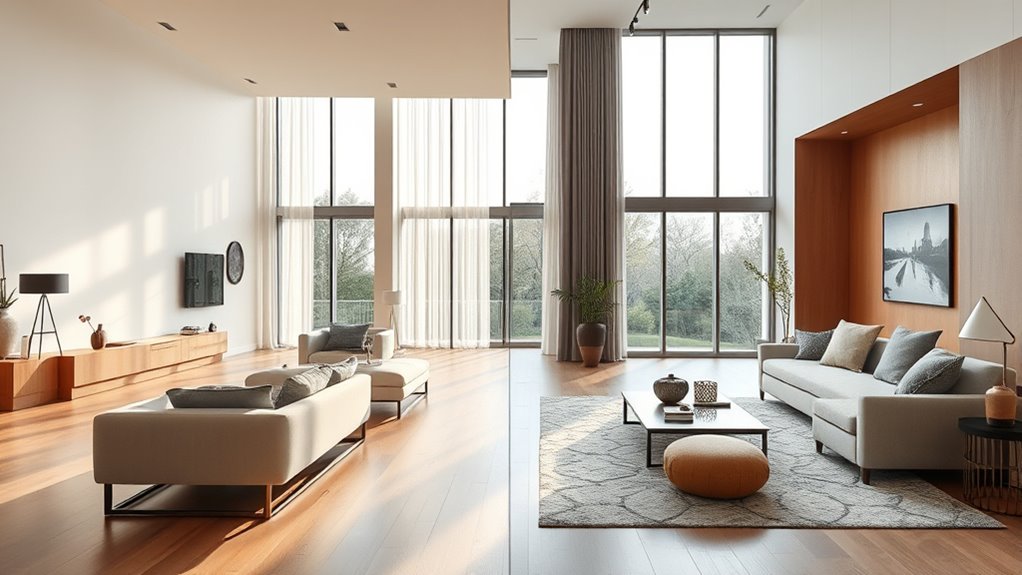
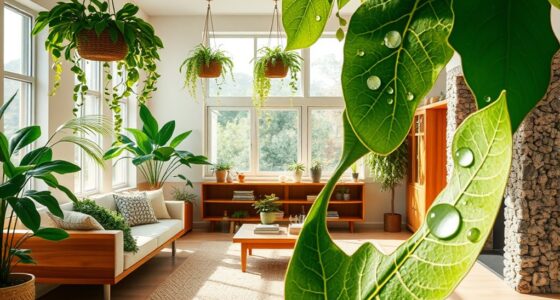
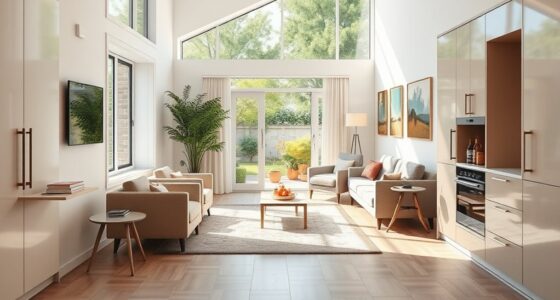
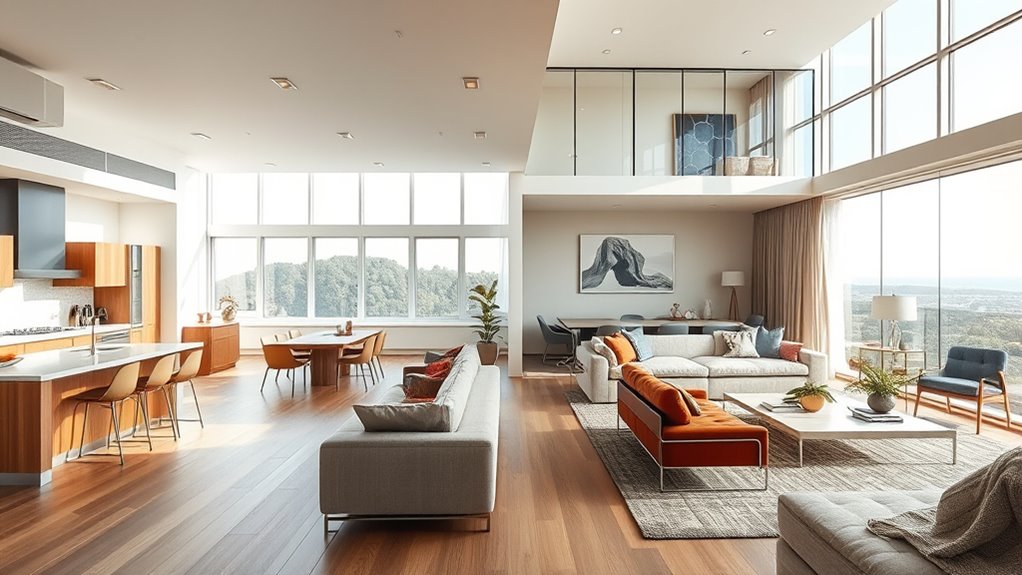
Choosing between open-concept and defined spaces can substantially impact how you experience your home. It’s a decision that influences not just aesthetics but also functionality, comfort, and even the value of your property in 2025. When you’re considering an open-concept layout, one of the key factors to evaluate is lighting design. Without walls to block natural light, these spaces tend to feel brighter and more inviting, especially if your windows are well-placed. Open layouts allow sunlight to flow freely, reducing the need for artificial lighting during the day and creating a warm, welcoming atmosphere. However, this expansive openness can also make it challenging to control lighting in specific areas, which might require strategic placement of fixtures or layered lighting options to avoid glare or overly bright spots.
Open-concept layouts boost natural light but require strategic lighting solutions for comfort and ambiance.
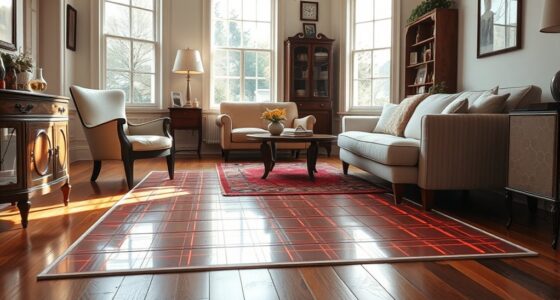
On the other hand, defined spaces give you the ability to design lighting with precision. You can set the mood room by room—dim the living room lights for movie night or brighten the kitchen for cooking. This level of control enhances not just ambiance but also energy efficiency, since you’re not lighting the entire area when only one part needs illumination. But the flip side is that defining walls and partitions can limit natural light flow, potentially making some rooms feel darker and less lively unless you incorporate clever lighting design techniques. This is where thoughtful placement of windows, skylights, or glass partitions can help balance privacy concerns with effective lighting.
Privacy concerns are another major consideration. In an open-concept space, privacy can be more difficult to achieve, especially when entertaining guests or managing household routines. You might find yourself wishing for some separation between your kitchen and living areas or bedrooms, which can be tricky without walls. Conversely, defined spaces inherently offer more privacy, allowing you to create secluded zones for work, relaxation, or sleep. Yet, sometimes, the openness fosters better communication and connection within your household, which can add intangible value. If privacy is a priority, you might consider multi-functional spaces with movable screens or sliding doors that offer flexibility—merging the benefits of both layouts. Additionally, incorporating natural materials like wood and linen can help soften the division between spaces, creating a more cohesive and inviting environment.
Ultimately, your choice hinges on your lifestyle and priorities. Open-concept homes boost social interaction and make spaces feel larger, which can increase value in bustling, modern neighborhoods. Defined spaces, however, offer comfort, privacy, and tailored lighting that appeal to families or those seeking a more traditional feel. In 2025, the deciding factor will be how well each layout aligns with your daily routines, aesthetic preferences, and long-term goals for your home’s value.
Conclusion
Ultimately, whether you prefer open or defined spaces, striking a smart balance boosts your home’s value. Embrace the blend by blending bold, beautiful boundaries with bright, breezy openness. This dynamic duo delivers the best of both worlds—privacy and personality, spaciousness and style. By thoughtfully tailoring your layout to match your lifestyle, you’ll create a welcoming, valuable space that appeals to modern buyers and maximizes your home’s worth now and in the future.

Hi, I’m Emma. I’m the Editor in Chief of Tiny House 43, a blog all about tiny houses. While tree houses are often associated with childhood, they can be the perfect adult retreat. They offer a cozy space to relax and unwind, surrounded by nature. And since they’re typically built on stilts or raised platforms, they offer stunning views that traditional homes simply can’t match. If you’re looking for a unique and romantic getaway, a tree house tiny house might just be the perfect option.