Building a permanent tiny guesthouse involves planning a sturdy foundation, like concrete slab or pier and beam, suited to your site conditions. Use sustainable, durable materials such as reclaimed wood or recycled steel to guarantee longevity and eco-friendliness. Design carefully to include utilities like plumbing and electricity while considering climate and local regulations. Focus on creating a functional, cozy space that adds value to your property. To discover more tips on making your guesthouse last for years, keep exploring these essential steps.
Key Takeaways
- Choose a suitable foundation type, such as concrete slab or pier-and-beam, based on site conditions and long-term stability needs.
- Select sustainable, durable materials like reclaimed wood, recycled steel, or bamboo to ensure eco-friendliness and longevity.
- Design the guesthouse layout to accommodate utilities like plumbing, electricity, and insulation for year-round comfort.
- Consider local climate, drainage, and regulatory requirements to ensure proper construction, safety, and compliance.
- Invest in a high-quality foundation and materials to create a durable, functional, and environmentally responsible guesthouse.
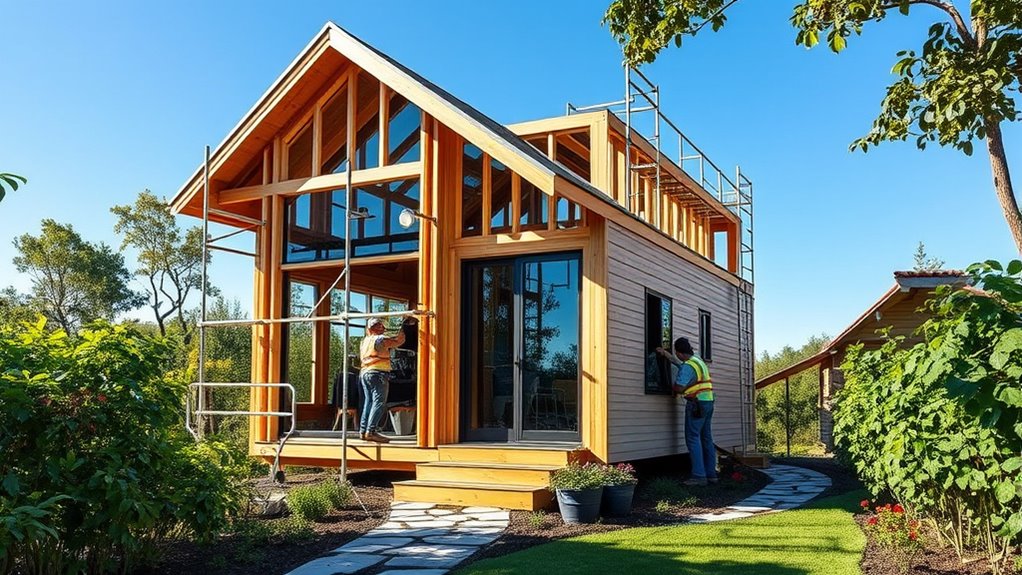
Creating a permanent tiny guesthouse is an excellent way to add functional space without sacrificing your yard’s charm. When you decide to build something meant to last, focusing on a solid permanent foundation becomes essential. A well-constructed foundation ensures your guesthouse remains stable, safe, and durable over time. You’ll want to select the right type—whether concrete slab, pier and beam, or stem wall—based on your site conditions and personal preferences. This foundation not only supports the structure but also helps prevent issues like shifting or settling that can compromise the integrity of your tiny home down the line.
Using sustainable materials is another key aspect of building a guesthouse that’s both environmentally friendly and long-lasting. You can choose eco-conscious options like reclaimed wood, recycled metal, or sustainably harvested timber. These materials reduce your carbon footprint and often provide better insulation, helping your guesthouse stay comfortable year-round. Incorporating sustainable choices also aligns with a desire to create a structure that respects the environment while standing the test of time. From eco-friendly insulation to non-toxic paints, every material you select contributes to a healthier space and planet.
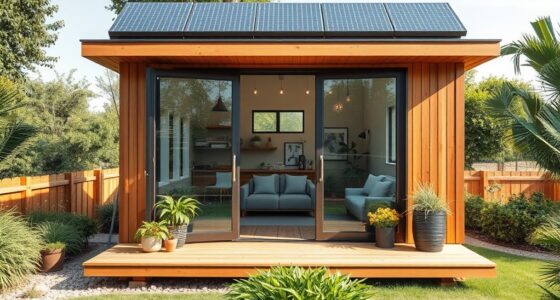
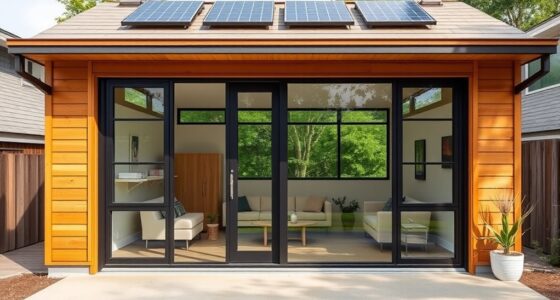
Choosing eco-friendly materials like reclaimed wood and recycled metal ensures durability and environmental responsibility.
When planning your build, keep in mind that a permanent tiny guesthouse isn’t just about size; it’s about creating a space that feels welcoming and functional. Your foundation should be carefully planned to accommodate utilities like plumbing, electricity, and heating. This ensures your guesthouse isn’t just a pretty addition but a fully livable space. In choosing sustainable materials, think about durability as well. For example, bamboo flooring is both sustainable and resilient, making it an excellent choice for high-traffic areas. Similarly, using recycled steel for framing can provide strength while reducing waste.
You’ll also want to consider the local climate and conditions when selecting materials and designing your foundation. Proper drainage and insulation are essential to prevent moisture issues and maintain comfort. Additionally, understanding local regulations and zoning laws is crucial before starting construction, as these can significantly impact your building process and compliance. By investing in a permanent foundation and choosing sustainable materials, you’re setting your tiny guesthouse up for decades of reliable use. It’s an investment in your property that enhances its value, reduces environmental impact, and offers a cozy retreat for visitors or family. With thoughtful planning and quality materials, your tiny guesthouse will stand as a durable, eco-friendly addition that complements your yard’s charm for years to come.
Frequently Asked Questions
What Permits Are Required for a Tiny Guesthouse?
You need to check your local zoning restrictions first, as they determine if you can build a tiny guesthouse on your property. Then, you’ll go through the permit application process, which involves submitting plans and paying fees. Contact your city or county building department to get specific requirements. Making certain you follow all regulations helps avoid delays and ensures your tiny guesthouse is legal and safe for guests.
How Do I Ensure Proper Insulation and Ventilation?
A stitch in time saves nine, so start with proper insulation techniques like spray foam or mineral wool to keep your guesthouse cozy. Guarantee good ventilation by installing vents, exhaust fans, or windows that open easily. Use passive ventilation methods like cross-ventilation to improve airflow naturally. Combining effective insulation and ventilation methods creates a comfortable, energy-efficient space where your guests feel right at home.
What Are Cost-Effective Material Options?
You should consider sustainable materials like reclaimed wood, bamboo, or recycled metal, which are both eco-friendly and budget-friendly options. Using these materials helps keep costs down while supporting sustainability. You might also look into inexpensive insulation options like cellulose or spray foam, which enhance energy efficiency. Combining these sustainable choices ensures your guesthouse is affordable, environmentally responsible, and comfortable for visitors.
How Long Does Construction Typically Take?
Think of construction as planting a seed that needs time to grow. Typically, it takes about 3 to 6 months, depending on your foundation planning and zoning regulations. You’ll start with groundwork, ensuring the foundation is solid and compliant, then move on to framing and finishing. Rushing can cause issues, so patience guarantees your tiny guesthouse becomes a sturdy, charming retreat that’s ready to welcome visitors.
Can I Customize the Design Easily?
Yes, you can customize the design easily. With design flexibility in mind, you can choose layouts, styles, and features that suit your needs. Material customization allows you to select different finishes, colors, and building materials, making your tiny guesthouse uniquely yours. This approach guarantees that your guesthouse fits seamlessly into your space and reflects your personal taste, all while maintaining practicality and durability.
Conclusion
As you finish building your tiny guesthouse, it’s funny how the small space feels so welcoming, almost like it was meant for you all along. The coincidence of turning a simple project into a cozy retreat reminds you that sometimes, the best things come from just taking a chance. Now, with a place for visitors and memories to be made, you realize that tiny can truly be mighty, and your dream has finally found its perfect home.