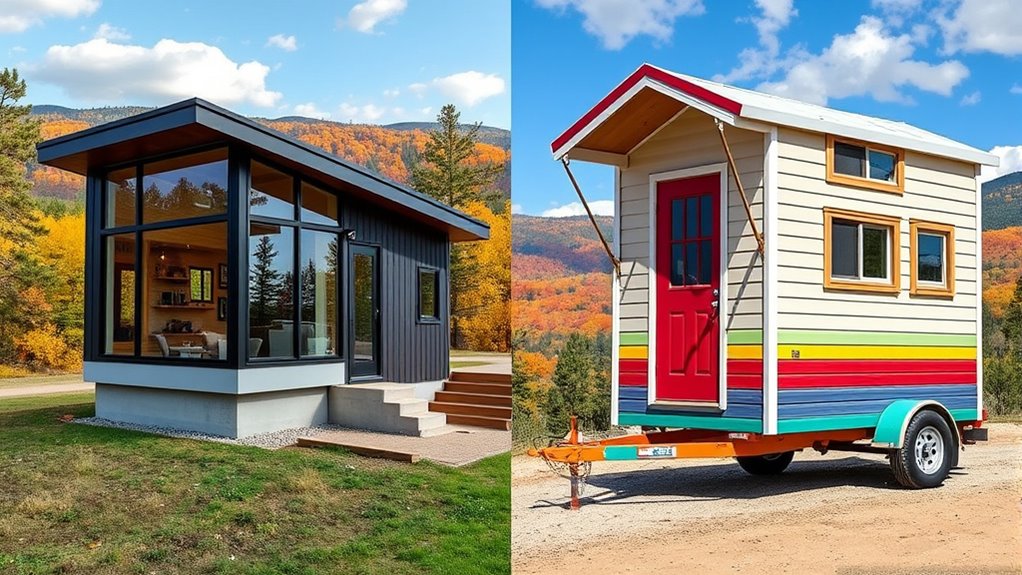

When choosing between a permanent and portable tiny house, consider your lifestyle and priorities. Permanent homes are built for stability, offering long-term durability, customization, and a cozy environment for year-round living. Portable tiny houses on wheels provide mobility, flexibility, and the ability to explore new locations easily. Both options can include luxury features and off-grid systems. If you want to discover which fits your needs best, keep exploring the differences and benefits of each option.
Key Takeaways
- Permanent tiny houses are built on foundations for stability, while portable ones are on wheels for mobility.
- Fixed homes support extensive customization and luxury features; portable options are lighter and less customizable.
- Permanent options offer year-round living with better insulation and utilities; portable homes are ideal for mobility and remote exploration.
- Choice depends on lifestyle priorities: stability and customization versus flexibility and travel.
- Both types can include off grid systems, but permanent homes are better suited for long-term, fixed residence.
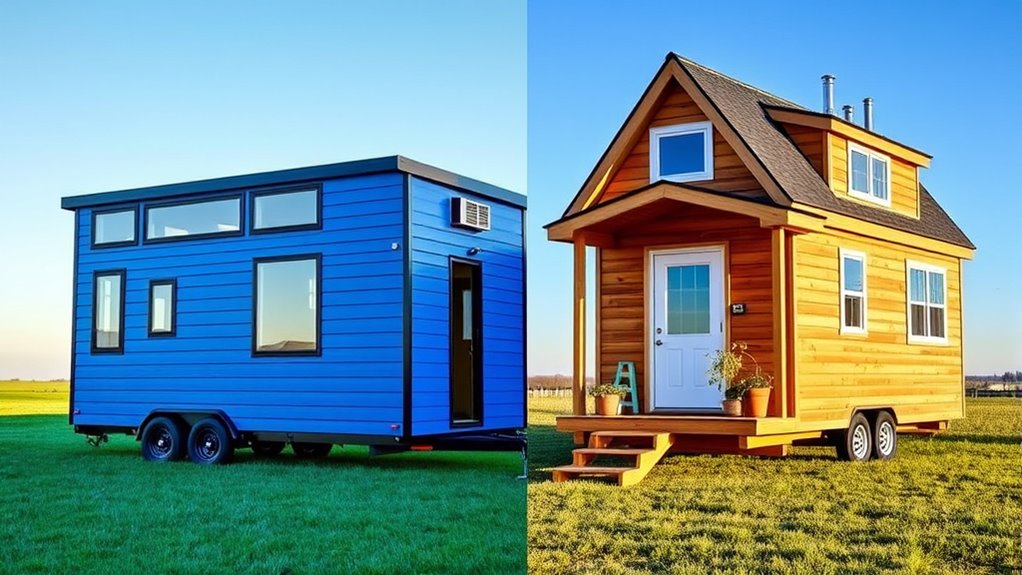
Are tiny houses the perfect solution for affordable, efficient living? It’s a question many consider as they explore options for simplifying their lifestyle. When it comes to tiny house options, you’ll find two main choices: permanent and portable. Both have their advantages, but understanding their differences helps you decide which aligns best with your goals, especially if you’re interested in off grid living or luxury features.
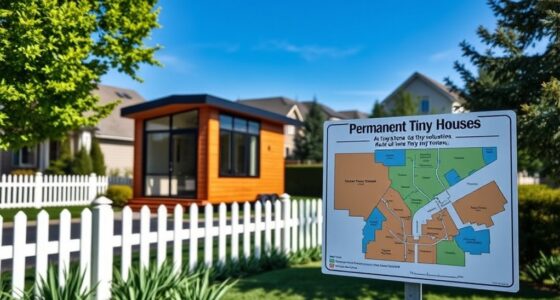
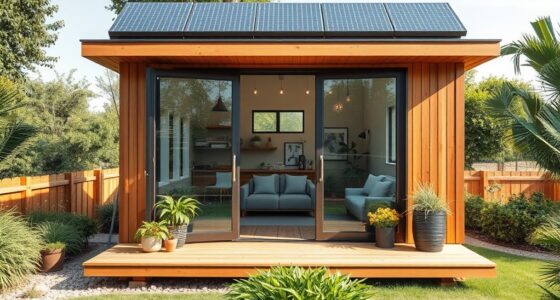
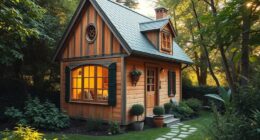
Permanent tiny houses are built to stay put. They’re designed with stability and durability in mind, often installed on a foundation or a minimal footing system. If you’re looking for a long-term residence, this option offers the comfort of a traditional home with a smaller footprint. You won’t have to worry about moving it around, which means you can invest in luxury features like high-end appliances, custom cabinetry, or even solar power systems that support off grid living. These homes often include enhanced insulation, better plumbing, and electrical setups, making them suitable for year-round living in various climates. Plus, since they’re fixed in place, you can expand or customize them more extensively, creating a personalized space that truly fits your lifestyle.
Permanent tiny houses offer stability, durability, and the ability to customize with luxury features for year-round living.
On the other hand, portable tiny houses give you the flexibility to move wherever you want. If you’re someone who values mobility or plans to travel extensively, a portable tiny house might be the better fit. You can take your home to different locations, whether it’s a scenic rural area or a vacation spot, without the hassle of traditional moving. This mobility also means you can explore off grid living in remote locations, enjoying privacy and natural surroundings. Many portable tiny houses come equipped with luxury features, such as energy-efficient appliances, composting toilets, and solar panels, making off grid living both comfortable and sustainable. Because they’re built on wheels or skids, these homes are generally lighter and easier to transport, but that also means there are some limitations on size and the amount of luxury features you can incorporate compared to permanent options.
Ultimately, your choice depends on your lifestyle, budget, and priorities. If you’re seeking a permanent, customized retreat with all the luxury comforts and the ability to live off grid, a fixed tiny house might be best. If you prefer the freedom to relocate, explore different environments, and enjoy off grid living wherever you go, a portable tiny house offers unmatched flexibility. Both options can be tailored to include the features you desire, ensuring your tiny house fits seamlessly into your life.
Frequently Asked Questions
Are Portable Tiny Houses More Cost-Effective Than Permanent Ones?
Yes, portable tiny houses are generally more cost-effective than permanent ones. The cost comparison shows that portable options often require lower upfront investment because they don’t need a foundation or extensive permits. Plus, their mobility benefits allow you to relocate easily, saving money on moving expenses. You get flexibility and affordability, making portable tiny houses a smart choice if you want to minimize costs while enjoying the benefits of mobility.
How Do Zoning Laws Differ for Permanent and Portable Tiny Houses?
You’ll find zoning restrictions vary considerably for permanent and portable tiny houses. About 60% of municipalities have strict land use regulations that limit permanent tiny homes on certain properties, while portable options often face fewer zoning restrictions. Portable tiny houses typically qualify as RVs or trailers, making them easier to place without extensive land use permits. However, always check local zoning laws, as they can still restrict where you can legally park or live in them.
Can Portable Tiny Houses Be Customized Extensively?
Yes, portable tiny houses can be customized extensively. Thanks to modular design, you can choose different layouts, features, and upgrades to suit your needs. Interior flexibility allows you to add or remove elements like furniture, appliances, or storage solutions easily. This adaptability makes portable tiny houses a great choice if you want a personalized space that can evolve with your lifestyle, all while maintaining mobility and convenience.
What Are the Best Locations for Permanent Tiny House Installation?
You should consider locations with flexible land leasing options and good mobile mobility. Look for properties that allow tiny house installation without strict zoning restrictions, like rural areas or designated tiny house communities. confirm the land offers easy access for transportation and stability. Choosing a location with supportive local regulations makes it easier to install your permanent tiny house, giving you a secure setup with the freedom to move if needed.
How Does Insurance Coverage Vary Between Permanent and Portable Options?
Insurance implications differ between permanent and portable tiny house options. Permanent homes typically have broader coverage and more thorough policies, but they may face higher premiums and coverage limitations due to fixed location risks. Portable tiny houses often have specialized policies with coverage limitations, focusing on mobility and location changes. You should compare policies carefully to make sure your chosen option provides sufficient protection, considering potential risks like theft, damage, or relocation.
Conclusion
Choosing between a permanent or portable tiny house is like deciding whether to plant deep roots or enjoy the freedom of the open sky. A permanent home anchors you, offering stability and a sense of belonging, while a portable one invites adventure and the thrill of new horizons. Whichever path you pick, remember that your tiny house is more than just walls—it’s a symbol of your dreams, your journey, and the space where your true self can flourish.