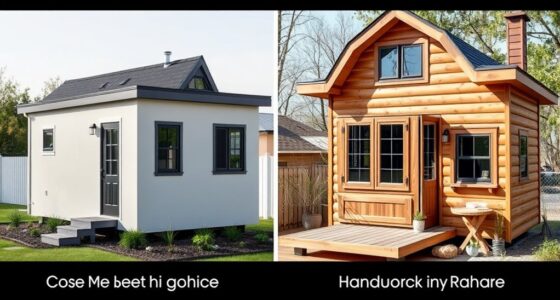
Prefab tiny house factories around the world are transforming small living with sustainable materials, innovative manufacturing, and regional designs. You can find factories in North America, Europe, Australia, and Asia, all focusing on eco-friendly, energy-efficient homes built rapidly in controlled environments. These factories guarantee high quality, durability, and customization options. If you want to explore how these facilities are shaping the future of tiny homes globally, there’s much more to uncover about this growing industry.
Key Takeaways
- North American factories focus on energy-efficient designs and eco-friendly materials for sustainable tiny homes.
- European prefab plants prioritize insulation and airtight construction suited for diverse climates.
- Asian and Australian manufacturers integrate local resources and innovative building techniques into their production.
- Globally, factories utilize advanced manufacturing methods like precision cutting and modular assembly for rapid delivery.
- The worldwide trend emphasizes sustainable, customizable tiny homes produced in controlled environments for quality and efficiency.

Prefab tiny house factories are transforming how people build and live in small homes. These factories leverage innovative manufacturing processes that streamline construction, reduce waste, and guarantee consistent quality. Instead of traditional building methods, which can be slow and labor-intensive, prefab factories produce entire sections or even complete tiny homes in controlled environments. This shift means you can have a home delivered and assembled quickly, with less disruption and on a timeline you can rely on.
One of the key advantages of these factories is their focus on sustainable materials. Manufacturers prioritize eco-friendly options, such as reclaimed wood, recycled steel, and low-impact insulation, to minimize the environmental footprint of each tiny house. Using sustainable materials not only helps reduce waste during production but also results in a home that’s more energy-efficient and healthier to live in. Because the manufacturing process is carefully controlled, you get consistent use of high-quality, sustainable resources, which enhances durability and reduces the need for future repairs or replacements.
Sustainable materials reduce waste, improve energy efficiency, and ensure durable, eco-friendly tiny homes built with carefully controlled manufacturing.
Across the globe, prefab tiny house factories are adopting these sustainable materials and modern manufacturing processes to meet growing demand. In North America, many companies emphasize energy-efficient designs and eco-conscious materials, making tiny homes a practical choice for those committed to reducing their carbon footprint. European factories often focus on maximizing insulation and airtight construction, ensuring homes stay warm in winter and cool in summer, all while using environmentally friendly materials. Meanwhile, in Australia and Asia, manufacturers are integrating local sustainable resources and innovative building techniques to create affordable, eco-friendly tiny homes suited to diverse climates and lifestyles.
The manufacturing process itself is designed for efficiency and environmental responsibility. Prefab factories utilize advanced machinery to cut, shape, and assemble components with minimal waste. This precision reduces excess material use and ensures that each part fits perfectly, leading to faster assembly on-site. Some factories even incorporate modular designs that allow for easy customization, so you get a tiny home tailored to your needs without sacrificing sustainability. This approach not only speeds up production but also ensures that each home is built with a focus on longevity and eco-friendliness.
In essence, prefab tiny house factories around the world are revolutionizing small living by combining sustainable materials with efficient manufacturing processes. You benefit from homes that are eco-conscious, durable, and quick to build. As these factories continue to innovate, they’re making tiny living more accessible, affordable, and environmentally friendly for people everywhere. Moreover, the use of advanced manufacturing techniques ensures that every tiny house is built to high standards, promoting sustainability and longevity.
Top picks for "prefab tiny house"
Open Amazon search results for this keyword.
As an affiliate, we earn on qualifying purchases.
Frequently Asked Questions
What Are the Environmental Impacts of Prefab Tiny House Factories?
You might find that prefab tiny house factories generally have a smaller environmental impact compared to traditional building methods. They promote sustainable building by reducing waste and energy use. However, manufacturing emissions from factory operations can still contribute to pollution if not managed properly. By focusing on eco-friendly materials and energy-efficient processes, these factories can minimize their environmental footprint while providing affordable, sustainable homes.
How Do Factory-Produced Tiny Houses Compare in Durability to Traditional Homes?
You’ll find that factory-produced tiny houses often match traditional homes in durability thanks to strict building standards and rigorous quality assurance processes. These factories use precise manufacturing techniques, ensuring consistent construction quality. While some worry about longevity, many prefab tiny homes are built with high-quality materials designed to withstand weather and daily wear. Overall, with proper standards and assurance, prefab tiny houses can be just as durable as conventional residences.
Are Prefab Tiny House Factories Customizable for Different Climates?
Yes, prefab tiny house factories are customizable for different climates. You can work with manufacturers to incorporate climate adaptation features, like enhanced insulation, wind-resistant structures, or waterproofing, tailored to your environment. Their design flexibility allows you to select materials and layouts suited for hot, cold, humid, or windy conditions. This guarantees your tiny home remains comfortable and durable, no matter where you plan to live.
What Is the Average Cost of a Tiny House From a Factory?
The average cost of a tiny house from a factory typically ranges from $30,000 to $60,000. You’ll find that factory efficiency helps keep prices lower by reducing labor and material waste. When doing a cost comparison, consider factors like customization options and quality, which can influence the final price. Overall, factory-produced tiny homes offer a more affordable and streamlined option compared to traditional construction.
How Long Does It Take to Manufacture a Tiny House in These Factories?
You can expect the manufacturing timeline for a tiny house to be around 4 to 8 weeks, depending on the factory’s production schedule. The factory production schedule influences how quickly your tiny home is built, with some factories offering faster turnaround times due to streamlined processes. Factors like customization and design complexity may also affect the overall timeline, so it is crucial to communicate with the manufacturer for precise estimates.
Conclusion
As you explore prefab tiny house factories worldwide, it’s clear that affordable, sustainable living is more attainable than ever. Some believe these factories could revolutionize housing, offering comfort without waste. While skepticism exists, the rising innovation suggests this isn’t just a fleeting trend but a movement toward a more efficient future. Embrace the possibility—tiny homes might just be the key to a simpler, greener life, proving that big change often starts small.