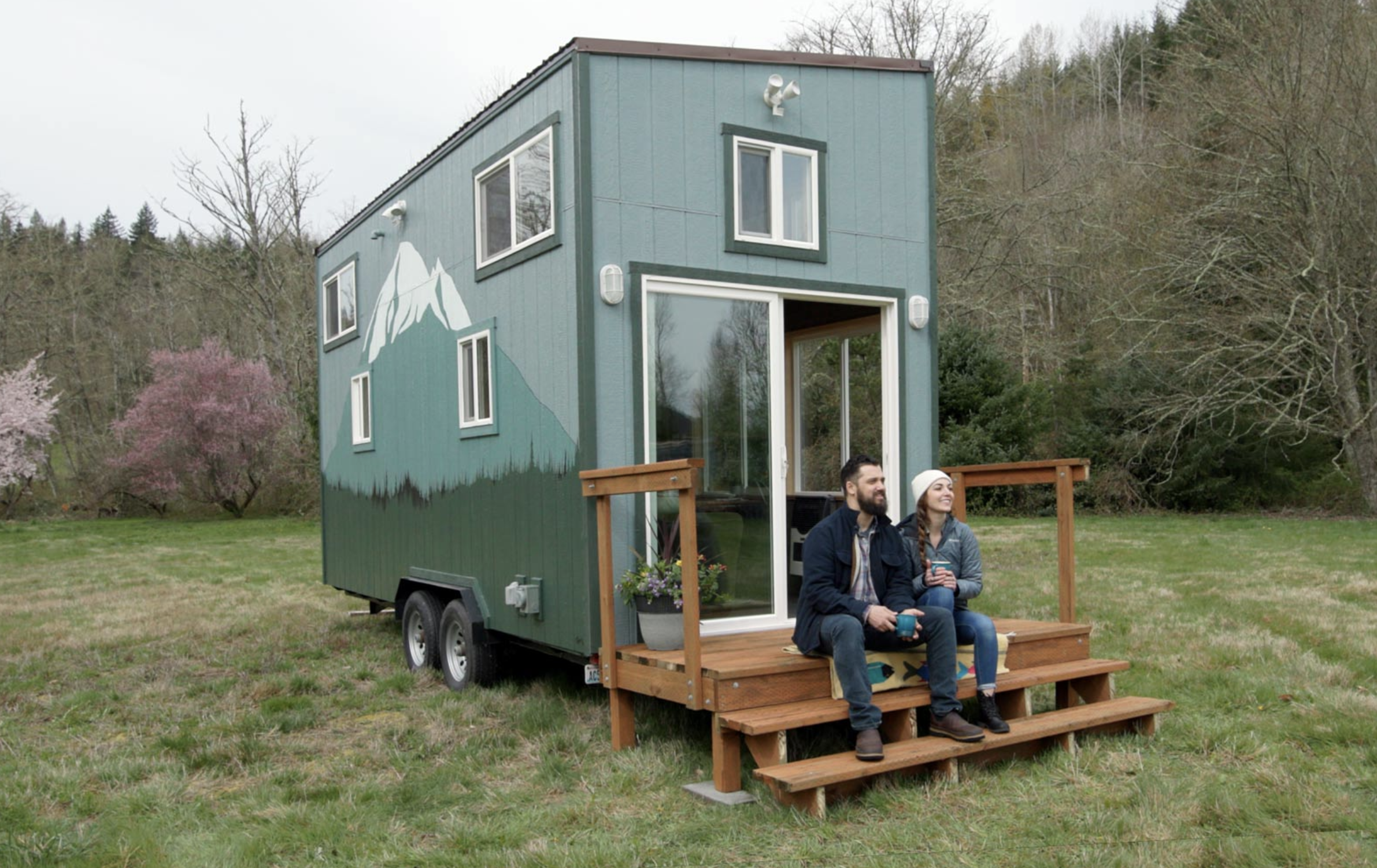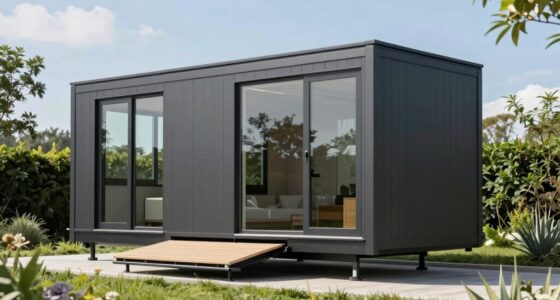
Prefab tiny houses with flexible interior modules let you customize your space easily. They use pre-made modules that can be rearranged or added to create larger living areas, dedicated workspaces, or extra storage. Features like fold-away furniture and movable walls maximize limited space and make reconfiguring simple. These homes are built quickly, often in just a few weeks, with eco-friendly materials that last. Keep exploring to discover how these innovative features can perfectly suit your lifestyle.
Prime for Young Adults — start your free trial
Fast free delivery, streaming and member deals for eligible 18–24 year olds.
As an affiliate, we earn on qualifying purchases.
Key Takeaways
- Prefab tiny houses use pre-made modules that can be rearranged to customize interior layouts.
- Modular design allows for flexible configurations like open-plan living or separate rooms.
- Movable walls and fold-away furniture maximize space and adapt to changing needs.
- Interior modules support various functions, including workspaces, bedrooms, and storage.
- The system enables quick assembly and future reconfigurations for versatile living solutions.
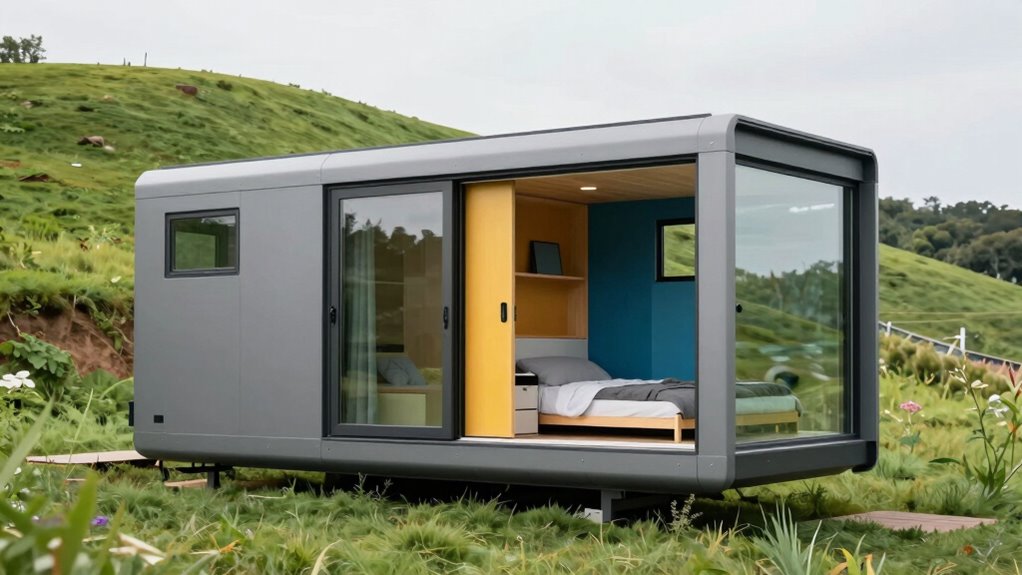
The concept of modular construction is central to prefab tiny houses. Instead of building everything on-site, you’re assembling pre-made modules that fit together seamlessly. This approach offers incredible flexibility because you can customize your home’s layout by adding or rearranging modules based on your needs. Whether you want a larger living area, a dedicated workspace, or extra storage, modular construction makes it easy to adapt your tiny house quickly and efficiently. It also means that your home can be built faster than traditional construction, often within a few weeks, which considerably cuts down on costs and inconvenience. Additionally, the controlled environment of prefab manufacturing enhances quality control, ensuring consistent standards throughout the building process. The ability to incorporate sustainable materials into the modules contributes to environmentally friendly building practices. Incorporating innovative design features allows for even greater customization and functionality within small spaces. Flexibility in interior design is another major benefit. The modules are designed to be versatile, so you can choose different configurations that suit your lifestyle. For example, you might have a living module with an open-plan kitchen and living room, or separate sleeping and workspace modules. Some designs include fold-away furniture or multi-purpose rooms that maximize limited space. You can also opt for movable walls or sliding partitions, which allow you to reconfigure the interior layout as your needs change—whether you’re hosting guests or working from home. Moreover, these interior modules are typically built with energy efficiency in mind. Incorporating energy-efficient insulation and sustainable heating and cooling systems helps reduce your home’s environmental impact. Because prefab tiny houses are built in a controlled environment, quality control is higher, ensuring that your home maintains its efficiency and durability over time. The integration of advanced construction techniques further enhances the durability and longevity of these homes. Overall, the combination of sustainable materials, modular construction, and flexible interior modules makes prefab tiny houses a smart choice for those seeking adaptable, eco-conscious, and cost-effective living spaces. You get to enjoy the benefits of customization without sacrificing sustainability or convenience, making your tiny house truly a reflection of your lifestyle and values.
As an affiliate, we earn on qualifying purchases.
Frequently Asked Questions
How Customizable Are the Interior Modules Beyond Standard Options?
You can customize the interior modules beyond standard options thanks to their high interior flexibility. Many prefab tiny houses allow you to choose and modify layout configurations, materials, and finishes. With a variety of customization options, you can personalize space to suit your lifestyle, whether adding storage, changing room functions, or selecting unique design elements. This level of interior flexibility guarantees your tiny home feels truly yours, tailored to your preferences and needs.
What Is the Typical Lifespan of Prefab Tiny Houses?
You can expect a typical prefab tiny house to last around 30 to 50 years, depending on foundation durability and material longevity. Well-built foundations guarantee stability over time, while high-quality materials resist weather and wear. Regular maintenance also extends lifespan. Choosing durable materials like treated wood or metal, and making certain a solid foundation, helps your tiny house withstand the elements and remain functional for decades.
Are There Eco-Friendly or Sustainable Prefab Tiny House Options?
You can absolutely find eco-friendly prefab tiny house options that are as close to perfection as possible. These homes often feature solar energy systems, reducing your carbon footprint dramatically, and use green materials like reclaimed wood and recycled insulation. Not only do they help protect the environment, but they also lower your energy costs in the long run. Embracing sustainable living has never been easier or more practical with these innovative tiny homes.
How Long Does Installation and Setup Usually Take?
Installation and setup typically take between a few days to a couple of weeks, depending on your interior layout and the complexity of the construction timeline. You’ll work with the manufacturer to customize the interior modules, which can influence how quickly your tiny house is ready. Once everything is on site, professional crews usually complete the assembly efficiently, ensuring your eco-friendly space is ready for use without prolonged delays.
What Are the Warranty and Maintenance Requirements?
Like a trusted companion, your tiny house’s warranty coverage shields you from unexpected issues, typically lasting 1-2 years, depending on the manufacturer. Regular maintenance, guided by a schedule, keeps it in top shape—cleaning, inspections, and occasional repairs. Always review your warranty details, understand what’s covered, and follow the recommended maintenance schedule to guarantee durability, comfort, and peace of mind for years to come.
Conclusion
Think of prefab tiny houses with flexible interior modules as a perfectly tailored suit—your space adapts to your needs, just like the suit molds to your body. With their innovative design, you get the freedom to customize, move, and grow without the hassle of traditional building. It’s like having a home that’s as versatile as your imagination, ready to change with you as life’s chapters unfold. Embrace this smart, adaptable lifestyle and make your tiny house truly yours.
NFL season / tailgating Picks
team gear
As an affiliate, we earn on qualifying purchases.