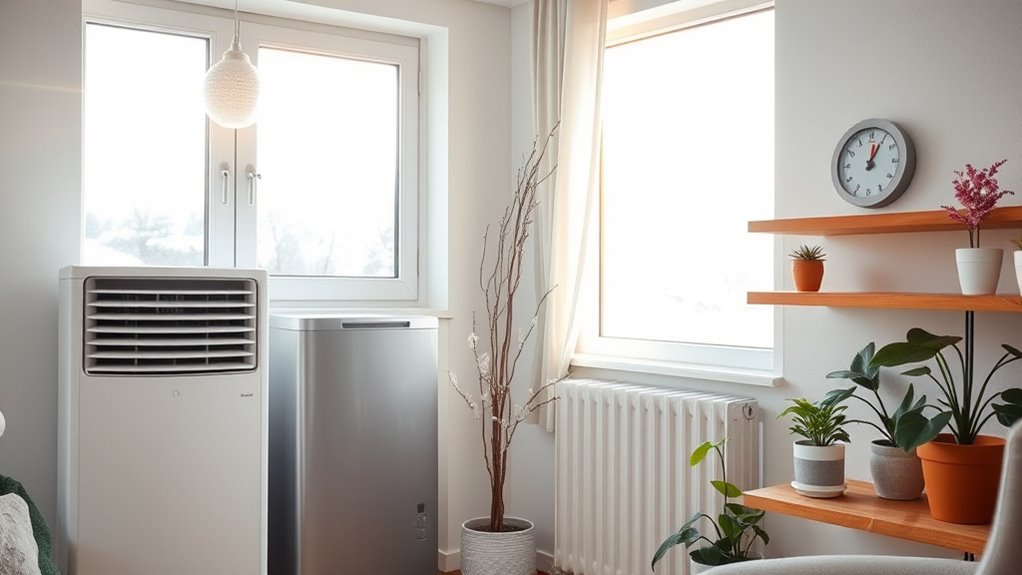

To prevent condensation in your small home, control humidity by using exhaust fans in kitchens and bathrooms, and keep windows open to improve airflow. Insulate walls, windows, and pipes to keep surfaces warm and reduce cold spots where moisture can form. Use a dehumidifier to maintain humidity levels around 30-50%, and regularly wipe down surfaces to prevent mold. Ensuring proper ventilation and insulation can make a big difference—continue exploring to learn more effective strategies.
Key Takeaways
- Improve ventilation by using exhaust fans, opening windows, and keeping doors open to circulate air effectively.
- Maintain indoor humidity levels between 30-50% with dehumidifiers and monitoring devices.
- Insulate walls, windows, and pipes to prevent surface cooling and reduce condensation formation.
- Seal leaks and weatherstrip doors and windows to minimize cold spots where moisture can accumulate.
- Regularly wipe down surfaces and control indoor moisture sources like drying clothes indoors.
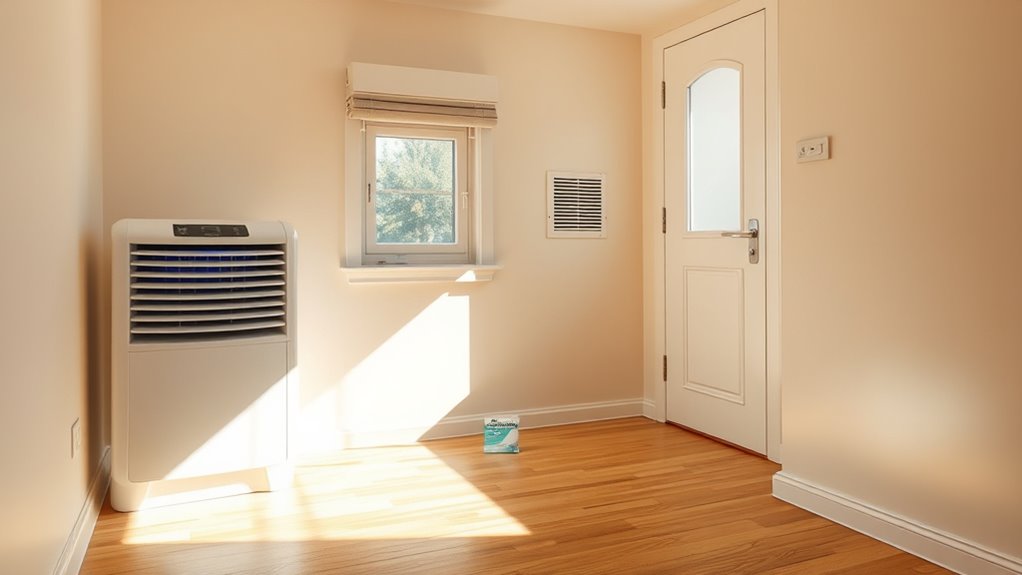
Condensation happens when warm, moist air comes into contact with cooler surfaces, leading to water droplets forming where they shouldn’t. In small homes, this issue can quickly become a persistent problem, causing mold growth and damage to walls, ceilings, and furniture. To combat this, you need effective ventilation strategies and moisture control techniques. These are your best tools for managing humidity levels and preventing excess moisture from settling on surfaces.
Start by improving your home’s ventilation. Good airflow helps remove excess moisture from the air before it can condense. Use exhaust fans in high-moisture areas like the bathroom and kitchen, and make sure they vent outside rather than into your attic or walls. If you don’t have exhaust fans, consider installing them, especially if you tend to cook or shower frequently. Opening windows regularly also helps, particularly during and after activities that produce a lot of moisture. Cross-ventilation, where fresh air enters from one side of the home and moist air escapes from another, creates a natural flow that reduces indoor humidity. Keep interior doors open to facilitate this airflow, which disperses moisture more evenly and prevents it from settling in one spot.
Improve ventilation with exhaust fans, open windows, and keep doors open to reduce indoor humidity and prevent condensation.
Moisture control techniques are equally important. Use dehumidifiers in rooms prone to dampness, and empty their tanks regularly to keep humidity levels low. A hygrometer can help you monitor indoor humidity, aiming for levels around 30-50%. When humidity rises above this range, condensation becomes more likely. Additionally, insulate walls, windows, and pipes; insulation keeps surfaces warmer, reducing the temperature difference that causes condensation. Weatherstripping and sealing leaks around windows and doors prevent outside moisture from entering and contribute to better indoor moisture control. You should also be mindful of drying clothes indoors, as this adds significant moisture to your home’s air. Whenever possible, dry laundry outside or use a vented dryer. Implementing proper insulation can further reduce temperature disparities and prevent cold surfaces from attracting moisture.
Lastly, keep your home’s surfaces clean and dry. Wipe down windows and sills regularly to remove water droplets and prevent mold. If you notice persistent condensation in certain areas, consider installing vapor barriers or additional insulation to keep temperatures more consistent. Combining proper ventilation strategies with moisture control techniques creates a dry environment, reducing the likelihood of condensation problems. It’s all about controlling the moisture level in your home and ensuring good airflow. With consistent effort, you can keep your small home free from the damage and discomfort caused by excess humidity, making your living space healthier and more comfortable year-round.
Frequently Asked Questions
Can Plants Help Reduce Indoor Condensation Levels?
Yes, plants can help reduce indoor condensation levels. By strategically placing houseplants near problem areas, you can improve humidity control and absorb excess moisture in the air. Opt for plants like peace lilies or pothos, which thrive indoors and assist in maintaining balanced humidity. Regular watering and proper placement will make your space more comfortable, reduce condensation, and improve overall air quality in your small home.
How Does Insulation Affect Condensation Prevention?
Insulation acts as a thermal barrier, reducing temperature differences between indoor air and walls, which helps prevent condensation. When you install proper insulation, it enhances moisture control by keeping surfaces warmer, so less moisture condenses on them. This not only helps maintain a dry environment but also improves energy efficiency. By investing in good insulation, you create a more comfortable space and markedly reduce the risk of condensation buildup.
Are There Specific Paints or Coatings That Prevent Condensation?
Yes, you can use moisture resistant paints and anti condensation coatings to help prevent condensation. These specially formulated paints create a barrier that reduces moisture buildup on surfaces, especially in areas prone to humidity. By applying anti condensation coatings on walls and ceilings, you’ll minimize the chances of condensation forming, helping your small home stay dry and comfortable. Make sure to choose high-quality products suited for your specific needs.
What’s the Best Way to Ventilate Tiny or Awkward Spaces?
Imagine a tight, awkward space like a hidden closet or under-stair nook. To ventilate it effectively, install exterior vents to allow fresh air in and moisture out. Use simple air exchange techniques—like small fans or passive vents—to keep air flowing, preventing dampness. Regularly open doors or windows nearby when weather permits. This keeps tiny spaces dry and prevents condensation buildup, even in the most challenging spots.
How Do Heating Habits Influence Condensation in Small Homes?
Your heating habits directly impact condensation by affecting humidity control and temperature regulation. When you heat your small home consistently, you keep surfaces warm, reducing the chance of moisture settling and causing condensation. However, if you turn the heat off or let it fluctuate, cold surfaces encourage moisture buildup. To prevent this, maintain steady temperatures, use good ventilation, and manage humidity levels effectively.
Conclusion
By keeping your home well-ventilated and controlling humidity, you’ll naturally prevent condensation from forming. Sometimes, it’s the small habits—like opening a window or using a dehumidifier—that make all the difference. It’s funny how simple actions can unexpectedly save you from costly repairs or mold issues down the line. So, stay proactive, and you’ll find that preventing condensation becomes an effortless part of your routine—almost like it was meant to be.