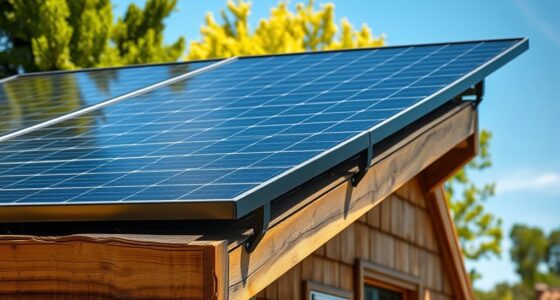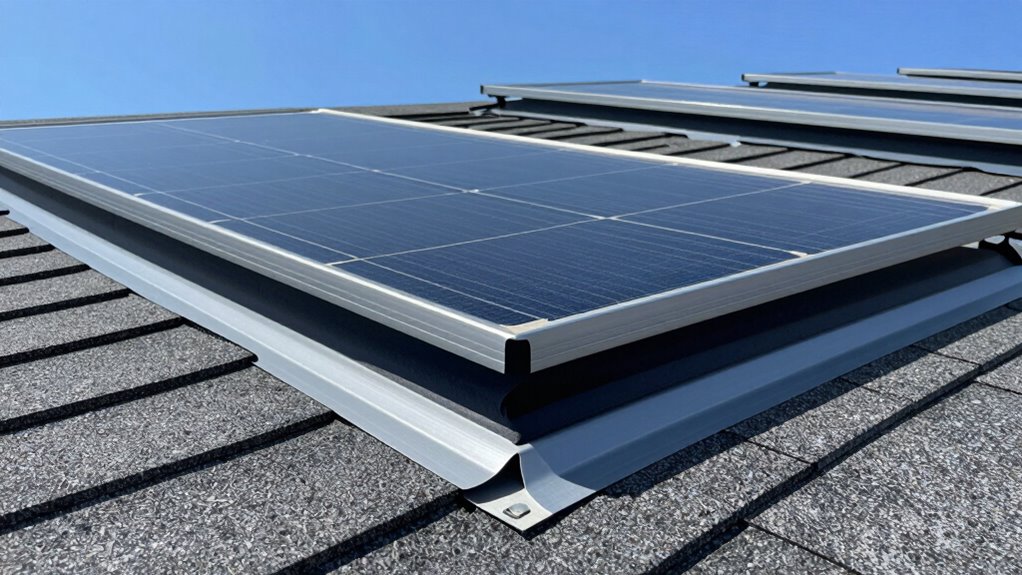

To prevent roof leaks around solar mounts, guarantee proper sealing with high-quality, weather-resistant materials. Carefully apply sealants around the mounting brackets and use durable flashing that overlaps the roof and mounts correctly. Regularly inspect these areas after storms or heavy winds to catch any cracks or lifting early. Proper installation and maintenance are key to stopping leaks and protecting your home, so keep learning how to do it right for long-term safety.
Prime for Young Adults — start your free trial
Fast free delivery, streaming and member deals for eligible 18–24 year olds.
As an affiliate, we earn on qualifying purchases.
Key Takeaways
- Use high-quality, weather-resistant sealants compatible with roofing materials around mounting brackets.
- Install properly overlapped flashing to redirect water away from roof penetrations.
- Ensure all sealing and flashing are tightly sealed and securely fastened with no gaps.
- Conduct regular inspections, especially after storms, to identify and repair cracks or lifting edges.
- Hire professional installers to ensure correct installation and adherence to building codes.
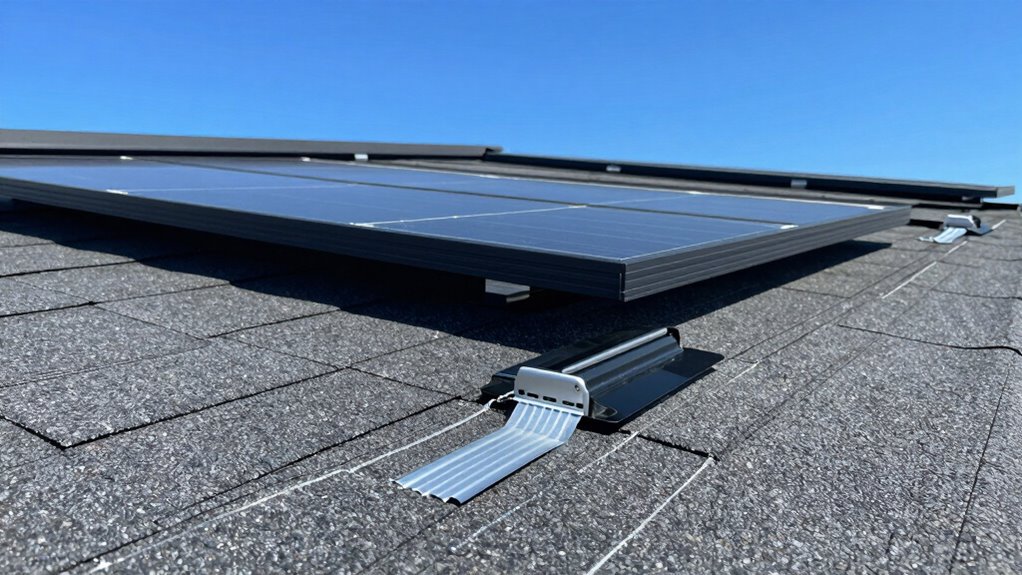
Ever wonder why roof leaks often happen unexpectedly and cause so much damage? One common reason is improper installation of solar mounts, which can lead to leaks if not done correctly. When you’re installing solar panels, you need to pay close attention to how the roof penetrations are sealed. Solar panel sealing is essential because it guarantees water doesn’t seep into your roof where the mounts are attached. If the sealing isn’t done properly, even a small gap can allow water to intrude, leading to leaks that can damage your roof deck, insulation, and interior ceilings over time. Proper solar panel sealing involves using high-quality, weather-resistant materials that create a tight barrier against water infiltration. Applying sealants correctly around the mounting brackets and ensuring they are compatible with your roofing material is important. Keep in mind that sealant application isn’t a one-time fix; it needs to be checked periodically, especially after severe weather, to maintain its integrity.
Additionally, understanding the role of contrast ratio in your roofing system’s durability can help you select materials that resist water penetration better. Another key element in preventing roof leaks around solar mounts is flashing installation. Flashing is a metal or flexible material installed around the penetrations to direct water away from vulnerable areas. When you’re installing your solar system, proper flashing installation is essential. It acts as a shield, redirecting water away from the penetrations created by the mounts. Inadequate or improperly installed flashing is a common cause of leaks. You want to ensure that the flashing overlaps the roofing material and the mounting brackets correctly, creating a continuous, waterproof barrier. The flashing should be sealed tightly to both the roof and the mounts, with no gaps or loose edges. When you’re working on your roof, use high-quality flashing materials designed for your roof type and climate. Pay close attention during installation to make sure every seam is sealed and that the flashing is securely fastened. Proper installation techniques are critical to ensure the longevity and effectiveness of your roofing system. Regular inspections are also indispensable. After installation, check the flashing and sealing points periodically, especially after storms or heavy winds. Look for cracks, lifting edges, or any signs of deterioration. Addressing small issues early can prevent them from turning into major leaks. Incorporating advanced sealing techniques can further enhance your roof’s water resistance. Implementing a comprehensive maintenance plan can help identify potential problems before they escalate, saving you money and stress in the long run. If you’re unsure about your installation skills, consider hiring a professional to guarantee the flashing installation and solar panel sealing are up to code and standards. By doing so, you’re investing in the longevity of your roof and protecting your home from costly water damage caused by leaks around solar mounts.
As an affiliate, we earn on qualifying purchases.
Frequently Asked Questions
Can Roof Pitch Affect Leak Prevention Around Solar Mounts?
Yes, roof pitch greatly affects leak prevention around solar mounts. A steeper roof slope helps water runoff quickly, reducing the chance of leaks, while a flatter roof may require extra weather resistance measures. You should guarantee proper sealing and flashing tailored to your roof’s pitch, as these help prevent water intrusion. Proper installation considering roof slope enhances leak prevention and maintains the integrity of your roof and solar system.
How Often Should Solar Mounts Be Inspected for Leaks?
You should inspect your solar mounts for leaks at least twice a year, especially after severe weather. The roof material influences inspection frequency—more durable materials may require less frequent checks, but it’s wise to stay vigilant. Regular inspections help catch potential leaks early, preventing costly damage. Make certain to look closely around the mounts, flashing, and sealant to guarantee everything remains watertight and secure.
Are There Specific Roof Types More Prone to Leaks?
Did you know that asphalt shingles account for 80% of roof leaks? You’re more prone to leaks with certain roof materials, especially flat or metal roofs, which can be more vulnerable around solar mounts. To guarantee leak mitigation, choose compatible mounting systems and regularly inspect your roof. Proper installation and maintenance are key to preventing leaks, particularly if you have susceptible roof types like flat or metal roofs.
Do Different Solar Mounting Systems Impact Leak Risk?
Different solar mounting systems can affect leak risk, especially depending on the mounting materials and sealant options you choose. For example, ballasted mounts with proper sealants reduce penetration issues, while penetrating mounts require high-quality sealants to prevent leaks. Always select durable mounting materials compatible with your roof type, and use reliable sealant options to guarantee a watertight seal around penetrations, minimizing leak risks over time.
What Is the Best Sealant for Long-Term Leak Prevention?
Think of sealant durability and weather resistance as your roof’s shield against relentless storms. For long-term leak prevention, you should choose high-quality, elastomeric sealants like polyurethane or silicone, which flex and bond with your roofing material. These sealants create a seamless barrier, resisting cracking and deterioration over time. By selecting the right product, you guarantee your solar mounts stay watertight, keeping your roof safe and dry through all of nature’s moods.
Conclusion
Think of your roof like a fortress, and every solar mount as a tiny gate. When you seal these gates properly, rain stays out, and your home remains safe. I once saw a homeowner who skipped proper sealing, and water found its way inside, causing costly damage. Remember, even small gaps can lead to big problems—so take the time to seal around your solar mounts. A well-maintained roof is the strongest shield you can build.
NFL season / tailgating Picks
team gear
As an affiliate, we earn on qualifying purchases.