
To plant a privacy screen without blocking solar access, choose plants with varying heights and open canopies, like deciduous trees or shrubs, to allow light to filter through. Position taller plants on the north side so they don’t shade sun-loving plants on the south. Incorporate semi-permeable structures like lattice panels to add privacy without blocking sunlight. By carefully planning placement and selecting the right plants, you’ll create a private yet bright garden. Keep exploring for more helpful tips.
Key Takeaways
- Position taller privacy plants on the north side to prevent shading sun-loving plants in the garden.
- Use deciduous trees or shrubs that block sight lines but allow sunlight during the winter.
- Incorporate semi-permeable barriers like lattice panels to balance privacy and light flow.
- Space plants appropriately to avoid overcrowding and maintain optimal sunlight exposure.
- Prune and maintain plants regularly to control height and prevent unnecessary shading.
Creating a privacy screen doesn’t have to block sunlight or hinder your garden’s growth. With thoughtful planning, you can design a barrier that provides privacy while still allowing ample solar access for your plants. The key lies in understanding how to integrate garden design principles with strategic plant selection to achieve this balance. Start by evaluating your yard’s layout, noting areas where sunlight is most essential for your garden’s health. Identify the spots where you want privacy but also where sunlight needs to reach, so you can position your screen accordingly.
Design privacy screens that enhance your garden’s beauty without blocking essential sunlight or growth.
When planning your garden design, consider how the placement of your privacy screen interacts with the sun’s path throughout the day and across seasons. Typically, the sun rises in the east and sets in the west, so placing taller plants or structures on the north side of your garden can block views without casting long shadows over sun-loving plants on the south side. By designing your screen with this in mind, you prevent it from creating unnecessary shade, allowing your garden to flourish.
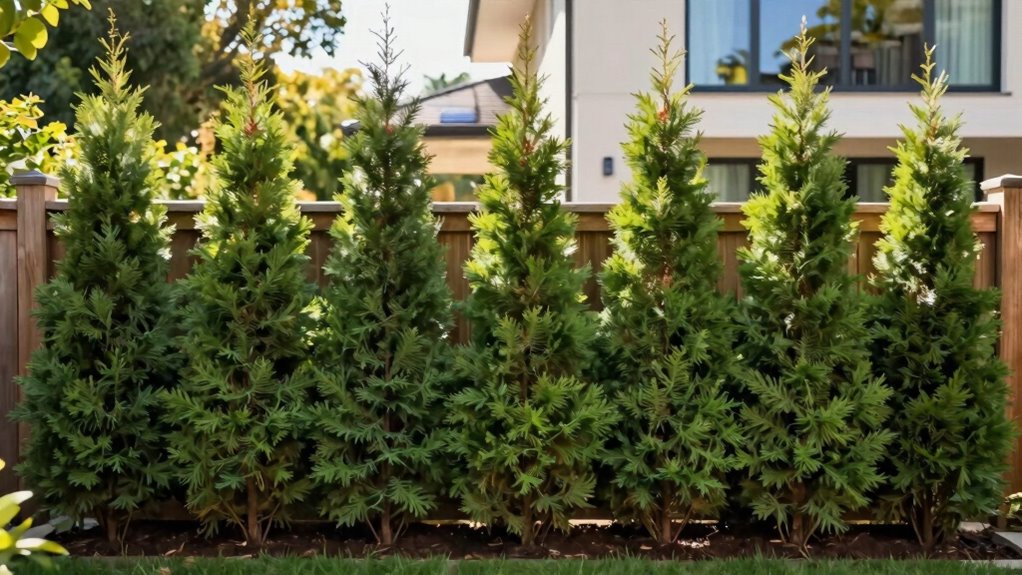
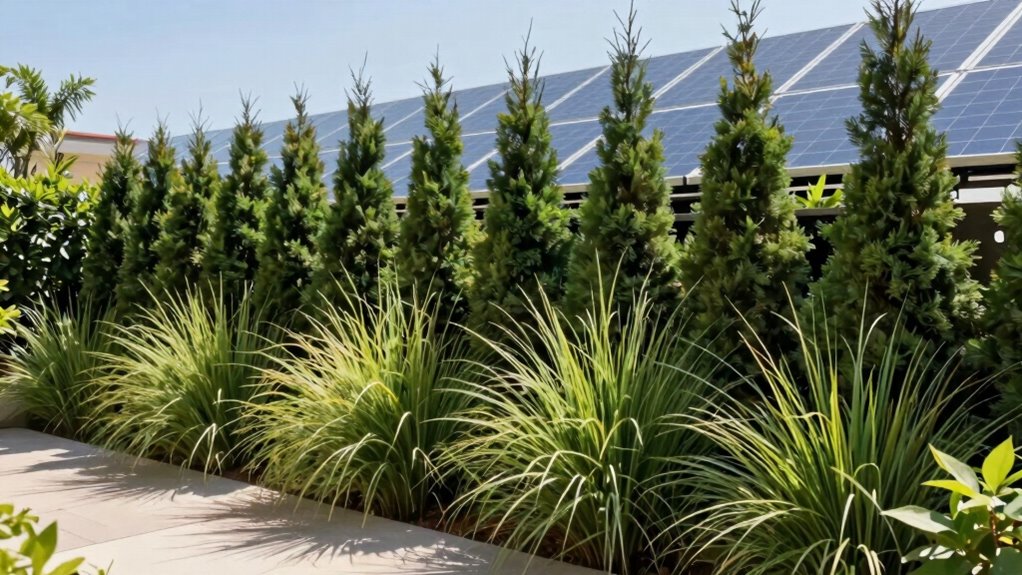
Plant selection plays a key role. Choose plants that are dense enough to provide privacy but have an open or layered growth habit that lets sunlight filter through. For example, select deciduous trees or shrubs with a light canopy, such as certain varieties of maples or dogwoods, which block sight lines without creating dense shade during the growing season. Incorporate plants with different heights and textures to add visual interest while maintaining the flow of sunlight. Using a mix of taller, lighter foliage and lower, sun-loving ground covers creates a natural, effective barrier that doesn’t compromise solar access.
Additionally, consider the spacing between your plants. Overcrowding can lead to excessive shade, so give each plant enough room to grow and allow sunlight to penetrate. Regular pruning and maintenance help control their growth, ensuring they stay within your desired height and density. If you’re using structure elements like fences or trellises, opt for designs that are semi-permeable—such as lattice panels—so light can pass through rather than be blocked entirely. Understanding solar access is crucial for balancing privacy and sunlight in your garden design, and being mindful of plant growth habits can further optimize your garden’s sunlight exposure. Recognizing the importance of vegetation density can help you choose the right plants that provide privacy without excessive shading, and selecting permeable barriers can enhance sunlight penetration while maintaining privacy. Additionally, using innovative fencing solutions can further improve light flow and privacy simultaneously.
lattice privacy panels for garden
As an affiliate, we earn on qualifying purchases.
As an affiliate, we earn on qualifying purchases.
Frequently Asked Questions
What Are the Best Fast-Growing Plants for Privacy Screens?
You should consider fast-growing native species like willow or dogwood, which quickly create privacy while supporting local ecosystems. Ornamental grasses such as switchgrass or fountain grass also work well—growing rapidly and providing a natural screen without blocking sunlight. These plants not only grow fast but also require minimal maintenance, making them ideal for establishing a privacy screen that preserves solar access and enhances your landscape’s beauty.
How Do I Maintain My Privacy Screen Over Time?
To sustain your privacy screen over time, follow regular maintenance tips like watering, fertilizing, and inspecting for pests. Pruning techniques are essential; trim back overgrown branches to keep the screen dense and healthy. Remove dead or diseased foliage promptly, and shape plants to encourage growth without blocking sunlight. Consistent care ensures your privacy screen stays effective, attractive, and healthy, providing ongoing privacy while allowing solar access.
Can I Plant a Privacy Screen in Small or Irregular Spaces?
Yes, you can transform tiny or irregular spaces into lush privacy screens. Think of your garden layout as a puzzle—planting techniques like vertical or layered planting help fit greenery into awkward spots. Use narrow or fast-growing plants to create a dense barrier without overwhelming the space. With clever placement and thoughtful selection, even small corners can turn into private retreats that blend seamlessly into your landscape’s rhythm.
Are There Eco-Friendly Options for Privacy Screens?
Yes, eco-friendly privacy screens exist. You can choose options made from recyclable materials like bamboo, recycled plastic, or metal. Native plantings also work well, as they require less water and maintenance, supporting local ecosystems. By selecting these sustainable options, you reduce environmental impact and create a natural barrier that’s both beautiful and functional. This approach guarantees your privacy needs are met while respecting the planet.
How Do I Prevent My Privacy Screen From Attracting Pests?
To prevent pests from attracting to your privacy screen, choose pest-resistant plants like lavender, rosemary, or marigolds. Incorporate natural deterrents, such as planting garlic or neem oil nearby, to keep bugs away. Regularly inspect your plants for pests and remove any early signs of infestation. Maintaining healthy plants also makes them less appealing to pests, ensuring your privacy screen stays attractive and pest-free without sacrificing solar access.
Conclusion
By choosing the right plants and strategic placement, you craft a living shield that whispers privacy while basking in the sun’s warm embrace. Imagine a lush, green tapestry gently dancing in the breeze, offering seclusion without casting shadows on your daily sunlight. With patience and care, your privacy screen becomes a vibrant guardian—an inviting haven that balances openness and seclusion, like a delicate dance of nature’s harmony, perfectly tuned to keep your space bright and private.