
Rate changes directly impact your tiny house’s energy budget by causing short-term increases or decreases in costs. Rising electricity rates can quickly raise your monthly expenses, making it harder to stick to your budget, while falling rates offer temporary savings. Keeping an eye on market trends helps you plan better and decide when to upgrade solar or insulation. Continue exploring to discover effective strategies for managing these fluctuations and maintaining long-term energy savings.

Get compact home essentials delivered free with Prime
- Fast, free delivery on millions of items
- Prime Video, Amazon Music and more included
- Member-only deals all year
Key Takeaways
- Rate increases raise overall energy costs, requiring tighter budget management for tiny houses.
- Falling rates temporarily reduce expenses but market fluctuations can quickly reverse savings.
- Higher electricity prices make solar panel investments more financially attractive.
- Insulation reduces reliance on grid power, helping buffer against rate spikes.
- Continuous monitoring and upgrades optimize energy efficiency amid changing rates.
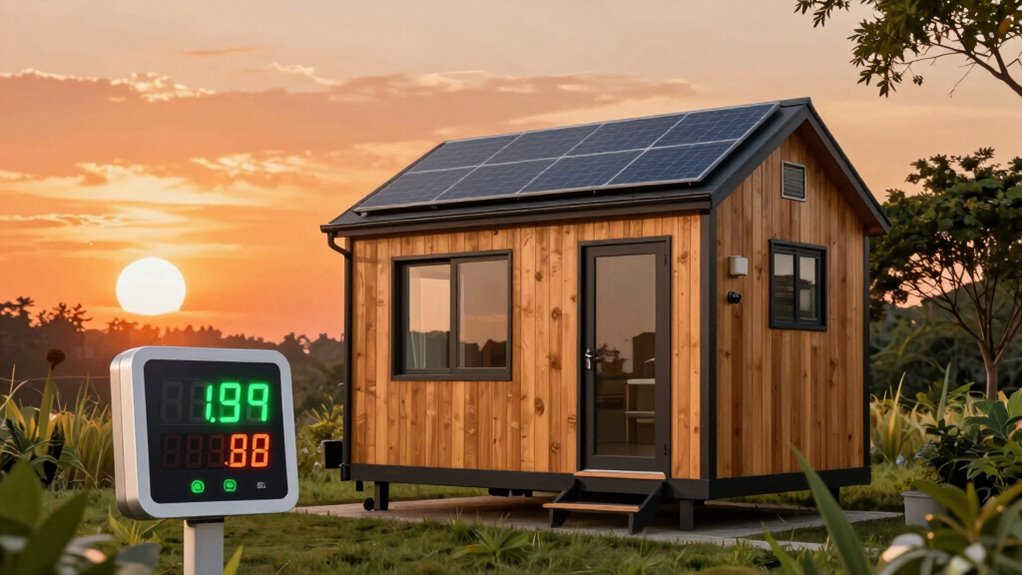
Have you ever wondered how rate changes impact the tiny house lifestyle? When your energy bills go up or down because of fluctuating rates, it directly influences your overall budget and how you plan for future expenses. Small shifts in energy costs might seem insignificant, but in a tiny house, where efficiency is key, they can have a big effect. For example, if electricity prices increase, your monthly costs could rise unexpectedly, forcing you to reconsider your energy consumption habits or invest more upfront in energy-efficient solutions. Conversely, if rates drop, you might enjoy some relief, but it’s essential to remember that such savings are often temporary or subject to market fluctuations.
Rate fluctuations can significantly affect your tiny house energy costs and planning.
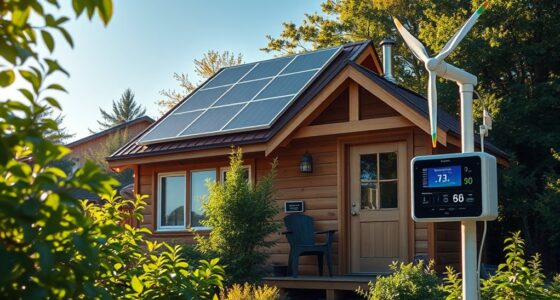
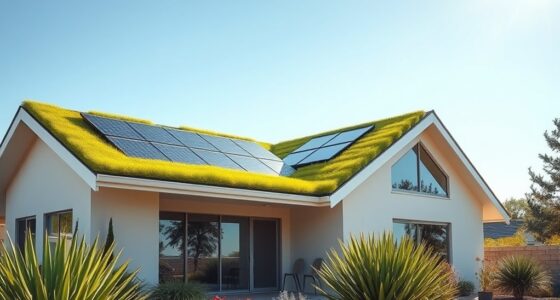
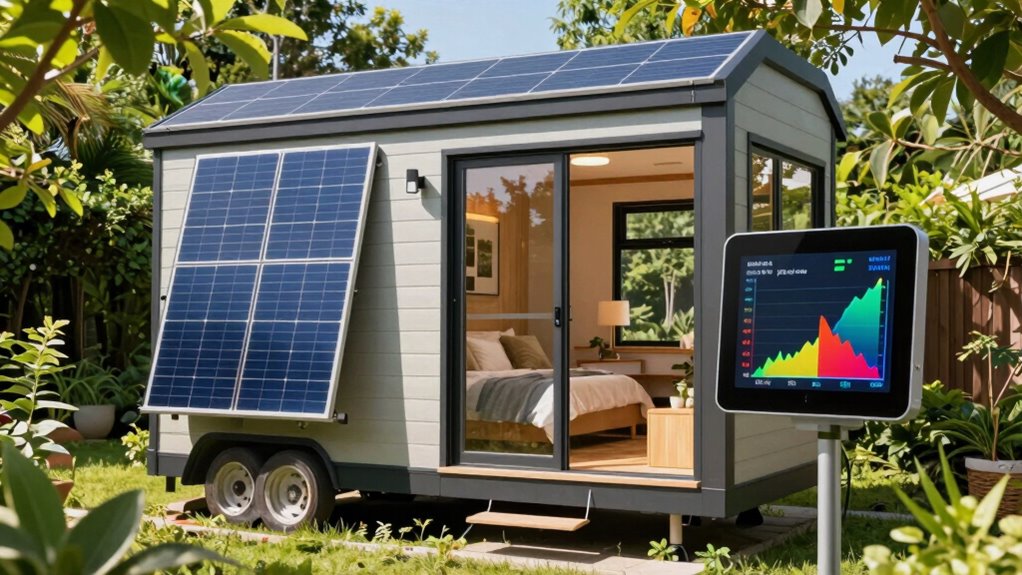
One major factor that plays into your energy efficiency and costs is solar efficiency. If you’re relying on solar panels, rate changes can impact the financial benefits you expect from your system. When rates are high, generating your own power becomes more advantageous because you save more money on what you’d otherwise pay your utility. However, if rates fall, the financial incentive to produce your own energy diminishes, possibly making the investment less worthwhile. Maintaining high solar efficiency is crucial—regularly monitoring your panels, ensuring they’re clean, and upgrading components when needed can help maximize your energy savings regardless of rate fluctuations. This way, you protect yourself from rising costs and ensure your tiny house remains energy-efficient. Improving solar panel maintenance can significantly boost your system’s performance and savings.
Another significant consideration is insulation costs. As energy prices shift, so do the costs associated with heating and cooling your tiny home. Good insulation minimizes your energy needs, reducing your reliance on grid power and buffering you against rate hikes. While insulating your tiny house might require an upfront investment, it pays off over time by lowering your energy bills. When rates spike, your insulation’s importance grows because it helps maintain a stable indoor temperature without draining your wallet. Conversely, if rates fall, the immediate savings might seem less urgent, but investing in quality insulation still makes sense for long-term comfort and energy efficiency. It ensures your tiny house stays cozy in winter and cool in summer, regardless of market changes. Additionally, understanding the different technology options available for insulation can help you choose the most effective and cost-efficient materials for your climate. Being aware of rate fluctuations and how they influence your overall energy costs allows you to plan better and consider alternative energy solutions.
Ultimately, understanding how rate changes influence your tiny house energy budget helps you make smarter decisions. Whether it’s investing in high solar efficiency to lock in savings or upgrading insulation to shield yourself from fluctuating costs, being proactive ensures your tiny home remains affordable and sustainable. By staying informed and making strategic upgrades, you can better navigate the unpredictable world of energy rates, keeping your tiny house a comfortable, efficient haven no matter what the market throws your way.
solar panel maintenance kit for tiny house
As an affiliate, we earn on qualifying purchases.
As an affiliate, we earn on qualifying purchases.
Frequently Asked Questions
How Do Seasonal Rate Fluctuations Impact Tiny House Energy Costs?
Seasonal rate fluctuations directly impact your tiny house energy costs by causing rate variability throughout the year. During peak seasons, seasonal pricing increases, making electricity more expensive, while off-peak times offer lower rates. You can manage these fluctuations by adjusting your energy usage during high-cost periods and using energy-efficient appliances. Being aware of seasonal pricing helps you plan your energy consumption better, reducing overall costs and keeping your tiny house energy budget balanced.
What Government Incentives Are Available for Tiny House Energy Efficiency?
You can cash in on renewable incentives and tax credits that promote energy efficiency for tiny houses. These government programs are designed to help you save money while reducing your environmental footprint. By taking advantage of available incentives, you’ll get a leg up on costs and make your tiny house more sustainable. Don’t miss out—these benefits could be the key to making your small space both eco-friendly and budget-smart.
How Can Tiny House Owners Predict Future Rate Changes?
You can predict future rate changes by staying informed through rate forecasting and analyzing utility trends. Regularly review your utility provider’s reports, subscribe to energy news updates, and monitor regulatory decisions that influence rates. Additionally, tracking seasonal fluctuations and historical pricing patterns helps you anticipate shifts. By actively researching and observing these trends, you’ll make smarter decisions for your tiny house energy budget, preparing for potential rate increases or decreases.
What Are the Best Energy-Saving Appliances for Tiny Houses?
Imagine your tiny house as a delicate dance, where every move counts. Opt for appliances with high efficiency ratings, like LED lights, energy-star refrigerators, and compact dishwashers. These gems reduce power consumption, helping your energy budget stay steady amid rate shifts. By choosing smart, efficient appliances, you conserve your resources, ensuring your tiny haven remains cozy and sustainable, no matter what the energy market throws your way.
How Does Local Climate Influence Tiny House Energy Budgeting Strategies?
Your local climate greatly influences your tiny house energy budgeting strategies. In colder areas, you’ll want to prioritize insulation techniques to retain heat and consider solar integration to maximize sunlight and reduce reliance on external energy sources. Conversely, in warmer climates, focus on shading and ventilation. Adapting your insulation and solar solutions to your climate helps you save energy, cut costs, and maintain comfort year-round.
Conclusion
As you watch your tiny house’s energy costs fluctuate with rate changes, you realize it’s more than just numbers—it’s about your independence and adaptability. Coincidentally, just as you adjusted your energy habits, rate shifts reminded you how closely your lifestyle is tied to these rates. In the end, staying flexible and mindful of these changes helps you manage your energy budget wisely, proving that even small adjustments can make a big difference in your sustainable living journey.
Halloween Picks
halloween
As an affiliate, we earn on qualifying purchases.