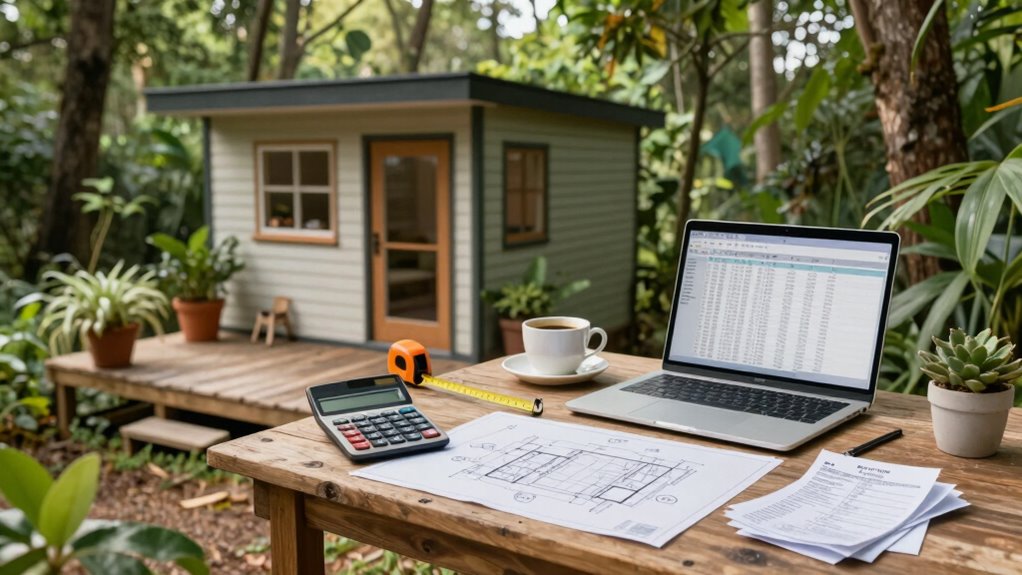

A realistic tiny house contingency budget usually ranges from 10-15% of your total project cost, depending on complexity. It covers unexpected expenses like permit fees, utility hookups, or unforeseen repairs. Higher percentages are wise if you’re adding luxury upgrades or customizing extensively. Setting aside this buffer helps you stay on track without sacrificing quality or key features. Want to find out more tips for managing your tiny house budget effectively? Keep going for useful advice.
Listen free for 30 days with Audible
Thousands of audiobooks and originals — cancel anytime.
As an affiliate, we earn on qualifying purchases.
Key Takeaways
- Allocate 10-15% of the total project budget for unexpected expenses and unforeseen issues.
- Include additional funds for luxury upgrades like appliances, fixtures, and energy-efficient features.
- Budget for outdoor landscaping costs, such as plants, materials, and walkways, to enhance appeal and value.
- Account for utility setup, permits, inspections, and compliance with local building codes.
- Clearly define project scope to avoid underbudgeting and ensure contingency funds cover potential overruns.

Building a tiny house can be an affordable way to simplify your life, but understanding a realistic budget is essential before you start. When planning your finances, it’s important to consider not just the basic construction costs but also the unexpected expenses that can pop up along the way. A contingency budget acts as a financial safety net, covering those surprises without derailing your plans. Typically, setting aside 10-15% of your total budget for contingencies is recommended, but depending on your project’s complexity, you might want to lean toward the higher end. This buffer ensures you won’t have to cut corners or compromise on features if costs increase.
If you’re dreaming of luxury upgrades, it’s wise to allocate a specific portion of your contingency fund for those enhancements. Think high-end appliances, custom cabinetry, or premium fixtures that elevate your tiny home’s comfort and style. These upgrades can greatly impact your budget, so planning for them upfront helps prevent overspending later. Keep in mind that luxury doesn’t always mean extravagant — sometimes, thoughtful upgrades like energy-efficient windows or quality insulation can make a big difference in long-term comfort and savings.
Outdoor landscaping might seem secondary, but it’s an essential part of your tiny house’s overall appeal and functionality. When budgeting, include costs for landscaping materials, plants, walkways, or decks. These features can enhance your outdoor space, creating a seamless extension of your living area. Landscaping costs vary widely depending on how elaborate you want your outdoor space to be, so include a contingency amount for unexpected expenses like soil preparation or additional planting. Proper outdoor landscaping can also add value to your tiny home, making it more inviting and personalized. Additionally, understanding battery inverter generator specifications like watt-hours and capacity can help ensure your outdoor utilities are adequately powered, especially if you plan to incorporate off-grid energy solutions. Furthermore, familiarizing yourself with local building codes can prevent costly surprises during the approval process. Being aware of system efficiency can also assist in choosing the most cost-effective and sustainable energy setups for your tiny home. A thorough knowledge of project scope helps in accurately estimating costs and avoiding underbudgeting, including potential permit fees and inspection requirements.
As an affiliate, we earn on qualifying purchases.
Frequently Asked Questions
How Long Does It Typically Take to Build a Tiny House?
It typically takes about 3 to 6 months to build a tiny house, depending on your Tiny house design and construction timeline. If you DIY, you might finish faster, but delays can occur. Factors like materials, permits, and weather influence the process. Planning carefully and sticking to your schedule helps guarantee your tiny house project stays on track, making the build more manageable and predictable.
What Permits Are Required for Tiny House Construction?
You might worry about permits and zoning restrictions holding you back, but staying proactive makes it manageable. To build your tiny house, you’ll need to research local zoning laws and verify your plans comply. Permit acquisition varies by location, often requiring building permits, electrical, and plumbing approvals. Contact your city or county office early to understand specific requirements, so you can navigate the process smoothly and bring your tiny house dream to life.
Can I Finance a Tiny House Purchase?
Yes, you can finance a tiny house purchase, but your financing options depend on your loan eligibility. Lenders may view tiny houses differently, considering them as RVs or small homes, which affects loan availability. To increase your chances, verify your credit score is strong, and explore specialized lenders or personal loans. Researching various financing options helps you find a solution suited to your budget and ownership goals.
What Are Common Hidden Costs in Tiny House Projects?
Hidden costs in tiny house projects sneak up faster than a squirrel in your attic. Expect surprises like permit fees, unexpected expenses for utility hookups, and costly upgrades to your chosen materials. When you do your cost estimation, don’t forget maintenance, insurance, and potential last-minute adjustments. These hidden costs can turn your tiny dream into a wallet-draining nightmare if you’re not prepared. Stay vigilant and budget generously for the unexpected!
How Do I Plan for Future Upgrades or Repairs?
To plan for future upgrades or repairs, you should set aside a dedicated fund for future maintenance and upgrade planning. Regularly inspect your tiny house and note potential issues early. Research costs of common repairs or upgrades, and include these estimates in your contingency budget. By proactively saving and planning, you guarantee your tiny house remains functional and comfortable without unexpected financial stress down the road.
Conclusion
So, don’t let surprise costs catch you off guard. A realistic tiny house contingency budget isn’t just about covering unexpected expenses—it’s about giving you peace of mind. If you think you won’t need extra funds, remember that unforeseen issues like weather delays or hidden repairs can happen. Staying prepared with a solid contingency budget means you can handle surprises without stressing, making your tiny house journey smoother and more enjoyable.
Fall yard work Picks
leaf blowers
As an affiliate, we earn on qualifying purchases.