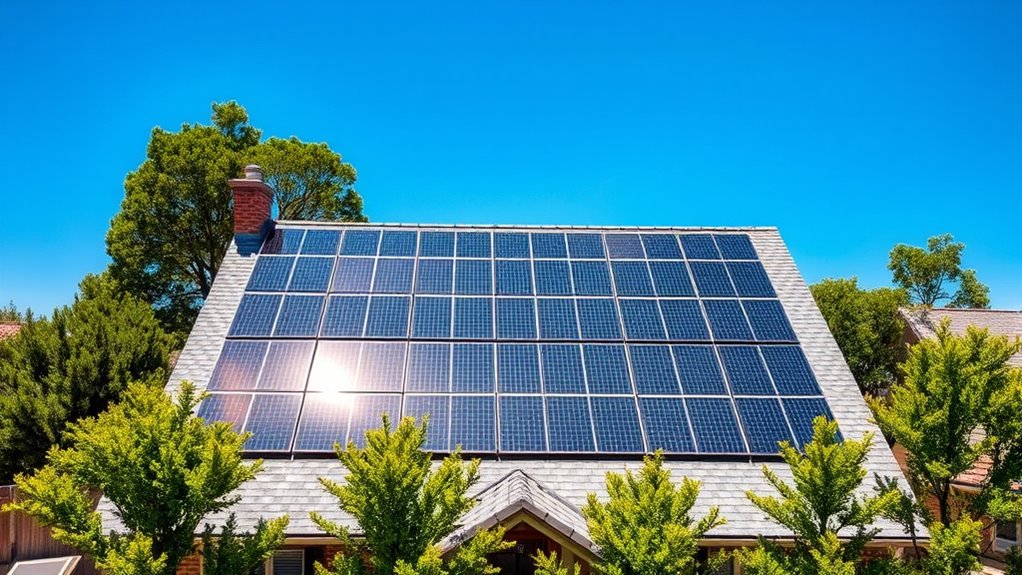

It might seem like you need an enormous amount of roof space to go solar, but that’s not always the case. In fact, most homes can generate significant energy with far less area than you might expect. The real question is, how much space do you need to meet your energy goals without sacrificing your roof’s other functions? Understanding the factors that influence your solar setup can help you make smarter decisions—so let’s explore what truly determines your required roof area.
Key Takeaways
- Determine your household’s average energy usage to estimate the required solar system size.
- Calculate usable roof area by measuring total space minus obstructions like vents or skylights.
- Consider optimal panel orientation and shading to maximize efficiency within your available space.
- Typically, 100-150 square feet per kilowatt of solar capacity is needed, but this varies with panel efficiency.
- Conduct a shading analysis to ensure sufficient unobstructed sunlight for the desired system size.
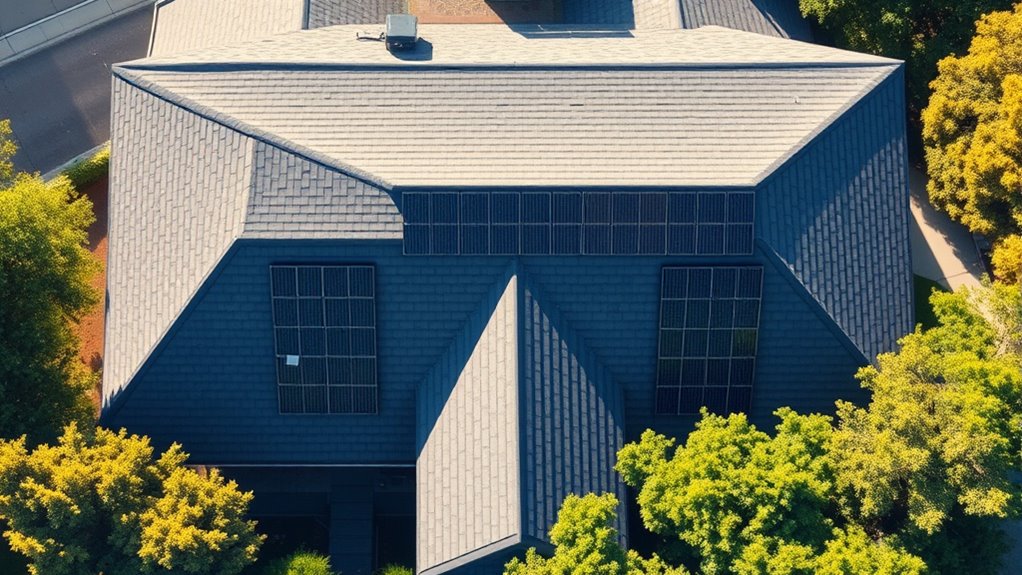
When considering solar energy for your home, understanding your roof’s available area is vital. The amount of space you have directly impacts how many solar panels you can install and whether they’ll generate enough electricity to meet your needs. To start, you need to evaluate your roof’s size and shape carefully. Measure its total area, paying attention to any sections that might be unusable due to obstructions like vents, chimneys, or skylights. This helps you determine the maximum potential space for installing solar panels. Keep in mind that not all roof areas are equal—some sections may face away from the sun or be shaded during parts of the day, reducing their effectiveness.
A key factor in planning your solar setup is solar panel orientation. Ideally, panels should face true south if you’re in the northern hemisphere, or true north in the southern hemisphere, to maximize sun exposure throughout the day. If your roof’s orientation is less than perfect, you might still get good results, but it’s worth considering how the angle and direction will affect energy production. Proper orientation ensures your panels receive the most sunlight possible, making the most of your available roof space.
Equally important is conducting a roof shading analysis. Even small shadows cast by trees, chimneys, or nearby buildings can notably reduce your solar system’s efficiency. A roof shading analysis helps identify the times of day and year when shadows are most prominent, so you can plan your panel placement accordingly. Sometimes, shading can be mitigated by adjusting the tilt or location of panels, but in other cases, it might limit your options. Making sure your roof has minimal shading during peak sunlight hours is vital for optimizing your solar investment. Additionally, understanding solar panel placement options can help you maximize efficiency despite shading challenges.

SUNMAK 8 units per set Solar Panel Mounting Z Brackets Lightweight Aluminum Corrosion-Free for solar panels installed on RVs, Trailers, Boats, Yachts, Wall, Cabins, Sheds, Garages&Other Off Gird Roofs
【SUPERIOR QUALITY】 Anodized Aluminum Z brackets, Stainless Steel Hex Bolts and Screws, service life up to 25 years,…
As an affiliate, we earn on qualifying purchases.
As an affiliate, we earn on qualifying purchases.
Conclusion
With wise, well-placed work, you’ll wield the width of your roof to wattage your wants. Measure meticulously, minimize shadows, and maximize sunlight’s sway. Remember, your roof’s real reach, rich with radiant potential, decides your solar success. So, stay sharp, survey your space, and strategize smartly—securing a sustainable, solar-powered sanctuary that’s perfectly proportioned for your needs. Your roof’s ready to harness, harvest, and hold the hope of a brighter, better tomorrow.

ZIBOO FT-2000W Solar Panel Tester MPPT Meter – 2000W Max Power, 150V/35A PV Module Tester for Voc/Isc, Open Circuit Voltage & Short Circuit Current, with Backlight & Data Hold
⚡ Professional-Grade PV Testing Measures maximum power (Pmax) up to 2000W, open-circuit voltage (Voc: 12-150V), and short-circuit current…
As an affiliate, we earn on qualifying purchases.
As an affiliate, we earn on qualifying purchases.

Solar Angle Guide for Solar Panel – Keopuals Solar Panel Accessories Find The Optimal Angle for Solar Panels Tools
Find Perfect Angle for Solar Panels: The solar angle guide helps you determine the optimal angle for your…
As an affiliate, we earn on qualifying purchases.
As an affiliate, we earn on qualifying purchases.
TRULY Pocket Calculator, 10-Digit Solar Calculator with Dual Power, Big Buttons, Auto Power Off, Compact Mini Calculator with PU Leather Case for Office, School & Travel – 216
「Display:」Large 10-digit display with clear, easy-to-read numbers. Wide viewing angle reduces eye strain and makes quick calculations easier…
As an affiliate, we earn on qualifying purchases.
As an affiliate, we earn on qualifying purchases.