
To set up satellite internet in your tiny home, start by ensuring your dish points directly toward the satellite with clear line of sight, avoiding trees or buildings. Check all connections and use signal meters or apps to fine-tune alignment. Consider environmental factors like terrain and regional coverage, which can affect signal strength. Proper installation and regular maintenance are essential. Want to learn more about optimizing your satellite setup for the best connection? Keep exploring!

Get compact home essentials delivered free with Prime
- Fast, free delivery on millions of items
- Prime Video, Amazon Music and more included
- Member-only deals all year
Key Takeaways
- Assess the location for clear line-of-sight, free of obstructions like trees or buildings, for optimal satellite signal.
- Confirm the satellite provider’s coverage area matches your tiny home’s location and terrain.
- Ensure proper antenna alignment and positioning using signal meters or provider apps for best internet speed.
- Check all equipment connections, and regularly maintain the dish for reliable, consistent signal quality.
- Be aware of regional factors and potential data caps that could impact your internet usage and connection stability.
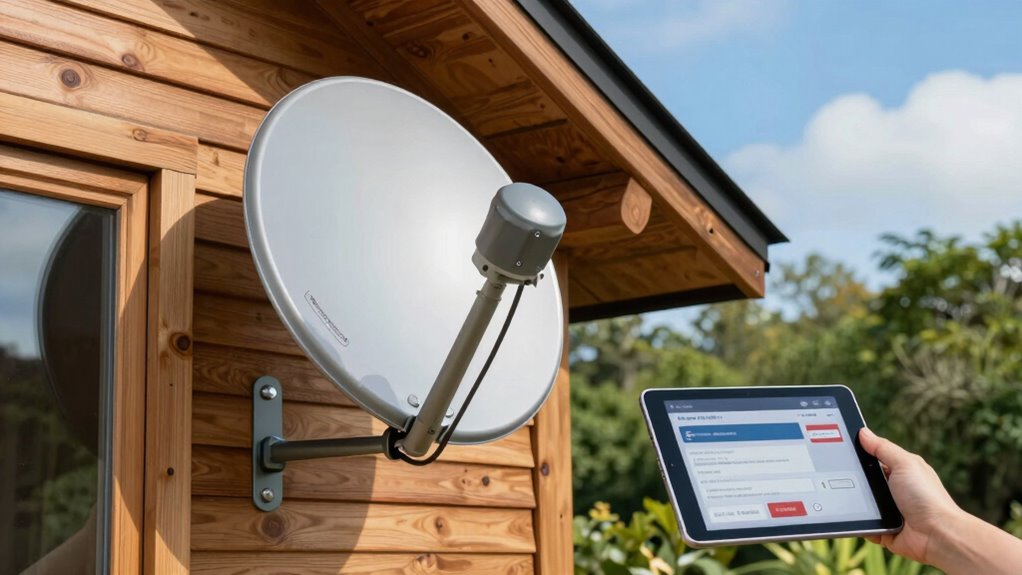
When configuring satellite internet in a tiny home, many homeowners find themselves asking the same essential questions before making a decision. One of the first concerns is how to guarantee a strong, dependable signal. You’ll want to understand the importance of antenna alignment, as positioning your satellite dish correctly can markedly influence your internet speed and connection stability. Proper antenna alignment involves pointing your dish precisely toward the satellite in the sky, which can be tricky without clear guidance or experience. It’s common to have to adjust the dish multiple times to find the best signal. Many providers offer troubleshooting tips to help you with this process, but it’s best to use a signal meter or the provider’s app to get real-time feedback on your alignment. If your signal seems weak or inconsistent, you might need to revisit the alignment process and make small adjustments until you hit the most suitable position.
Ensuring proper satellite dish alignment is key to reliable, high-speed internet in your tiny home.
Signal troubleshooting is another critical question that often comes up. You might wonder why your internet keeps dropping or why the speed is slower than expected. In these cases, it’s essential to check for obstructions like trees, buildings, or even the position of your dish. Anything blocking the line of sight to the satellite can severely impair your connection. Sometimes, simple fixes like repositioning the dish or removing obstacles can resolve the problem. If issues persist, you should verify your equipment connections—cables, modem, and router—to ensure everything is properly connected and functioning. It’s also wise to restart your equipment periodically, as this can resolve minor glitches that affect signal quality. Additionally, understanding satellite coverage areas can help you determine if your location is suitable for reliable service. Knowing your location’s terrain and how it impacts signal reception can be crucial for successful installation. Furthermore, researching the availability of regional providers can help you find the best options for your specific area. Considering the regulations and restrictions in your region may also be necessary to ensure smooth setup and operation. Being aware of antenna positioning requirements is essential for achieving optimal signal strength in various environments.
Another common concern is whether your tiny home’s location is suitable for satellite internet. If you’re in a heavily wooded or mountainous area, you might face additional challenges with antenna alignment and signal strength. In such cases, you may need to consider alternative mounting options or even a different satellite provider that offers better coverage in your region. Additionally, many homeowners ask about data limits and speeds. While satellite internet can be fast enough for streaming, working remotely, or browsing, you need to be aware of any data caps that could restrict your usage.
Ultimately, setting up satellite internet in your tiny home involves understanding the importance of antenna alignment, troubleshooting signal issues, and ensuring your location is suitable. Taking the time to properly install and maintain your dish, along with promptly addressing signal problems, will help you enjoy a stable, reliable connection, no matter how small your space.
As an affiliate, we earn on qualifying purchases.
Frequently Asked Questions
Can Satellite Internet Work During Severe Weather Conditions?
Satellite internet can struggle during severe weather, affecting weather resilience and signal stability. Heavy rain, snow, or storms can disrupt the signal, causing outages or slower speeds. While some providers offer enhanced weather resistance, it’s wise to expect occasional interruptions in extreme conditions. To minimize issues, consider installing a quality satellite dish, keeping it clear of obstructions, and checking your provider’s weather resilience features.
What Is the Typical Installation Time for Satellite Internet?
Typically, installing satellite internet takes about 2 to 4 hours, depending on your location and the complexity of the setup. You’ll need a satellite provider to deliver and install the equipment, which should be durable enough to withstand outdoor conditions. The provider’s technician usually handles the installation, ensuring the dish and modem are properly positioned for ideal signal strength, so your internet is reliable even during storms.
Are There Data Caps With Satellite Internet Plans?
Yes, many satellite internet plans have data caps, which limit your monthly data usage. These caps can affect your streaming, browsing, and working online. Keep in mind that data privacy concerns are essential, especially with satellite providers collecting usage data. Additionally, signal latency might impact your experience, especially during high traffic periods. Always review plan details carefully to understand data limits and how they might influence your internet use.
How Much Does Satellite Internet Installation Cost?
Satellite internet installation typically costs between $200 and $600, depending on equipment and service provider. You’ll need to invest in satellite dish and modem setup, which involves aligning the satellite signal for peak reception. Keep in mind, ongoing equipment maintenance is essential to guarantee consistent connectivity. Some providers include installation in their plans, while others charge separately. Always ask about hidden fees and service charges before committing.
Does Satellite Internet Cause Any Interference With Other Devices?
Satellite internet can cause some wireless interference, but it’s usually minimal. Your devices might experience occasional signal disruption if the satellite dish isn’t properly aligned or if there are obstructions like trees or buildings. To minimize issues, make certain your satellite dish is correctly installed and keep devices away from other strong signals. This way, you can enjoy reliable internet without significant interference affecting your other wireless devices.
Conclusion
Getting your satellite internet setup right is key to enjoying reliable connectivity in your tiny home. Remember, over 60% of tiny homeowners prioritize easy installation and minimal disruption when choosing internet options. By asking the right questions upfront, you can avoid costly mistakes and guarantee smooth access. With a little planning and the right info, you’ll be connected quickly, making your tiny home experience more enjoyable and stress-free.
Fall Picks
fall essentials
As an affiliate, we earn on qualifying purchases.