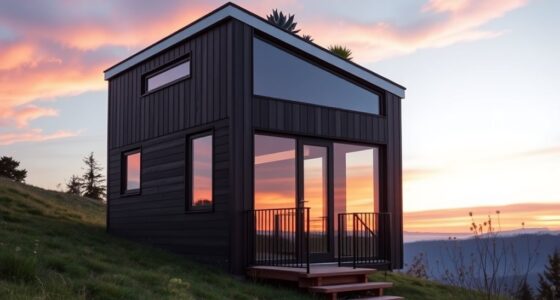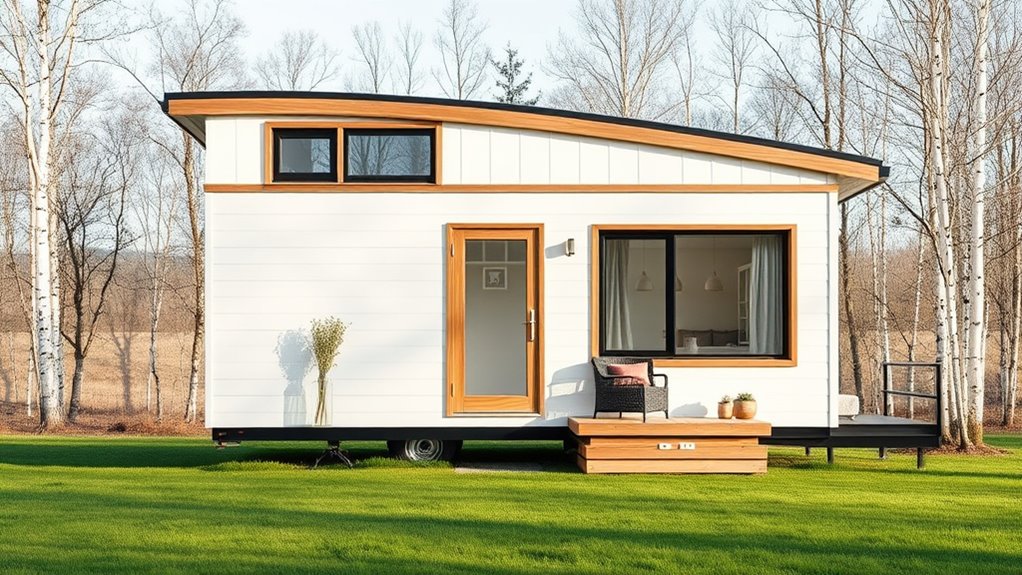

Scandinavian-inspired tiny house designs focus on minimalist, clean lines, open spaces, and cozy atmospheres. They often feature neutral color palettes like soft whites, cool grays, and warm beiges, enhanced by subtle accents. Natural light plays a key role, making spaces feel bright and airy. Sustainable materials such as reclaimed wood, bamboo, and natural fibers create eco-friendly interiors. To discover how these elements come together seamlessly, keep exploring what these stylish, functional tiny homes have to offer.
Key Takeaways
- Emphasize minimalist, clean lines with open, uncluttered layouts, reflecting Scandinavian simplicity.
- Incorporate neutral color palettes with subtle accents to create bright, tranquil interiors.
- Use sustainable materials like reclaimed wood and natural fibers for eco-friendly, warm finishes.
- Maximize natural light through large windows and skylights to enhance spaciousness and energy efficiency.
- Integrate multifunctional furniture and clever storage solutions to optimize small space practicality.
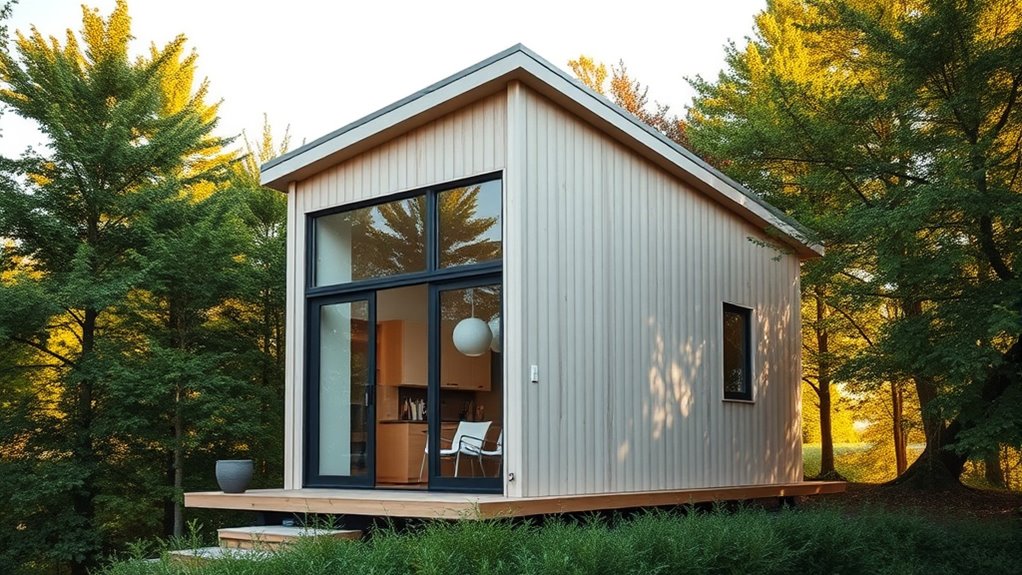
If you’re drawn to minimalist living, Scandinavian-inspired tiny house designs offer a perfect blend of functionality and beauty. These homes emphasize clean lines, open spaces, and a sense of calm, making them ideal for those who value simplicity and efficiency. One of the key features that set these designs apart is their thoughtful approach to interior color schemes. You’ll find that they favor neutral tones—soft whites, cool grays, and warm beiges—that create a bright, airy atmosphere. These colors reflect natural light beautifully, making even the smallest spaces feel more expansive. To add warmth and visual interest, subtle accents of muted blues, gentle greens, or earthy browns are often incorporated, maintaining the soothing aesthetic without cluttering the space. The goal is to foster a peaceful environment where every element feels intentional and uncluttered.
Sustainable building materials are at the heart of Scandinavian tiny house designs. You’ll notice that eco-friendly choices are prioritized, aligning with the region’s focus on environmental responsibility. Reclaimed wood, bamboo, and recycled metal often make up the structure and furnishings, reducing the ecological footprint. Insulation is typically made from natural fibers like sheep’s wool or cellulose, which offer excellent thermal performance while being biodegradable and non-toxic. These materials not only promote sustainability but also contribute to healthier indoor air quality, creating a safe, comfortable space. The use of sustainable building materials also enhances the aesthetic, as they often feature natural textures and finishes that add warmth and character to the interiors. This commitment to eco-consciousness isn’t just about environmental impact; it also ensures your tiny home ages gracefully and remains timeless, avoiding the fleeting trends that often fade quickly. Additionally, sound design techniques can be used to create a serene and calming atmosphere inside the tiny home, further enhancing its peaceful environment.
The design philosophy seamlessly integrates these elements—carefully curated color schemes and eco-friendly materials—into a cohesive, functional space that maximizes every square inch. You’ll find that Scandinavian tiny houses leverage clever storage solutions and multi-purpose furniture to keep clutter at bay, reinforcing the minimalist ethos. Large windows and skylights are common, flooding the interior with natural light and reducing the need for artificial lighting. This not only saves energy but also enhances the overall sense of openness. By choosing calming, neutral palettes and sustainable materials, you’re creating a living environment that’s both stylish and environmentally conscious, embodying the essence of Scandinavian design in a compact, efficient form.
Frequently Asked Questions
What Are the Plumbing Options for Tiny Scandinavian-Inspired Houses?
You can choose portable plumbing options like flexible hoses for easy setup and maintenance. Composting toilets are popular in tiny Scandinavian-inspired houses because they save space and reduce water use. You might also consider small, energy-efficient water heaters for your sink and shower. Combining these options gives you a practical, eco-friendly plumbing system that fits the minimalist and sustainable aesthetic of Scandinavian design.
How Do Scandinavian Designs Influence Tiny House Insulation?
You think insulation is just fluff? Think again. Scandinavian designs prioritize thermal efficiency, so you’ll use high-quality insulation materials like sheep’s wool, cellulose, or spray foam. These choices aren’t just trendy; they keep your tiny house cozy in winter and cool in summer. Embracing Scandinavian principles means investing in insulation that maximizes energy efficiency, ensuring your tiny retreat remains warm and inviting without breaking the bank.
Are Solar Panels Feasible on Scandinavian-Style Tiny Houses?
Solar panels are feasible on Scandinavian-style tiny houses, especially with good solar viability. You should focus on strategic panel placement, such as south-facing rooftops, to maximize sunlight absorption during winter months. With proper planning, even in northern climates, you can harness enough solar energy to power your tiny home efficiently. Keep in mind that insulation and window placement also play a role in optimizing energy use alongside your solar setup.
What Are the Best Furniture Choices for Small Scandinavian Interiors?
You want to maximize your small space, right? Opt for sleek, multi-functional furniture like fold-away beds and extendable tables that surprise with their versatility. Incorporate space-saving storage solutions such as under-seat drawers and wall-mounted shelves to keep clutter at bay. These choices not only make your interior feel open but also add that cozy, Scandinavian charm. With smart selections, your tiny house becomes both stylish and highly functional.
How Do Scandinavian Tiny Houses Handle Waste Management?
You handle waste in Scandinavian tiny houses efficiently by using composting toilets, which minimize water use and reduce plumbing needs. Gray water recycling systems are also common, allowing you to reuse wastewater from sinks and showers for irrigation or other non-potable purposes. These eco-friendly solutions align with the minimalist, sustainable ethos of Scandinavian design, helping you maintain a clean, functional, and environmentally conscious living space.
Conclusion
Imagine stepping inside one of these Scandinavian-inspired tiny houses, where sleek lines and cozy warmth blend seamlessly. As you explore, you sense the perfect harmony of form and function, but there’s always more to discover—hidden storage, clever details, or perhaps a secret view just beyond the window. These designs invite you to dream of a simpler, stylish life, leaving you enthusiastic to see what surprises lie just around the corner, waiting to be uncovered.