To boost your home’s efficiency, start by identifying common air leaks around windows, doors, outlets, and gaps in your walls or basement. Use quick fixes like duct tape for small cracks and foam sealant for larger gaps. Apply these carefully, ensuring surfaces are clean and dry. For ideal results, combine sealing with insulation and regularly check for new leaks. Keep exploring to discover more expert tips for sealing your home effectively.
Key Takeaways
- Identify common leak points such as windows, doors, outlets, and rim joists to target sealing efforts effectively.
- Use weatherstripping or caulking around windows and doors for quick, permanent sealing of small gaps.
- Apply foam sealant to fill larger cracks and gaps in walls, ceilings, or building envelope openings.
- Ensure surfaces are clean and dry before sealing, pressing firmly for a secure, airtight fit.
- Regularly inspect and maintain sealed areas to sustain energy efficiency and prevent new leaks.
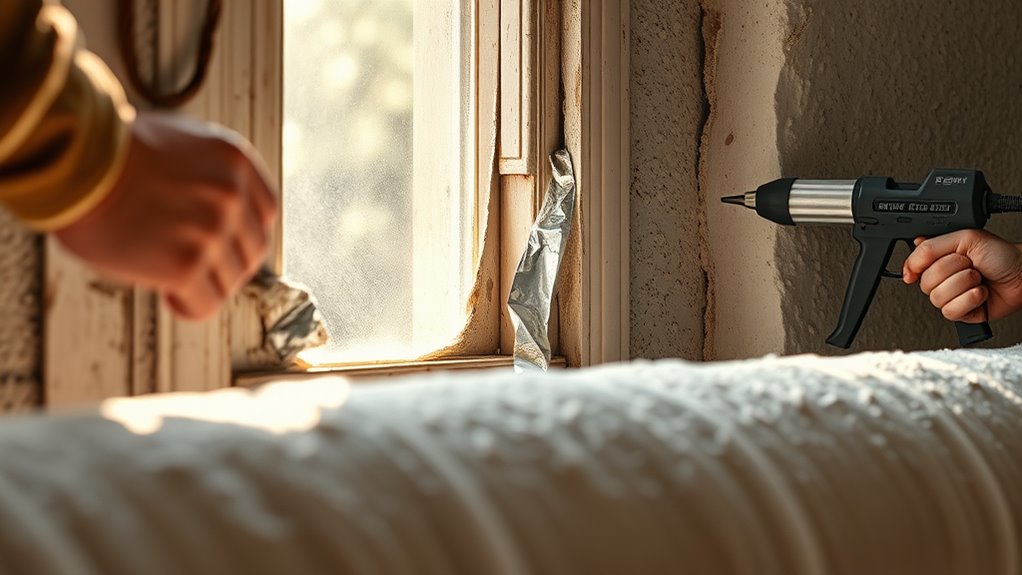
Sealing air leaks is one of the most effective ways to improve your home’s energy efficiency and comfort. When you address these leaks, you’ll notice a difference in your heating and cooling bills, and your home will feel more consistent year-round. The first step is identifying where the leaks are hiding. Common spots include around windows, doors, electrical outlets, and along the attic or basement rim joists. Once you know where to focus, you can start sealing these gaps effectively.
Sealing air leaks boosts efficiency and comfort by reducing drafts around windows, doors, outlets, and rim joists.
For small cracks and gaps, duct tape can be a quick fix. While duct tape isn’t always the best long-term solution, it works well for temporary sealing or on surfaces that won’t be exposed to weather or moisture. When you use duct tape, make sure the surface is clean and dry before applying it. Press firmly to create a good seal, and try to cover the entire opening with overlapping edges to prevent air from sneaking through. Keep in mind, duct tape is best for minor leaks or temporary measures; for a more durable solution, consider using foam sealant.
Foam sealant, especially expanding types, is an excellent choice for larger gaps and cracks. When you apply foam sealant, wear gloves and work in a well-ventilated space. Shake the can well, then hold it upright and spray the foam directly into the gap. The foam will expand to fill the space, creating an airtight seal. After it cures, usually within an hour, trim any excess with a utility knife for a neat finish. Foam sealant provides a long-lasting barrier against air leaks, and it adheres well to most building materials.
It’s essential to be precise when sealing with foam; avoid over-application, as the foam expands considerably. For best results, apply in layers if needed, and allow each layer to cure before adding more. Once cured, you can paint over the foam if desired for aesthetic reasons. Remember, sealing your home is about more than just plugging holes—it’s about creating a tighter, more energy-efficient environment. Properly insulating your home in conjunction with sealing leaks can further enhance energy savings and comfort. Combining quick fixes like duct tape with more permanent solutions such as foam sealant allows you to effectively reduce drafts and improve your home’s overall comfort and efficiency. Regularly inspecting and maintaining these seals will ensure your efforts pay off in lower energy costs and a cozier home.
Frequently Asked Questions
How Often Should I Check for New Air Leaks?
You should check for new air leaks at least once a year, especially after significant weather changes or renovations. Regular energy audits and leak detection help you identify hidden leaks that might develop over time. Keep an eye on common problem areas like windows, doors, and vents. Frequent inspections ensure your home stays energy-efficient, saving you money and maintaining a comfortable environment. Don’t wait too long—early detection is key to effective sealing.
Are There Eco-Friendly Sealing Options Available?
Yes, there are eco-friendly sealing options available. Think of it as choosing the green path, like a modern-day Robin Hood, using sustainable sealing materials that benefit both your home and the environment. These eco-friendly materials are made from natural or recycled sources, ensuring your sealing efforts are sustainable and safe. By opting for these, you’re not only improving efficiency but also contributing to a healthier planet.
Can Sealing Air Leaks Damage My Home?
Sealing air leaks generally won’t damage your home if you use proper materials and techniques. In fact, it enhances your home insulation, making it more energy-efficient. However, improper sealing might cause issues like trapped moisture or ventilation problems. You should carefully identify leaks and choose eco-friendly sealants designed for your home. Proper sealing promotes energy conservation, reduces drafts, and keeps your home comfortable without risking damage.
What Tools Are Best for Sealing Small Leaks?
Imagine pinpointing tiny gaps where energy escapes—your toolkit makes all the difference. Use a caulking gun for precise application, and choose flexible sealant types like silicone or acrylic for small leaks. These tools help you master caulking techniques, ensuring a tight, lasting seal. With steady hands and the right materials, you’ll effectively block those sneaky leaks, boosting your home’s efficiency and comfort without a hitch.
How Long Does It Take for Sealing to Show Results?
Sealing small leaks with DIY sealing can show energy savings in just a few days to a week. You’ll notice immediate improvements in comfort and lower energy bills as drafts diminish. While some results are quick, ideal energy efficiency benefits develop over a month as the sealant fully settles and prevents air infiltration. Keep monitoring your space to enjoy ongoing savings and a cozier home.
Conclusion
Sealing air leaks is like plugging tiny holes in a boat—once you fix them, your home becomes more efficient and comfortable. It’s a simple step that saves you money and energy in the long run. By taking the time to identify and seal those leaks, you keep warm or cool air inside, making your space feel better and reducing your utility bills. So, don’t wait—act now and enjoy a cozier, more efficient home.