
Retrofitting an older house with smart home technology can seem daunting, but it offers real benefits in efficiency, security, and convenience. While upgrading your pre-2000 home requires careful planning, starting small and expanding over time can make the process manageable. Understanding which devices to prioritize and how to integrate them smoothly is vital. If you’re considering this transformation, it’s worth exploring the best strategies to guarantee your retrofit is both effective and sustainable.

Get compact home essentials delivered free with Prime
- Fast, free delivery on millions of items
- Prime Video, Amazon Music and more included
- Member-only deals all year
Key Takeaways
- Assess your home’s current electrical system to ensure it can support new smart devices safely.
- Prioritize energy efficiency upgrades like smart thermostats and LED lighting to maximize cost savings.
- Start with essential security features such as smart locks and cameras for immediate safety benefits.
- Use a central hub or app to manage multiple smart devices, creating a cohesive home automation system.
- Plan upgrades gradually, focusing on security and energy improvements, to simplify installation and reduce disruptions.
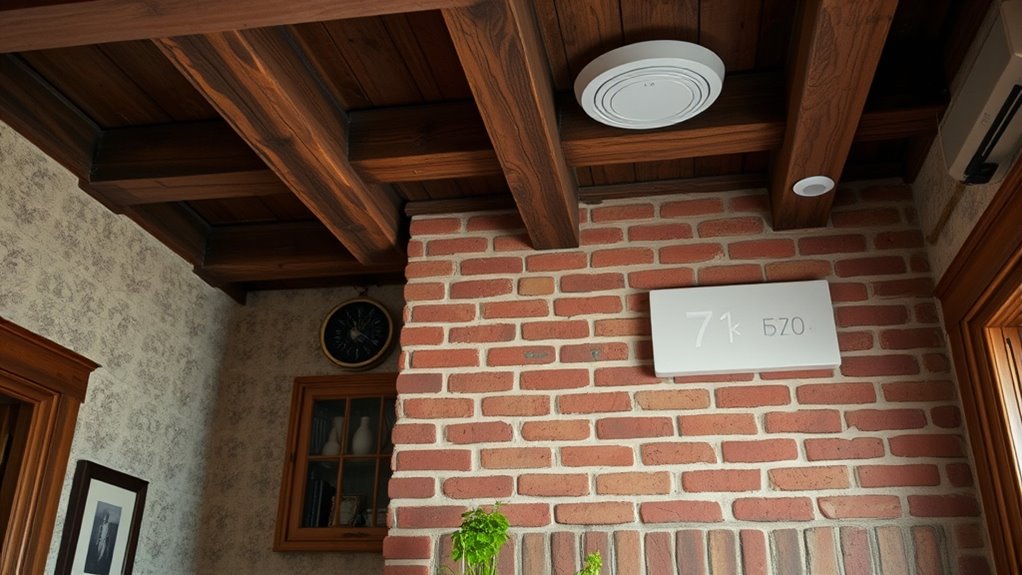
Upgrading your home with smart technology can seem overwhelming, but a thoughtful retrofit makes it manageable and rewarding. If your house was built before 2000, you might feel uncertain about where to start. The first step is understanding how smart upgrades can boost your home’s energy efficiency and security systems. These two areas deliver immediate benefits—cutting costs and enhancing safety—while also setting the foundation for a more integrated, modern home.
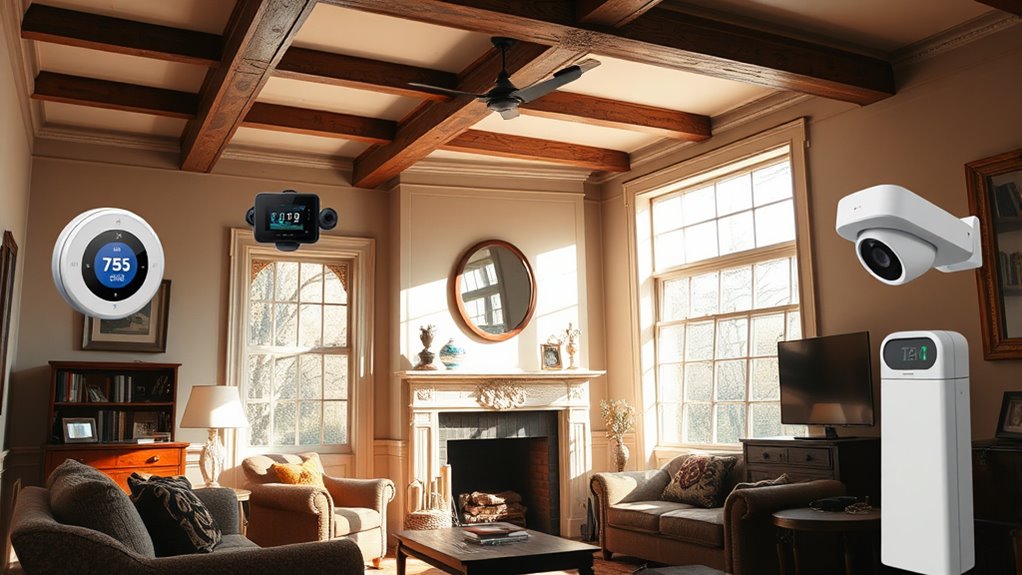
To improve energy efficiency, focus on smart thermostats and lighting. A smart thermostat allows you to control your heating and cooling remotely, adjusting settings based on your schedule or weather conditions. This not only saves energy but also reduces utility bills. Pair it with smart sensors that detect occupancy or open windows, so your home adjusts automatically, avoiding unnecessary energy use. Upgrading lighting with smart LED bulbs gives you control over brightness and color, all from your phone or voice commands. These bulbs can be scheduled or turned off when not needed, further conserving energy. When combined, these smart solutions can considerably reduce your home’s energy footprint, making it more sustainable and cost-effective over time.
On the security front, modern smart security systems offer peace of mind without the need for extensive wiring or expensive installations. Wireless cameras, doorbell cameras, and smart locks allow you to monitor your property remotely and control access from anywhere. With real-time alerts, you can respond immediately to any suspicious activity or visitors, enhancing your home’s security system. Smart security devices can also be integrated with your existing alarm system for a seamless experience. Installing smart locks means you can lock and unlock doors remotely, grant temporary access to guests or service providers, and receive notifications when someone enters or leaves. These features not only boost your security but also add convenience, especially when you’re away from home. Additionally, implementing security vulnerabilities assessments can help identify and mitigate potential risks associated with these new systems.
While these upgrades are powerful on their own, the real value lies in integrating them into a cohesive smart home ecosystem. A central hub or app can allow you to manage everything easily, from adjusting the thermostat to viewing security footage. This integration makes your home smarter and more responsive, giving you control at your fingertips. Remember, start small—focus on one or two upgrades initially—and expand as you become more comfortable. Retrofitting your pre-2000 house with smart technology doesn’t have to be intimidating; with careful planning, you can enhance energy efficiency and security systems, making your home safer, more efficient, and ready for the future.
Conclusion
By taking small, deliberate steps, you can turn your pre-2000 house into a smart home that’s both cozy and secure. Think of it as planting seeds for a brighter, more efficient future—each upgrade adding to a flourishing digital landscape. Stay patient and plan carefully, and before you know it, your home will be a seamless harmony of technology and comfort, making everyday living feel like a walk in the park.
Halloween Picks
halloween
As an affiliate, we earn on qualifying purchases.