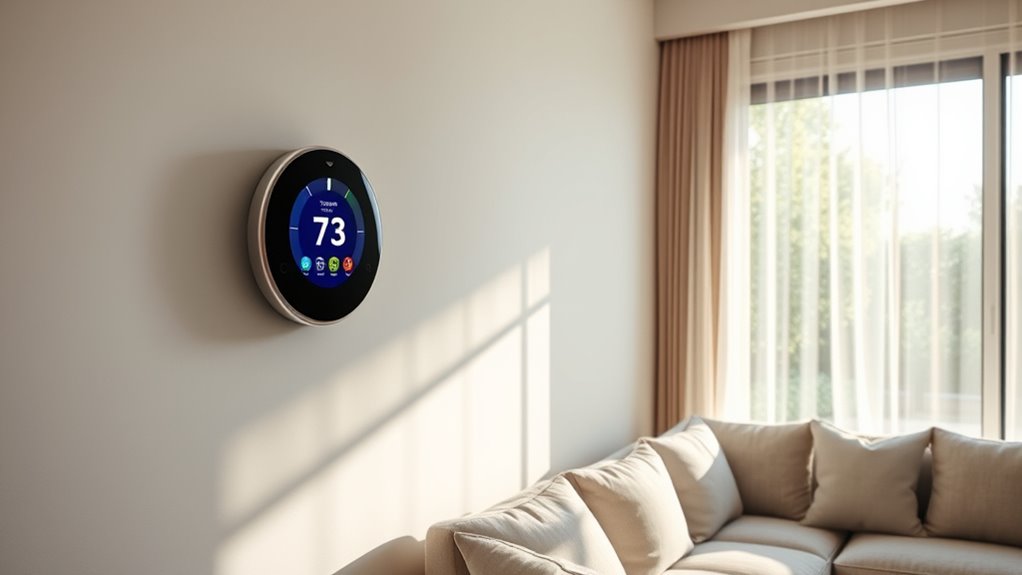

Smart thermostats are designed to learn your routines by analyzing how you adjust settings, your schedules, and occupancy patterns. They aim to optimize comfort and save energy, adapting over time to your habits. But they can struggle when your schedule is irregular or changes suddenly, and technical issues can interfere with their learning process. Understanding where they succeed—and where they fall short—can help you decide if they’re right for your home.
Key Takeaways
- Smart thermostats learn user habits by analyzing occupancy patterns and temperature preferences over time.
- They improve efficiency through manual inputs, scheduled settings, and geofencing technology.
- Their learning can be limited by irregular routines, frequent travel, or inconsistent user behavior.
- Sensor inaccuracies and connectivity issues can hinder proper data collection and device responsiveness.
- While they optimize energy use and comfort, manual adjustments may still be necessary for unpredictable schedules.
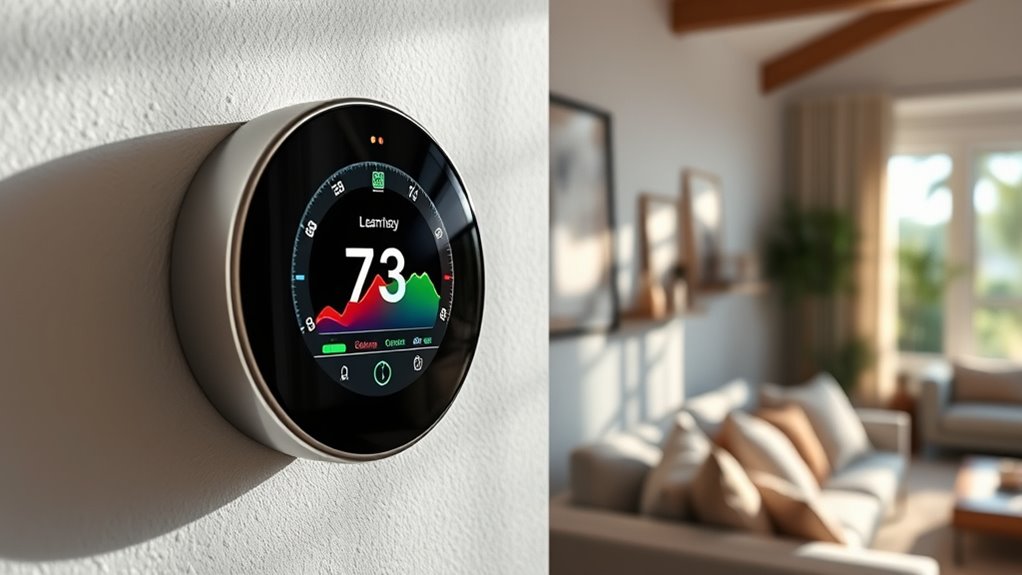
Have you ever wondered how to save energy and cut heating and cooling costs effortlessly? Smart thermostats make it possible by learning your habits and adjusting settings automatically. They’re designed to maximize energy savings without sacrificing comfort, all while giving you the power to customize your environment. When you install a smart thermostat, you’re not just replacing a traditional device—you’re stepping into a system that adapts to your lifestyle. As you interact with it, the thermostat gathers data on your schedule, preferred temperatures, and even when you’re home or away. Over time, it refines its behavior, creating a personalized heating and cooling plan tailored specifically to you.
Smart thermostats learn your habits to optimize comfort and energy savings effortlessly.
This process of user customization is central to the effectiveness of smart thermostats. The more you engage with the device—whether by manually adjusting the temperature or setting preferences—the smarter it becomes. Many models allow you to set different schedules for weekdays and weekends, and some can even detect when you’re away using geofencing technology. This means your system can automatically reduce energy usage when you’re not home, leading to significant energy savings. Plus, smart thermostats often feature intuitive interfaces that let you tweak settings from your smartphone or voice commands, giving you control no matter where you are.
What makes these devices particularly effective is their ability to learn from your behavior. If you tend to turn the temperature up in the mornings or lower it at night, the thermostat notices these patterns and begins to adjust itself accordingly. It’s like having a personal energy consultant who fine-tunes your home’s climate for maximum efficiency. This ongoing learning process ensures your heating and cooling system operates at peak performance, reducing waste and lowering your utility bills. Additionally, the effectiveness of these devices can be enhanced by technology that supports high refresh rates, which helps in making quick adjustments based on changing conditions.
However, these learning capabilities aren’t foolproof. Sometimes, smart thermostats struggle with irregular schedules or sudden changes in your routines. For example, if you have unpredictable work hours or travel frequently, the device might take longer to adapt or make inaccurate assumptions about your preferences. In such cases, manual adjustments may be necessary to keep things comfortable and energy-efficient. Additionally, some models can misinterpret sensor data or encounter connectivity issues, leading to less effective performance. While they’re excellent at creating customized routines based on your habits, they still rely heavily on consistent data and user input to function at its best.
In the end, smart thermostats excel at automating energy savings through user customization, but they aren’t perfect. They learn from your habits, help you save money, and make managing your home’s climate more convenient. Still, understanding their limitations ensures you get the most out of these intelligent devices and keeps your home comfortable year-round.
Conclusion
Smart thermostats can adapt beautifully to your routines, saving energy and boosting comfort. But remember, they’re only as good as the data they obtain. When your schedule becomes unpredictable or connectivity falters, their learning can stumble. Are you ready to balance reliance on technology with manual oversight? Ultimately, staying attentive ensures your home stays cozy and efficient—because sometimes, a little human touch makes all the difference.