
TL;DR

Get compact home essentials delivered free with Prime
- Fast, free delivery on millions of items
- Prime Video, Amazon Music and more included
- Member-only deals all year
A Hunker home-care report recommends steam-cleaning indoor or outdoor garbage cans to loosen stuck-on residue and address odor sources. The method uses a steamer, followed by wiping away grime; the report does not provide independent testing or measurements of odor or bacteria reduction.
Hunker has recommended steam-cleaning garbage cans as a way to loosen stuck-on grime and address odors in indoor and outdoor bins. The household tip matters for people dealing with residue or persistent smells, but the report offers practical guidance rather than independent test results measuring how much odor or bacteria steam cleaning removes.
The method starts with basic preparation: remove the trash bag, take out large scraps that have fallen into the can, and consult the steamer’s instruction manual, especially if the appliance is new. For outdoor bins with insects, Hunker advises dealing with them before cleaning; a small handheld steamer may not be a convenient way to handle a large number of bugs.
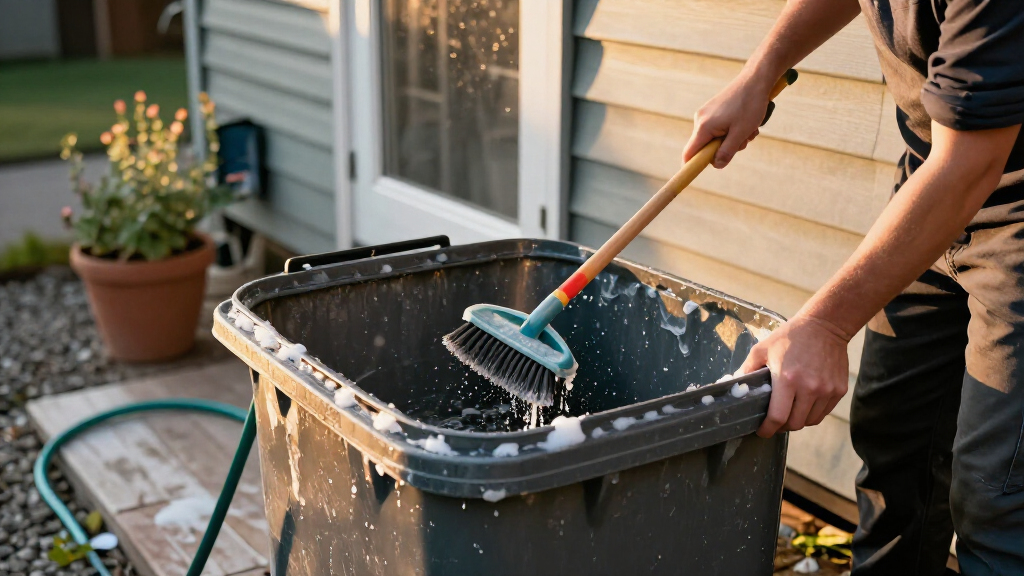
To clean, move the steamer up and down each interior side so the surfaces receive steam. The outside can also be treated. Hunker recommends lingering over stuck-on residue, then using a sponge, paper towel or scraper to remove loosened grime. If the smell has no obvious visible source, wipe the inside after steaming to remove any remaining material that could be contributing to it.
The report says moisture left by the steam can be allowed to evaporate on its own. It also says a simple hand steamer can be used; a high-powered model is not presented as necessary. People who do not want to clean the bin themselves can check whether local cleaning companies offer garbage-can steam cleaning.
A Cleaning Option for Odorous Bins
Garbage cans collect food scraps and other residue that can contribute to unpleasant smells. Steam cleaning offers a way to loosen material from the bin’s surfaces, rather than simply masking an odor. The suggestion applies to both indoor and outdoor cans, including bins that need attention before guests arrive or after animals have accessed them.
The approach may also appeal to households seeking to clean without relying on harsh chemicals. Hunker describes steam as a chemical-free cleaning option, but that description should not be read as evidence that steam sterilizes every bin or removes every odor. The report provides no measured results, and cleaning needs may vary with the type of residue, the bin material and the steamer used.
For readers, the practical point is that the process pairs heat and moisture with physical removal of loosened grime. Wiping after steaming is part of the advice, particularly when a strong smell remains or residue is visible.
Products Worth Considering

Sonos Era 100 SL Compact Microphone-Free Speaker, Black

Dreame L40 Ultra Gen 2 Robot Vacuum and Mop

eufy Security 5-Piece Home Alarm Kit
As an affiliate, we earn on qualifying purchases.
How the Steam Method Works
Hunker’s explanation is that hot steam can help loosen stuck-on dirt and dissolve residues much as water does. It also says heat can kill a variety of bacteria and insects under suitable conditions. Because residue and microbes can contribute to odors, the report presents a steamer as a useful tool for bin cleaning.
Those statements are general explanations in the source, not reported results from a controlled test of garbage cans. The report does not identify a specific temperature, exposure time, steamer model or level of bacterial reduction. Its instructions instead focus on covering the bin’s interior surfaces, applying extra steam to stubborn grime and wiping away what has loosened.
“A simple hand steamer will work just fine.”
— Hunker report
Limits of the Cleaning Advice
The source does not say how much steam, how long to apply it, or which bin materials are suitable for every steamer. It also provides no test data showing the degree of odor reduction or bacteria removal. Readers should follow the appliance maker’s instructions and check whether the bin’s material can tolerate heat before applying steam.
It is also unclear whether steam alone will resolve a persistent smell caused by material lodged in a hard-to-reach area or by an ongoing source outside the bin. Hunker advises wiping the interior when the odor is strong, but does not give a separate treatment protocol for smells that remain after cleaning. The source does not specify when it was published.
Steps Before Cleaning Your Bin
Anyone trying the method should first empty the can, remove loose debris and read the steamer’s manual. Follow the appliance’s operating and safety instructions, keep hands away from the steam outlet, and avoid directing hot steam toward people, pets or surfaces that may be damaged by heat. Treat each side of the bin, wipe off loosened residue and let remaining moisture dry.
If insects are present or the odor persists, the report suggests addressing those issues rather than assuming steam alone will solve them. Households that prefer not to do the work can ask local cleaning providers whether they offer garbage-can steam cleaning. Hunker’s article does not announce a product, service launch or formal test; it presents the method as a home-cleaning recommendation.
Key Questions
Can a handheld steamer clean a garbage can?
Hunker says a simple hand steamer can be used. Follow the device manual and confirm the bin material can tolerate steam.
Do I need to dry the can after steaming?
The report says the remaining moisture can evaporate on its own. Wipe the bin if grime or a strong odor remains.
Does steam cleaning eliminate every odor or bacteria?
The source makes no measured claim that it removes all odors or bacteria. It says heat can kill a variety of bacteria, but provides no test results or specific reduction figures.
What should I do before steaming an outdoor bin?
Remove the bag and loose scraps, read the steamer instructions, and address insects before cleaning. Hunker cautions that a small steamer may not be a convenient option when many bugs are present.
Source: rss