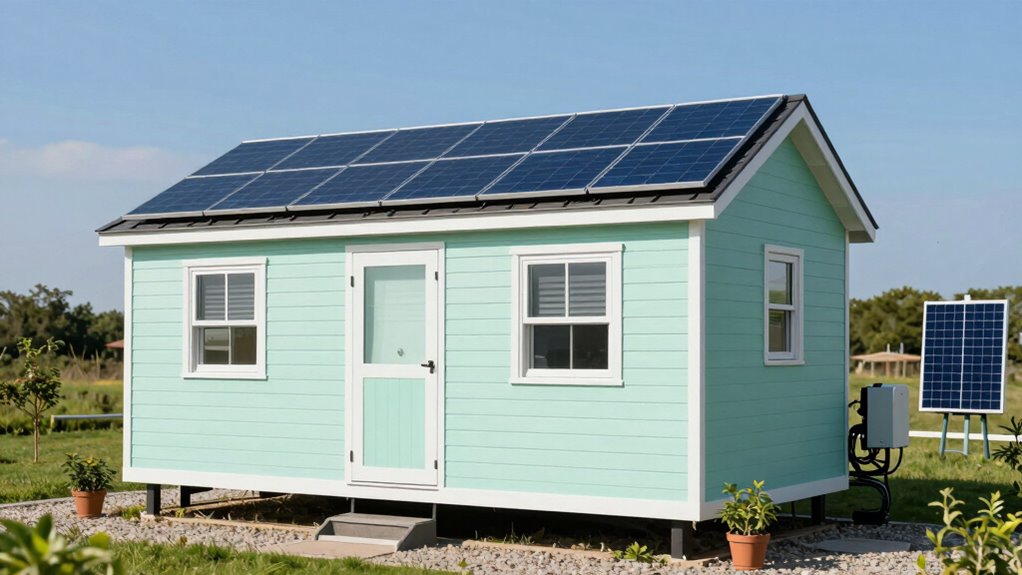

Solar-ready panels make your tiny house’s electrical planning much simpler by allowing you to expand your solar system easily in the future. They’re designed for seamless upgrades, so you avoid costly rewiring and complex modifications later on. With pre-wired connections and thoughtful placement, you’ll save on both time and money. This proactive approach also boosts energy efficiency and sustainability. Keep exploring to discover how these features help create a flexible, eco-friendly tiny home setup.

Get compact home essentials delivered free with Prime
- Fast, free delivery on millions of items
- Prime Video, Amazon Music and more included
- Member-only deals all year
Key Takeaways
- Solar-ready panels are designed for easy integration, reducing wiring complexity during initial installation.
- They allow for flexible future solar panel expansion without major electrical rewiring.
- Pre-wired connections streamline the setup process, saving time and lowering installation costs.
- Their scalable design supports energy efficiency improvements as energy needs grow.
- Using solar-ready panels promotes long-term sustainability through proactive electrical planning.
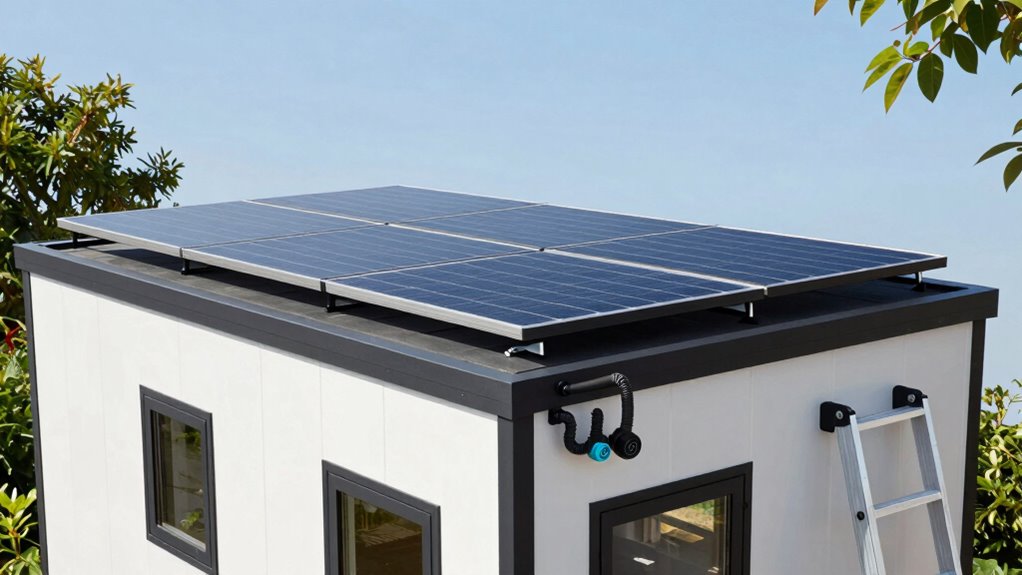
Planning the electrical system for a tiny house can be intimidating, but solar-ready panels make it much simpler. These panels are designed with future solar integration in mind, allowing you to prepare your electrical system for easy solar power expansion down the line. This foresight can save you a lot of hassle and money, especially when it comes to energy efficiency and installation costs. By choosing solar-ready panels, you’re not only investing in a more sustainable lifestyle but also making sure your tiny house’s electrical setup is flexible enough to accommodate future upgrades without major rewiring or costly modifications.
Solar-ready panels simplify tiny house electrical planning and enable future solar upgrades with ease.
One of the biggest advantages of solar-ready panels is how they streamline the installation process. Instead of installing a completely separate solar system later, you’re already set up with the necessary infrastructure. This means you can install the panels when it’s most convenient or cost-effective, rather than rushing to retrofit your system after your tiny house is built. The pre-wired connections and designated spaces for solar components reduce the complexity of installation, which directly impacts installation costs. Since the groundwork is laid out from the start, you’ll spend less on labor and materials, making the overall project more affordable.
Energy efficiency is another key benefit. Solar-ready panels are often built with high-quality materials that maximize energy capture, ensuring you get the most out of your solar investment. When you’re ready to add solar, the panels can be integrated seamlessly, allowing your tiny house to generate its own power more efficiently. This reduces your reliance on grid electricity and lowers your energy bills in the long run. Plus, because the system is prepared in advance, you avoid the inefficiencies that often come with piecemeal upgrades or retrofits, which can lead to energy losses and higher operating costs. Incorporating integrated systems into your planning can also help optimize your energy setup for maximum efficiency and environmental impact. Additionally, proper planning can help minimize potential energy losses over time. Planning with future expansion in mind can further enhance your system’s flexibility and sustainability.
Additionally, choosing solar-ready panels encourages smarter planning for your tiny house’s overall electrical design. You’ll be prompted to think about ideal panel placement, wiring pathways, and power management from the start. This proactive approach ensures your tiny house is not just energy-efficient but also resilient and scalable. As your energy needs grow or technology advances, you can easily expand your solar capacity without overhauling your entire electrical system. This adaptability makes solar-ready panels a wise investment, blending immediate cost savings with long-term benefits. Incorporating biodiversity and conservation principles into your planning can also enhance the sustainability of your tiny living environment.
solar-ready solar panels for tiny house
As an affiliate, we earn on qualifying purchases.
As an affiliate, we earn on qualifying purchases.
Frequently Asked Questions
What Is the Cost Difference Between Solar-Ready Panels and Traditional Panels?
The cost difference between solar-ready panels and traditional panels varies, but solar-ready panels often cost about 10-15% more upfront due to enhanced features for easy integration. However, their higher panel efficiency can save you money in the long run by generating more power with less space. A thorough cost comparison shows that initial investments might be higher, but the increased efficiency and flexibility can lead to greater savings over time.
How Long Does Installation of Solar-Ready Panels Typically Take?
The installation of solar-ready panels typically takes about one to three days, depending on your tiny house’s size and complexity. You can plan your project timeline accordingly, allowing for simultaneous setup of electrical components and mounting. This streamlined process helps you stay on schedule, reduces labor costs, and makes project planning easier, so you can enjoy your solar power system sooner without unnecessary delays.
Are Solar-Ready Panels Suitable for All Tiny House Sizes?
Is a tiny house size a match made in heaven for solar-ready panels? Absolutely. These panels fit most tiny houses because of their versatile design, accommodating various roof compatibilities. Plus, their high panel efficiency guarantees you get maximum energy output, regardless of size. Think of it as a tailored suit—adjusted perfectly to your tiny home’s roof, providing efficient, sustainable power without the fuss.
What Maintenance Is Required for Solar-Ready Panels?
You’ll find that solar-ready panels require minimal maintenance thanks to their durability. Regular maintenance routines involve cleaning the panels to remove dirt and debris, which helps optimize efficiency. Also, inspect for any signs of damage or wear periodically. By keeping these maintenance routines simple, you guarantee your panels stay in top condition, maximizing energy production and extending their lifespan without much effort.
Can Solar-Ready Panels Be Upgraded in the Future?
Yes, solar-ready panels can be upgraded in the future. They’re designed for battery compatibility and future expansion, allowing you to add more panels or a larger battery bank later on. This flexibility means you can enhance your tiny house’s energy system as your needs grow or technology advances. Upgrading is straightforward, and solar-ready panels are built to accommodate these changes without needing complete replacements.
Conclusion
As you consider your tiny house’s future, solar-ready panels could be the game-changer you didn’t see coming. They streamline your electrical setup and open the door to limitless possibilities—if you choose to seize them. But what if the real surprise lies just beyond the horizon, waiting to transform your tiny house experience in ways you never imagined? The choice is yours—are you ready to unleash the potential lurking within those panels?
Halloween Picks
halloween
As an affiliate, we earn on qualifying purchases.