You might think that roof angles don’t matter much when installing solar panels, but choosing the right tilt can considerably improve your tiny home’s energy efficiency. While a flat roof may seem simpler, a well-angled roof can maximize sunlight exposure throughout the year. Understanding how to align your roof’s tilt with your location can make a real difference in energy gains. Curious about how to find the best angle for your tiny home?
Key Takeaways
- The optimal roof angle for tiny homes depends on their geographic location to maximize annual solar exposure.
- Steeper roof angles improve winter solar energy capture, while flatter angles are suitable for year-round use.
- Flat roofs offer flexible panel tilt options, making them ideal for adjusting angles as needed.
- Roof material compatibility influences the ease of mounting solar panels and long-term efficiency.
- Properly orienting and tilting panels on tiny homes enhances energy production and overall solar readiness.

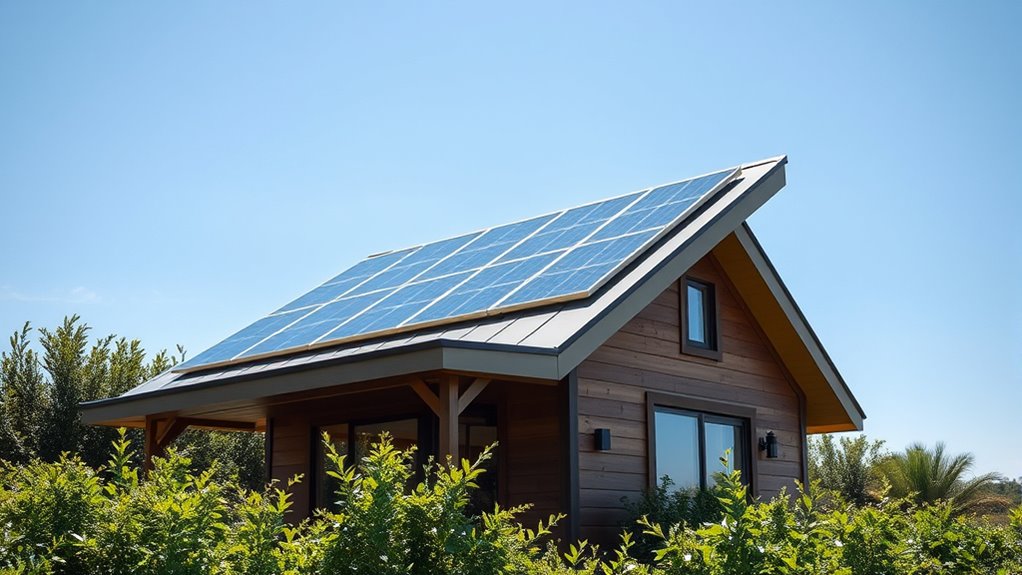
If you’re considering adding solar panels to your tiny home, choosing the right roof angle is essential for maximizing energy efficiency. The angle of your roof directly influences how much sunlight your solar panels can capture throughout the day and across different seasons. A steeper slope generally helps panels reach the sun more directly, increasing their efficiency, especially during winter months when the sun is lower. Conversely, a flatter roof might reduce some efficiency but could be easier to install and maintain. To get the most out of your solar investment, you’ll want to consider the ideal tilt angle based on your geographical location, aiming to maximize solar exposure year-round. Proper planning can also help ensure compatibility with your roof material, which affects installation options and long-term durability.
Your roof’s material choices also play a key role in solar panel efficiency and installation. Not all roof types are equally suited for solar panels—some materials work better than others when it comes to mounting systems and durability. For example, asphalt shingles are common and generally easy to work with, providing good stability for mounting hardware. Metal roofs, especially standing seam styles, offer an excellent surface for attaching panels securely without penetrations, reducing potential leaks. These materials tend to be durable and require less maintenance over time, making them ideal for solar installations. On the other hand, tile roofs, such as clay or concrete, may require specialized mounting brackets, which can increase installation complexity and cost. Flat roofs, often found on modern tiny homes, can also be advantageous since they offer flexible angles for panels and easier access for maintenance, but you’ll need to ensure proper drainage and waterproofing.
When selecting your roof material, think about longevity and how it will impact your solar panel efficiency over the years. A roof that’s in good condition and suited for solar attachment will ensure your panels remain securely mounted and function at their best. Additionally, some roof materials have better reflectivity, which can influence how much sunlight hits your panels—though this effect is usually minor compared to the impact of the roof angle itself.
Ultimately, the best roof angle and material choice depend on your specific location, the orientation of your tiny home, and your budget. By paying close attention to these factors, you can set yourself up for maximum solar panel efficiency and enjoy the benefits of renewable energy for years to come. Proper planning now ensures that your tiny home’s roof can support a sustainable, energy-efficient setup that meets your needs.

SUNMAK 8 units per set Solar Panel Mounting Z Brackets Lightweight Aluminum Corrosion-Free for solar panels installed on RVs, Trailers, Boats, Yachts, Wall, Cabins, Sheds, Garages&Other Off Gird Roofs
【SUPERIOR QUALITY】 Anodized Aluminum Z brackets, Stainless Steel Hex Bolts and Screws, service life up to 25 years,…
As an affiliate, we earn on qualifying purchases.
As an affiliate, we earn on qualifying purchases.
Conclusion
Think of your tiny home’s roof as a sunflower turning toward the sun. By choosing the right angle, you’re guiding your solar panels to soak up maximum sunlight, just like that sunflower reaching for rays. When you align your roof properly, you’ll boost your energy efficiency and save money—making your tiny home a shining example of sustainability. It’s a small adjustment that can make a big difference, helping you harness nature’s power every day.

Renogy 28in Adjustable Solar Panel Mount Brackets, with Foldable Tilt Legs on Any Flat Surface for RV, Roof, Boat, Any Off-Grid Systems
Compatible with Renogy Solar Panels under 100W, 100W N-type Solar Panels or 120W Shadowflux Solar Panels.
As an affiliate, we earn on qualifying purchases.
As an affiliate, we earn on qualifying purchases.
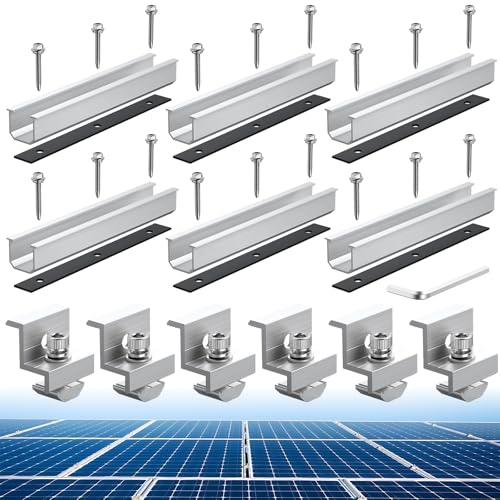
Anbte Solar Panel Bracket Kit, 6 Pcs 7.87 in Aluminium Solar Panel Mounting Rail 30mm/35mm Solar Panel End Clamps, Solar Panel Brackets for Metal Roof, Tin Roof, Flat Roof, Sheet Roof, RV, Silver
Easy to Install: Z-type, easy to install, save time and effort. This solar panel roof mounting kit create…
As an affiliate, we earn on qualifying purchases.
As an affiliate, we earn on qualifying purchases.

CMYYANGLIN Solar Panel Roof Mounts Bracket Kit for Sloped Pitched Tin Roof
【an easy set-up solar panel roof mounting bracket kit for sloped tin roof】Specially designed to vertically mount one…
As an affiliate, we earn on qualifying purchases.
As an affiliate, we earn on qualifying purchases.