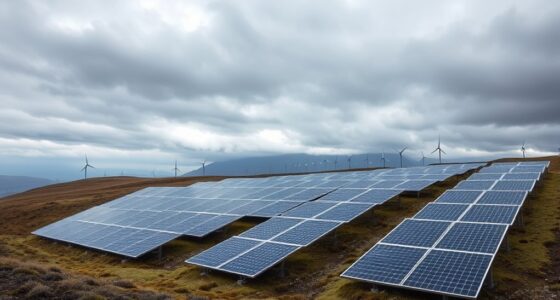

When sizing your solar power system, consider your daily energy needs, future expansion plans, and your battery storage requirements. Choose an inverter that can handle peak power and allows for added panels or batteries later. Proper sizing maximizes savings and guarantees reliable power during cloudy days or at night. Avoid under- or over-provisioning to get the most benefits. If you’re curious about detailed steps and important factors, keep exploring this guide.
Key Takeaways
- Proper system sizing aligns with your daily energy consumption to maximize efficiency and savings.
- Battery capacity should match your usage patterns and future needs to ensure reliable energy storage.
- Inverter selection must handle peak panel output and support expansion for added panels or storage.
- Professional analysis considers local regulations, incentives, and technical factors to optimize system performance.
- Oversizing components like batteries or inverters can accommodate future growth without unnecessary costs.
If you’re considering installing a solar power system, understanding how to size it correctly is vital to maximize efficiency and savings. One of the first steps is determining whether you want to include battery storage in your setup. Battery storage allows you to store excess energy generated during sunny periods for use at night or during cloudy days. When sizing your system, think about your energy consumption patterns and how much backup power you might need. If you have high energy demands or want greater independence from the grid, investing in larger batteries makes sense. Keep in mind that battery capacity should be aligned with your typical energy usage and future needs, so you’re not under- or over-provisioned.
Next, selecting the right inverter is critical for your system’s performance. The inverter converts the direct current (DC) produced by your solar panels into usable alternating current (AC). When sizing your inverter, ensure it can handle the maximum power output of your panels, especially during peak sunlight hours. Oversizing the inverter slightly can accommodate future expansions or unexpected surges, but avoid excessive over-sizing, which can lead to inefficiencies and unnecessary costs. Additionally, if you’re planning to include battery storage, look for inverters that support hybrid or battery-ready configurations. These models allow seamless integration of storage and optimize energy flow between your panels, batteries, and household loads. Properly sizing your system also involves considering the financial regulations and available incentives to maximize your investment benefits.
Sizing your system involves balancing several factors, including your daily energy consumption, the capacity of your batteries, and inverter specifications. If your goal is to maximize self-consumption, you’ll need a system that aligns with your typical energy use during the day and the amount of stored energy for nights. Conversely, if you want to feed excess energy back to the grid, your inverter must be capable of handling that export. Always work with a professional who can accurately analyze your energy needs and recommend the appropriate battery storage size and inverter type. Proper sizing ensures your system operates efficiently, reduces wastage, and provides reliable power when you need it most.
Frequently Asked Questions
How Often Should I Upgrade My Solar Power System?
You should upgrade your solar power system every 5 to 10 years, depending on your energy needs and system performance. Regular battery maintenance ensures longevity, and checking inverter compatibility is vital before upgrades. If your batteries show signs of reduced capacity or your inverter becomes outdated, it’s time to think about an upgrade. Staying proactive helps you maximize efficiency and guarantee your system remains reliable and compatible with current technology.
Can I Expand My System Later On?
Absolutely, you can expand your solar power system later on. As your energy needs grow, adding more panels or battery storage is a smart option. Just verify your current system is compatible with future upgrades, focusing on maintaining energy efficiency. Consulting a professional can help you plan for seamless expansion, maximizing your investment and ensuring your system continues to meet your evolving energy demands effectively.
What Is the Average Lifespan of a Solar System?
Your solar system can last an incredible 25 to 30 years, practically a lifetime of energy savings. To guarantee it stays in top shape, follow regular maintenance tips, like cleaning panels and checking connections. While installation costs might seem steep initially, proper upkeep extends your system’s lifespan, maximizing your investment. With good care, your solar setup will continue providing clean energy and savings for decades, making it truly worth it.
Do Solar Systems Work During Power Outages?
Yes, your solar system can work during power outages if it includes a battery backup. This setup gives you grid independence, allowing your system to supply power even when the grid is down. Without a battery backup, your system will shut off during outages for safety reasons. So, to keep your lights on and appliances running during blackouts, make sure to choose a solar system with an integrated battery backup.
How Do Local Weather Patterns Affect System Sizing?
Local weather patterns notably impact your solar system sizing. Climate variability, seasonal changes, and cloud cover directly influence the amount of sunlight your panels receive, affecting energy production. You need to account for these factors to guarantee your system generates enough power year-round. By understanding seasonal changes and climate variability, you can size your system appropriately, maximizing efficiency and reliability regardless of weather fluctuations.
Conclusion
Ready to conquer your energy needs and release unstoppable power? With the right solar system sizing, you’ll transform your home into an energy fortress, cutting costs and saving the planet like a true hero. Don’t settle for anything less than greatness—your perfect solar setup is your ticket to a brighter, cleaner future. Get excited, take action, and watch your energy bills shrink to nothing. The power to change everything is in your hands—seize it now!