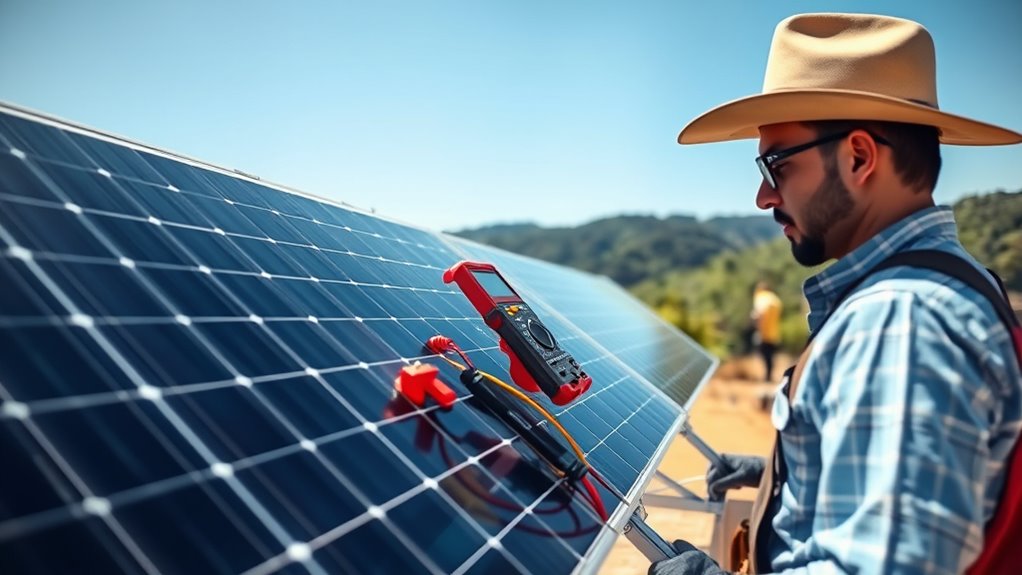

If your solar panels aren’t functioning well, start by inspecting for dirt, debris, or shading that could block sunlight. Check for physical damage like cracks or corrosion and make sure all connections are secure and clean. Also, look at your inverter for warning lights or error messages, and reset it if needed. Regular maintenance helps catch issues early. Keep going, and you’ll discover more tips to keep your system running smoothly and efficiently.
Key Takeaways
- Conduct regular visual inspections for debris, shading, cracks, or corrosion on panels.
- Clean panels to remove dirt and dirt buildup that impairs sunlight absorption.
- Check inverter warning lights, error messages, and ensure proper ventilation to prevent overheating.
- Inspect wiring connections for looseness, corrosion, or damage and use a multimeter to verify voltage levels.
- Update inverter firmware and consult professionals if troubleshooting exceeds basic maintenance steps.
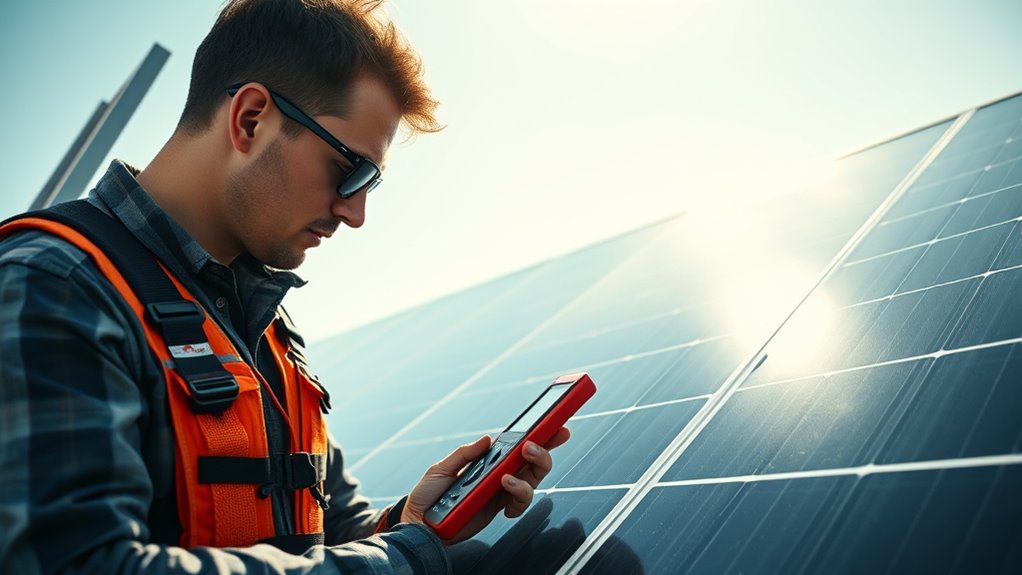
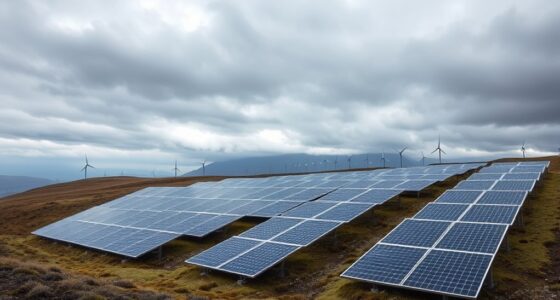
Solar panels are a dependable source of renewable energy, but like any system, they can encounter issues that reduce their efficiency. When your system isn’t performing as expected, troubleshooting becomes essential. The first step is understanding common problems and how to resolve them, which often involves a combination of solar panel maintenance and inverter troubleshooting. Regular solar panel maintenance keeps your system running smoothly by checking for debris, dirt, or shading that can diminish sunlight absorption. Cleaning your panels periodically ensures they operate at peak efficiency. Also, inspecting for physical damage like cracks or corrosion helps identify issues early before they worsen.
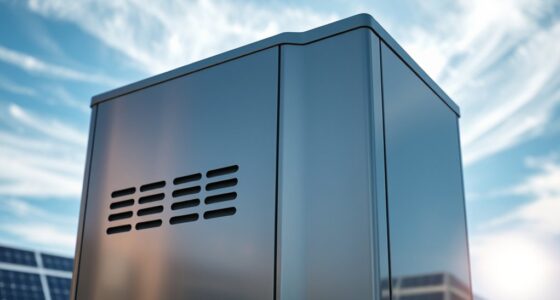
Inverter troubleshooting is another vital aspect because the inverter is the heart of your solar energy system, converting DC electricity into usable AC power. If your inverter displays warning lights or error messages, it’s a clear sign that something isn’t right. First, consult the user manual to interpret any error codes. Many inverter issues stem from simple causes like overheating, which can often be resolved by ensuring proper ventilation or cleaning dust from cooling fans. Sometimes, inverter faults require a reset—turning the device off, waiting a few minutes, then turning it back on can clear minor glitches. If problems persist, check the connections for loose or corroded wires, as poor contact can cause system shutdowns or reduced output.
Another common inverter troubleshooting step is verifying the system’s power output. Use a multimeter to measure voltage and compare it with the expected values. If the readings are too low, your inverter might be faulty or not receiving enough input from the panels. In such cases, inspecting the wiring and connections within your solar panel array is vital. Loose or damaged wiring can cause power loss or system failure. Additionally, ensure your inverter’s firmware is up to date, as manufacturers regularly release updates that fix bugs and improve performance. Maintaining proper system components is essential, especially since solar panel maintenance can help prevent many issues before they arise.
Beyond the inverter, keep an eye on the entire system for signs of trouble. If your solar panels are dirty, shaded, or damaged, their output will decline. Regular solar panel maintenance not only boosts efficiency but also helps you catch problems early. Remember, safety is paramount; always turn off the system before inspecting electrical components. If you’re unsure about any troubleshooting step, don’t hesitate to contact a professional. Proper maintenance combined with attentive troubleshooting guarantees your solar system remains dependable, efficient, and cost-effective, providing you with clean energy for years to come.
Frequently Asked Questions
How Often Should I Schedule Professional Solar Panel Inspections?
You should schedule professional solar panel inspections at least once every one to three years, depending on your maintenance schedule and local conditions. Regular inspections help identify potential issues early and ensure peak performance. If you notice a drop in energy output or damage, it’s wise to have an inspection sooner. Following a consistent maintenance schedule keeps your system running efficiently and extends its lifespan.
Can Shading From Nearby Trees Permanently Damage Solar Panels?
Tree shading can cause more than just dim sunlight; it can lead to panel damage over time. As branches scrape against the surface or roots disturb the foundation, shading from nearby trees may create persistent, uneven light that stresses your panels. While shading itself doesn’t directly damage the panels, the resulting physical damage or reduced efficiency can become permanent issues. Regular trimming and maintenance help prevent such risks and keep your system running smoothly.
What Are the Signs of Inverter Failure in My Solar System?
If your solar system’s inverter fails, you’ll notice a display error or no power production. During inverter troubleshooting, check for warning lights or error codes on the unit. If these signs persist, inverter replacement might be necessary. Keep an eye on inconsistent energy output or system shutdowns, which also indicate inverter issues. Addressing these signs promptly helps guarantee your system operates efficiently and prevents further damage.
Is It Safe to Clean Solar Panels With Household Cleaning Products?
You shouldn’t use household cleaning products on your solar panels because they can damage the surface and compromise panel safety. For example, a homeowner used dish soap and abrasive scrubbers, which caused scratches and reduced efficiency. Instead, stick to water and a soft brush or cloth. This guarantees your panels stay clean without risking damage, keeping them safe and functioning at their best.
How Do Extreme Weather Conditions Affect Solar Panel Longevity?
Extreme weather conditions can impact your solar panels’ longevity. Temperature fluctuations cause expansion and contraction, which may lead to microcracks over time. Hail damage is also a concern; large hail can physically crack or break the panels. To protect your investment, make certain your panels are rated for your climate, and consider additional protective measures like hail guards or reinforced mounting systems. Regular inspections help catch weather-related damage early.
Conclusion
By now, you’ve navigated the tangled web of solar panel issues, like a seasoned sailor charting stormy seas. Remember, patience and careful inspection are your compass, guiding you toward brighter, more efficient energy. When issues arise, don’t let frustration cloud your vision—see them as opportunities to fine-tune your system’s symphony. With steady hands and keen eyes, you’ll keep your solar setup shining like a beacon, illuminating your path to sustainable power.